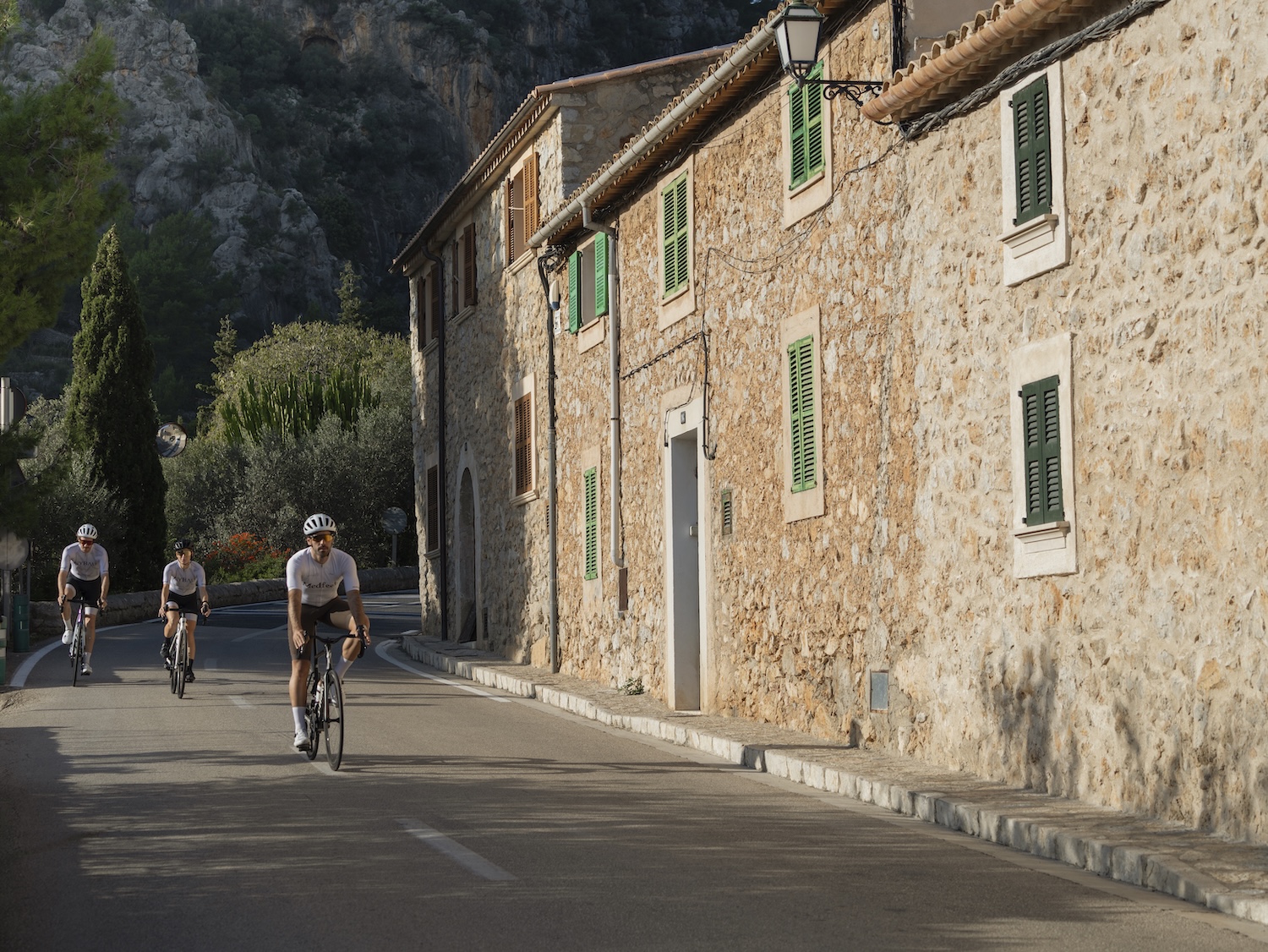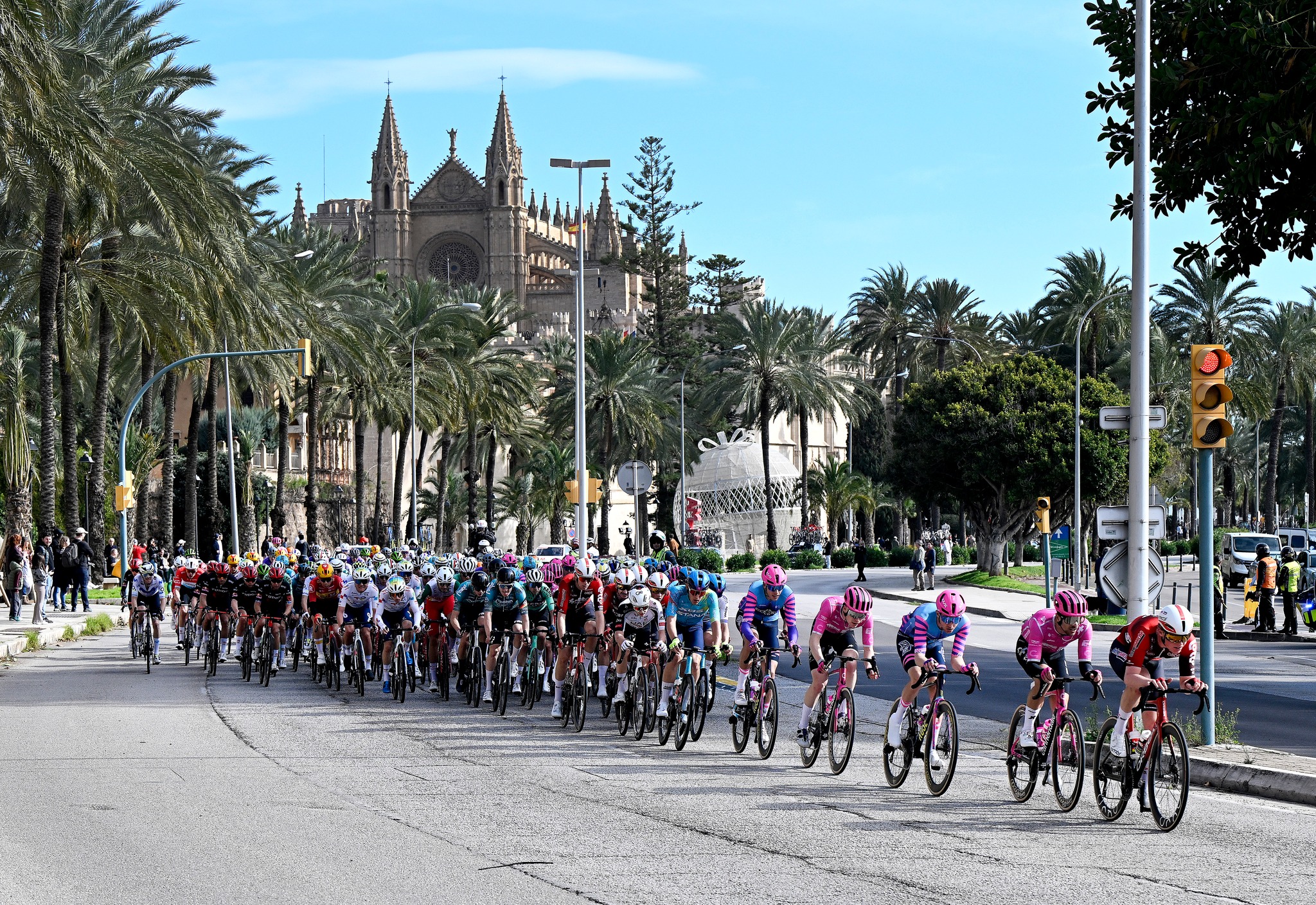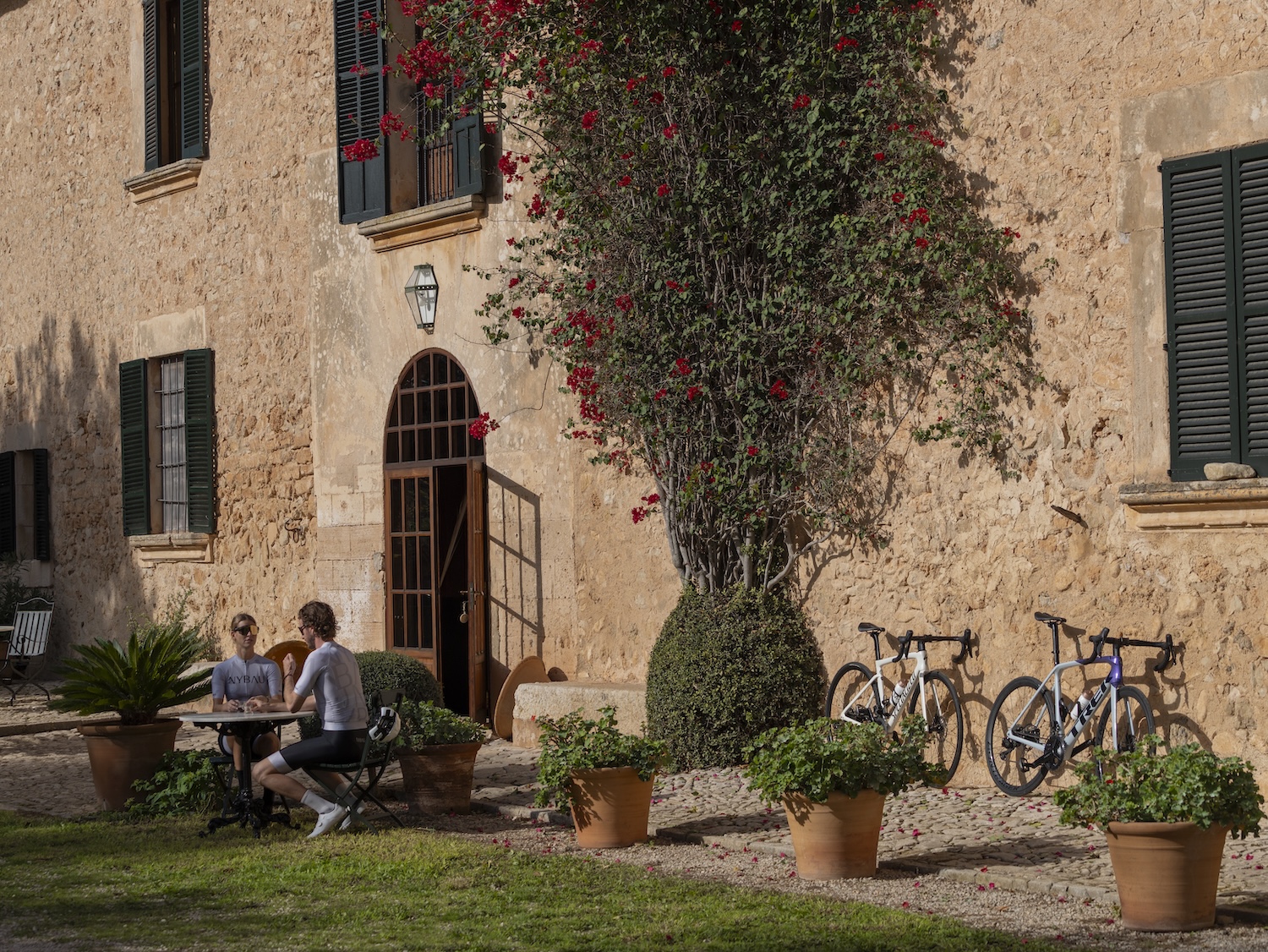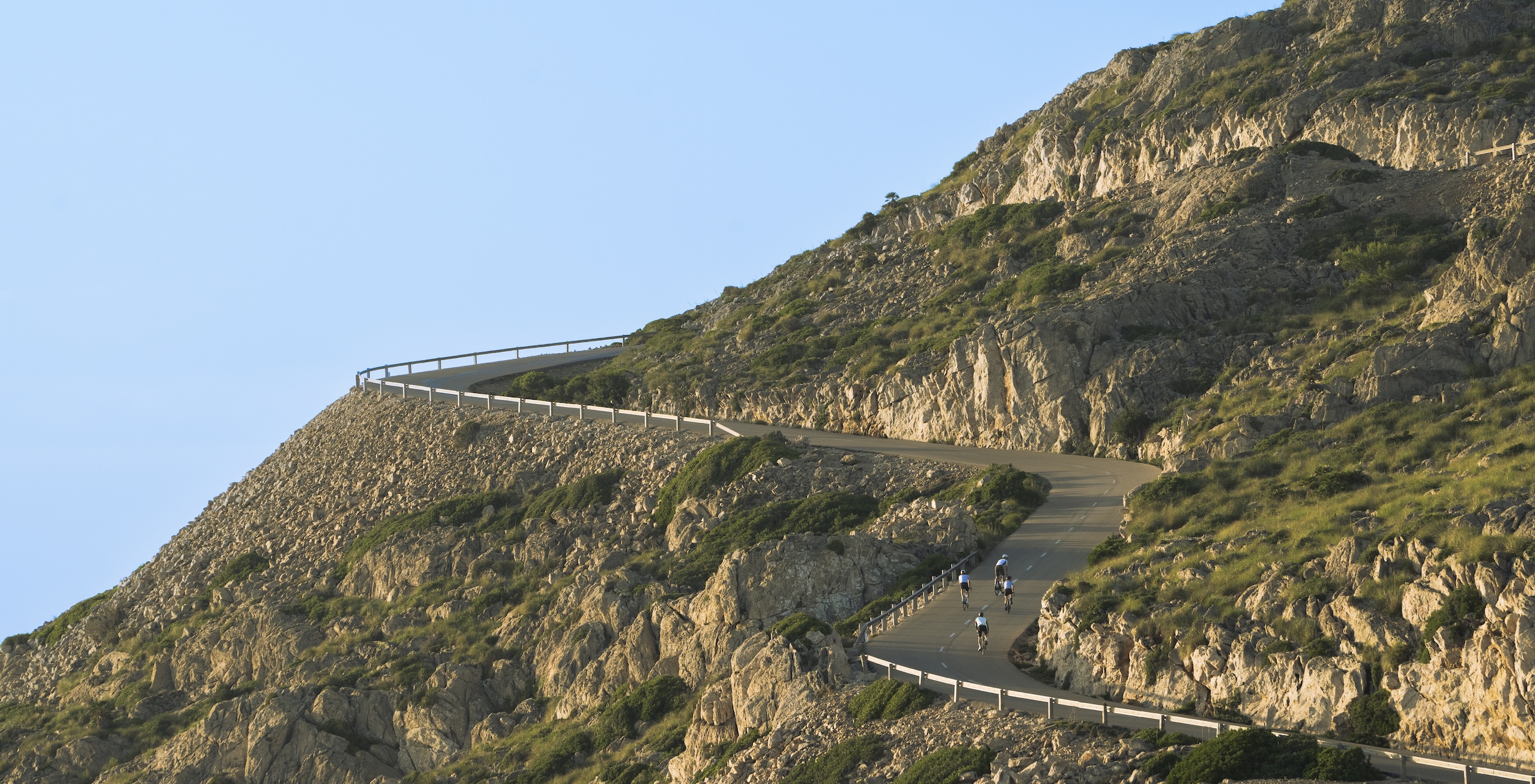
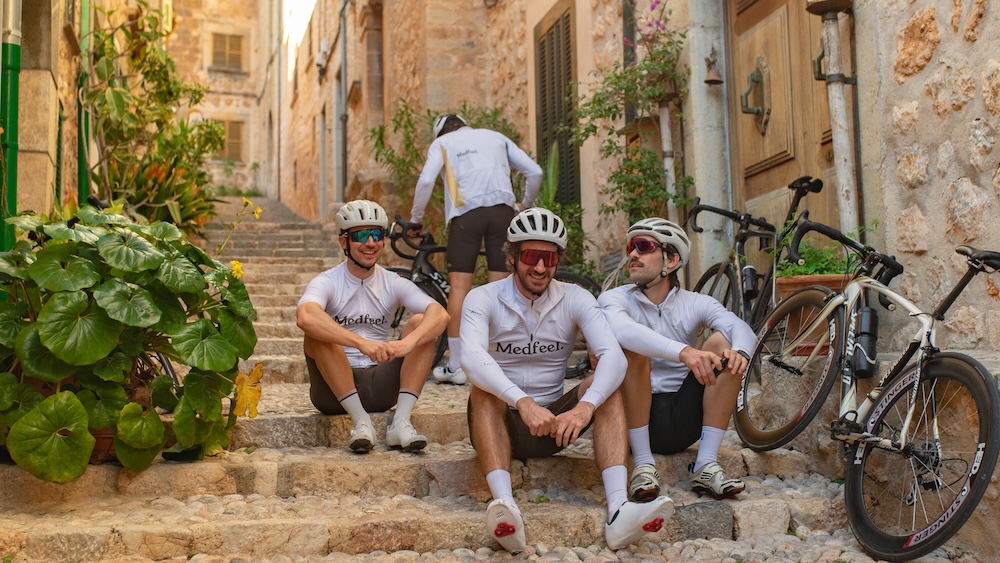
Ask five Mallorca cycling operators for their "best" five-day itinerary and you'll probably get five different proposals — each one shaped around its own hotels, bikes, support vehicles or preferred way of selling the island. Strip away the commercial angle, though, and Mallorca's geography points to a fairly clear answer.
For a first five-day cycling trip, the most complete option is to begin in the north, cross the Serra de Tramuntana, and finish in Port de Sóller. It's the most efficient way to ride Mallorca's defining climbs and landscapes without losing too much of the trip to transfers between hotels.
We build and guide cycling trips on this island for a living, which is exactly why this isn't written as a page about our own tour. Below is the itinerary we'd point a serious cyclist toward regardless of who ends up running it for them — and, further down, the honest answer on how you'd actually book it, including with us.
The Route, at a Glance
- The route: a northern base (Pollença, Cala Sant Vicenç or Port de Pollença) → across the Serra de Tramuntana via Coll de Sa Batalla and Puig Major → Port de Sóller for the back half.
- 5 days / 4 nights, 3 riding days, 330 km and 3,290 m of climbing overall — an average of ~110 km per riding day, though day 3 carries far more of that climbing than days 2 and 4.
- Day 3 is the "queen stage": Coll de Sa Batalla and Puig Major back to back, with an optional descent into Sa Calobra that you cannot skip once you've started it.
- Real difficulty is closer to Intermediate-plus than a flat "Intermediate" label suggests — an e-bike, a private guide for the hard day, or a flexible route plan are the honest fixes, not just pushing through it.
- Best months: March–June and September–November. July–August work with early starts; December–February isn't bookable on this exact itinerary, since these hotels close for the season.
| Duration | 5 days / 4 nights, 3 riding days |
| Distance / elevation | 330 km / 3,290 m overall — day-by-day breakdown below |
| Level | Intermediate-plus (e-bike-friendly) |
| Bases | Northern Mallorca (Pollença / Cala Sant Vicenç / Port de Pollença) and Port de Sóller |
| How to ride it | Fully independent, through any operator running this loop, or guided/self-guided with us — see the end |
What "Best" Really Means
This itinerary doesn't attempt to include every interesting road on the island — that would be impossible in five days. Its purpose is to combine, with as little logistical friction as possible, the things that make Mallorca one of Europe's genuine cycling destinations rather than just a warm-weather place to ride:
- The coastal scenery and viewpoints of Cap de Formentor.
- The climb towards Lluc via Coll de Sa Batalla.
- The long ascent of Puig Major, the island's highest paved climb.
- The dramatic hairpins and landscape of Sa Calobra.
- The west-coast roads through Deià and Valldemossa.
- Coll de Sóller as a natural final climb.
Formentor, Sa Batalla, Puig Major, Sa Calobra and Coll de Sóller are the climbs that repeatedly show up among Mallorca's defining cycling experiences — the same ones professional teams base winter training camps around. Together they offer genuine climbing, exceptional scenery and a reasonably efficient connection between the north and west of the island.
The key isn't simply choosing good roads. It's sequencing them properly — and a rider who wants pure scenery over climbing volume could reasonably swap a day for the west-coast road through Andratx, Estellencs and Banyalbufar instead of the queen stage below. We say more about that trade-off later.
Why North to South?
The northern base can sit in Pollença, Cala Sant Vicenç or Port de Pollença. All three give straightforward access to Cap de Formentor and the roads leading towards Coll de Sa Batalla.
From there, the route crosses the Serra de Tramuntana via Coll de Sa Batalla and Puig Major before reaching Port de Sóller. The two hardest climbs become the natural connection between the two bases, rather than an extra detour bolted onto the trip.
Sóller works particularly well as a second base because riders can leave straight from the hotel towards Deià, Valldemossa, Coll de Sóller or Puig Major, with no long transfer at the start of the day.
The itinerary can also be ridden in reverse, particularly if flight times make that more convenient. That places the hardest stage at the end of the trip instead of near the start — on legs already carrying more fatigue, with less flexibility left if the weather turns.
Where to Stay
Northern base: Pollença, Cala Sant Vicenç or Port de Pollença
The first base doesn't always need to be the same town. The best choice depends on the experience you want.
| Area | Character | Best for |
|---|---|---|
| Cala Sant Vicenç | Peaceful, coastal, relaxed | Couples and travelers wanting a calm arrival |
| Pollença | Restaurants, heritage, local atmosphere | Guests combining cycling with culture and gastronomy |
| Port de Pollença | Practical, more cycling infrastructure | Groups focused primarily on riding |
Recommended accommodation includes:
- Hotel El Vicenç de la Mar, a sophisticated coastal hotel in Cala Sant Vicenç with direct access to the Formentor climb.
- Can Aulí, a five-star historic boutique hotel in the centre of Pollença — recovery massages, nutrition-focused dining and a quieter, more local-feeling luxury.
- Carefully selected hotels in Port de Pollença for groups that prioritize bike rental, workshops and cycling services over a resort setting.
Western base: Port de Sóller
Port de Sóller is one of the best bases on the island for the second half of the trip. Riders can head straight from the hotel towards Coll de Sóller, Deià, Valldemossa or Puig Major.
| Hotel | Style | Best for |
|---|---|---|
| Jumeirah Mallorca | Five-star resort above the port | Wellness, privacy, gastronomy and premium recovery |
| Hotel Espléndido | Boutique hotel overlooking the sea | Design, location and a more accessible luxury option |
| Hotel Alcázar | Boutique hotel on Sóller’s old town square | Travelers who prefer the town to the port, with easy access to Fornalutx |
A single base in Palma, Alcúdia or Pollença is technically possible, but the daily transfers towards Sóller, Puig Major and the west coast add unnecessary time. For a five-day programme, moving hotels once is a worthwhile trade between comfort and cycling quality.
Day 1 — Arrival at Your Northern Base
The trip begins at a northern base — Pollença, Cala Sant Vicenç or Port de Pollença. The exact hotel depends on availability, flight arrival time and the kind of experience you're after: Cala Sant Vicenç offers a peaceful arrival beside the sea, Pollença combines heritage, restaurants and local atmosphere, and Port de Pollença is particularly practical for cycling groups.
After the airport transfer, the priority is settling into the hotel, completing the bike fitting, and reviewing the following days' routes — not riding. If you're using a rental bike, it's worth checking:
- Saddle height and position.
- Cleat alignment.
- Tyre pressure and condition.
- Available gearing for the climbs ahead.
- GPS and navigation setup.
- Battery range and charging arrangements, if riding an e-bike.
We don't recommend scheduling a demanding ride on arrival day. Between the flight, transfer, luggage and bike prep, most riders get more out of a relaxed afternoon and an early night than a first spin.
Why not always stay in Cala Sant Vicenç?
Because the best base depends on the experience you want to create. Cala Sant Vicenç gives maximum tranquility and a peaceful start; Pollença brings more restaurants and cultural character; Port de Pollença offers a wider range of cycling services, rental options and workshops. All three work for this itinerary — what matters most is avoiding unnecessary transfers and starting the next day's ride efficiently.
Day 2 — Cap de Formentor
- Distance: 68 km Elevation: 109 m net (the Creueta climb itself is steeper: 3.4 km at 5.8%, up to 9.3% in bursts, 270 m of gain)
- Level: Intermediate
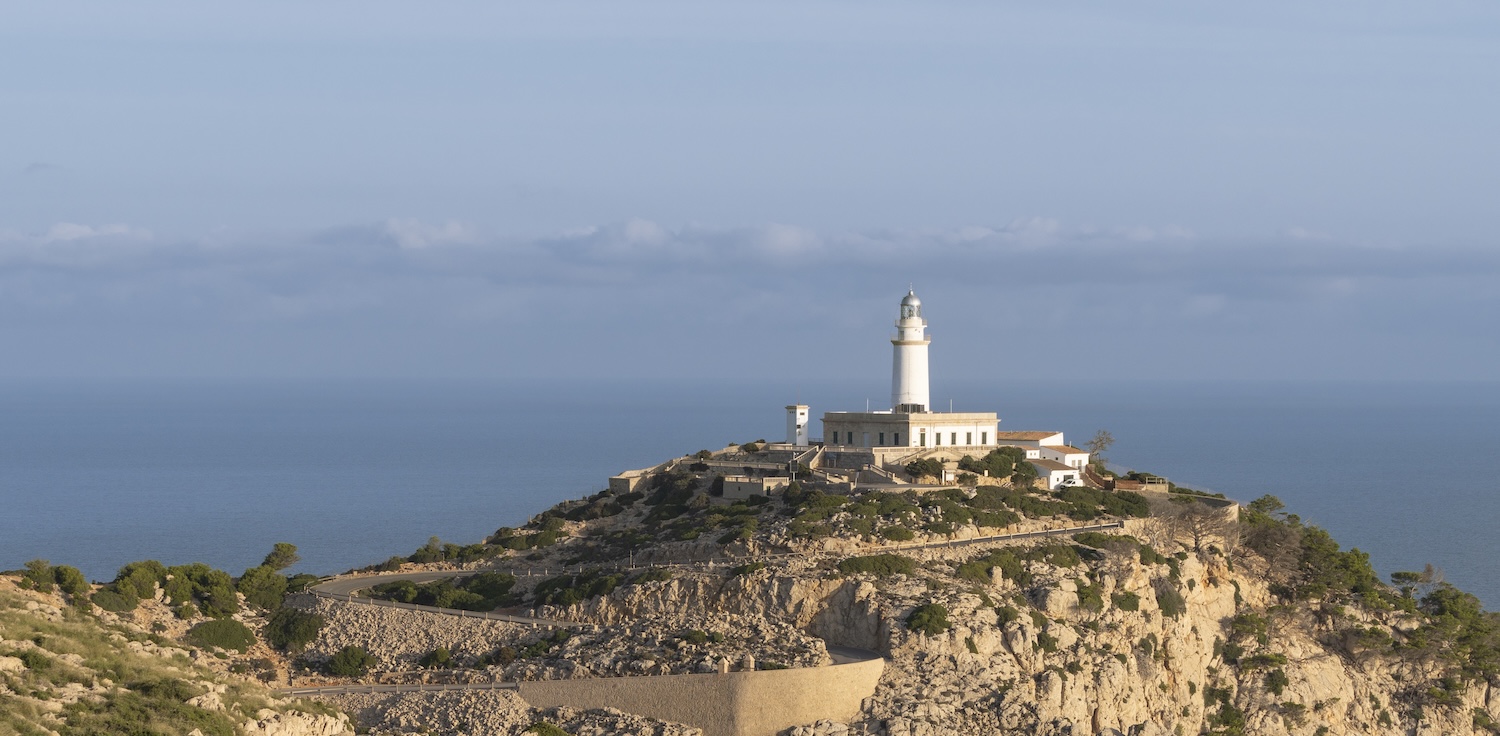
Formentor is the perfect introduction to Mallorca: open views, coastal roads, sweeping bends, short climbs and constantly changing scenery. The route can start from Cala Sant Vicenç, Pollença or Port de Pollença. After riding towards the peninsula, the road climbs Coll de la Creueta towards the Mirador de Es Colomer before continuing to Formentor Beach and the lighthouse.
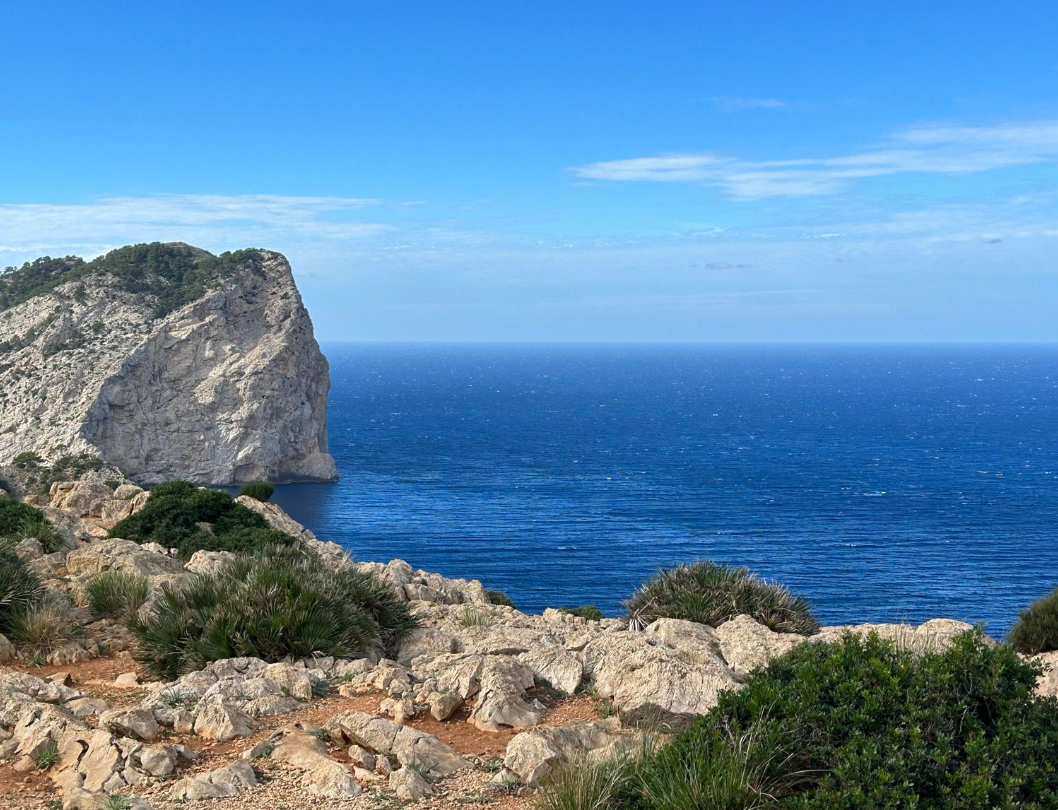
The route shouldn't be judged by elevation gain alone — wind, short ramps, exposure and traffic can make it feel harder than the numbers suggest. There's also a military installation at the Mirador de Es Colomer summit with photography restrictions in place, so don't plan a long drone or tripod session at the top.
Formentor access
Mallorca's authorities restrict private-vehicle access to the Cap de Formentor road for part of the summer season each year, generally via a park-and-ride/bus system during daytime hours. Cyclists are exempt from the restriction and can keep riding the road, but you'll still share it with buses, taxis and other authorized vehicles rather than having it to yourself. We haven't been able to verify this year's exact dates and hours through a live search this session — check the current-year restriction before you go, since it's set annually and we don't want to publish a specific date range we can't confirm.
The restriction may make for a calmer ride at certain times of day, but it doesn't make the road exclusive to cyclists. An early start remains the best strategy regardless.
How to ride it well
- Leave before 8:00.
- Carry enough water and nutrition — there's no refill point on the climb itself.
- Allow time for photos, but not in unsafe spots on the road.
- Avoid the busiest tourist hours (late morning through afternoon, May–October).
- Check the wind forecast before setting off.
Accommodation: selected hotel, northern Mallorca
Day 3 — The Queen Stage: Coll de Sa Batalla, Puig Major and the Sa Calobra Decision
- Base distance: 92 km Base elevation: 2,180 m net
- Sa Calobra extension: +19 km, +660 m of additional climbing
- Level: Intermediate-plus to advanced with the extension
This is the day that turns the trip into a genuine mountain-cycling experience. From the north, the route heads towards Selva and the climb of Coll de Sa Batalla (7.9 km at 5.0%, up to 7.3%) towards Lluc, then continues via Gorg Blau to Puig Major — at 14.4 km, 815 m of gain and 5.7% average, the island's longest paved climb — before dropping into Port de Sóller. Carry enough water and food to cover the whole crossing: none of the day's climbs has a refill point partway up.
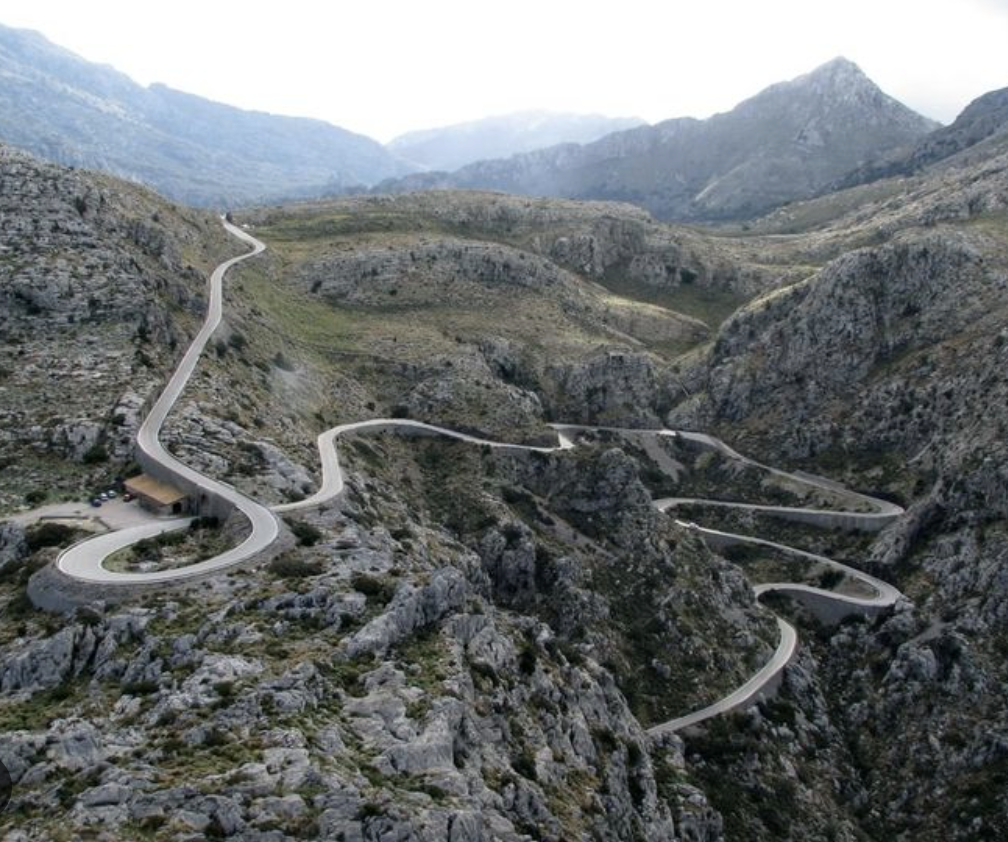
The Sa Calobra decision
The descent into Sa Calobra is one of Europe's great cycling experiences — dramatic limestone scenery and some of the most recognizable hairpins on the island. But the decision has to be made before you start the descent. Once you're at the bottom, the only way out by bike is back up Coll des Reis. There's no shortcut and no way to turn it into a quick look.
- Add Sa Calobra if your legs feel strong.
- Skip it if Sa Batalla and Puig Major have already taken their toll.
- Don't make the extension compulsory for a whole group — let some riders finish straight into Sóller.
- Decide before you begin the descent, not partway down.
There's no prize for arriving at the hotel completely wrecked, especially with Deià, Valldemossa and Coll de Sóller still waiting the next day.
Accommodation: Jumeirah Mallorca, Hotel Espléndido, Hotel Alcázar or another selected hotel in Port de Sóller
Day 4 — Deià, Valldemossa and Coll de Sóller
- Distance: 71 km Elevation: 1,270 m net
- Level: Intermediate-plus
After the queen stage, this day keeps the quality of the riding without demanding the same volume of climbing. The route explores some of the most elegant landscapes on Mallorca's west coast — Sóller, Deià, Valldemossa, and the mountain roads connecting them — at a more relaxed pace, with room for coffee stops, photos and a long lunch. The ideal finish is Coll de Sóller from its southern side (5 km at 5.1%) — tight hairpins on a quiet road, and one of the island's most memorable climbs.
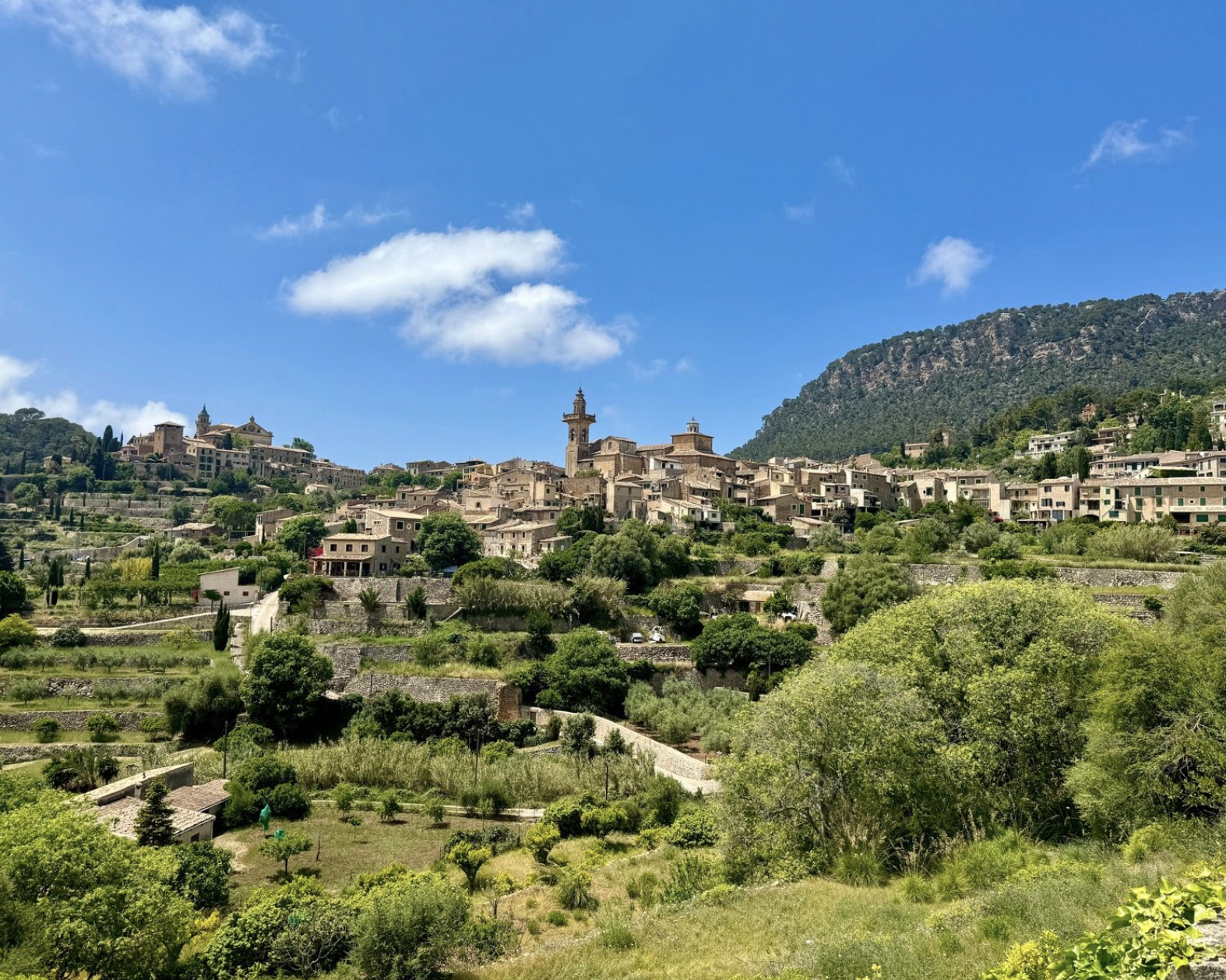
Two ways to ride the day
- Full version: Port de Sóller → Deià → Valldemossa → Coll de Sóller → Port de Sóller.
- Recovery version: Port de Sóller → Deià → back along the coast, cutting the elevation and leaving Coll de Sóller for another day.
An e-bike can be a sensible choice today — not because the route is impossible, but because it lets the group keep a comfortable pace while still taking in the villages and scenery.
Accommodation: Jumeirah Mallorca, Hotel Espléndido, Hotel Alcázar or another selected hotel in Port de Sóller
Day 5 — Departure
The final morning is for enjoying the destination, not chasing another number on the GPS. A relaxed breakfast, a walk around the port, a last coffee — an unhurried end to the trip before the airport transfer.
If your flight leaves later in the day and you'd like one final ride, a short, flatter route through the Sóller valley is an easy add-on. It should stay an optional extra, though, not an essential part of the programme — the goal is to finish satisfied, not to add kilometres for the sake of it.
Worth saying plainly: this is a taste of the island, not all of it. Five days buys you the Tramuntana's greatest hits, but it skips the west-coast climbs around Estellencs and Banyalbufar and the inland routes further south. If that's what draws you, our 7-day Signature Mallorca Bike Tour covers more of it without compressing the climbing into three days.
How Difficult Is It, Really?
Yes, this is an intermediate-plus itinerary — but it isn't evenly intermediate from one day to the next. The total distance is manageable for a fit regular cyclist, but the difficulty is concentrated: day 3 alone carries almost double the net elevation of days 2 and 4 combined, and day 4 is ridden on legs that already did Sa Batalla and Puig Major the day before.
The programme suits riders who:
- Cycle regularly.
- Can ride 60–90 km in a day at a steady pace.
- Are comfortable with 800–1,500 m of climbing most days, with the legs for a bigger effort on day 3.
- Can manage long, sustained efforts.
- Are willing to adapt the route if conditions change.
For couples or groups with mixed fitness, the smartest fix usually isn't simplifying the whole programme — it's mixing equipment. A conventional road bike for Formentor, an e-bike for the queen stage, and a private guide for the hardest day covers most of the gap without flattening the trip for everyone.
The Best Time of Year
March to June
One of the best windows of the year: pleasant temperatures, excellent light for photography, and less tourist pressure than midsummer.
September to November
September still runs warm; October and November bring quieter roads and a more relaxed atmosphere, with shorter days and a real chance of wind or rain at altitude.
July and August
Still possible, with the schedule adapted: start at dawn, carry extra water and electrolytes, avoid the hottest part of the day, ride Formentor and Sa Calobra as early as possible, and stay flexible on the order of the stages.
December to February
This exact itinerary isn't bookable in winter: the hotels in this guide, on both the northern coast and in Port de Sóller, close for the season from December through February. Mallorca itself keeps riding through winter — it's a genuine base-training destination for professional teams — but if you want this route with these hotels, plan for March onward.
Three Ways to Ride the Trip
Independently
The most flexible and usually the most economical option. Book your own hotels, rent your own bike, use your own GPX files, and arrange the transfer between the two bases yourself. The trade-off is that you're also responsible for route changes, mechanical problems, luggage, transport and any incident on the road.
Through an operator
Most Mallorca cycling operators offer some version of this core itinerary — a reasonable sign that the route itself, not any one company's design, is what's actually good. The differences that matter when comparing operators usually come down to:
- Bike quality and sizing.
- Group size.
- Guide experience.
- Support vehicle.
- Route flexibility.
- Hotel selection.
- Luggage handling.
- Mechanical and emergency assistance.
- Level of personalization.
With Medfeel
"Mallorca is our home, and every cycling trip we design reflects the roads, climbs, and local experiences we know and love. No two riders are the same, so no two itineraries should be either," says Jaume Agustí, Medfeel co-founder. Our philosophy isn't to run exactly the same programme for every guest — we start from this proven route and adapt it to fitness level, bike type, time of year, weather and travel style.
Our Classic Mallorca Bike Short Tour follows exactly this north-to-west logic — a carefully selected northern base, Formentor, the crossing of the Serra de Tramuntana, and Port de Sóller — starting from €1,250 per person, guided or self-guided.
What's included:
- 5 days and 4 nights: two at a northern base, two in Port de Sóller.
- Daily breakfast.
- A Trek Madone SL 6/7 road bike (subject to availability and sizing) or a Trek Domane+/Charter+ e-bike.
- Bike fitting and delivery to your hotel.
- Daily bike insurance, GPX files and navigation support.
- Energy and nutrition for the rides.
- Luggage transfers between hotels and airport transfers.
- Support throughout the trip, plus emergency and rescue assistance.
- Your choice of a private guide, a self-guided route with 24/7 support, or a mix of both.
On pricing: our cycling trips start from €1,250 per person, but the final price depends on the season (high, shoulder or low), the exact hotel category and property, room availability at the time of booking, whether the trip is guided or self-guided, group size, the bike or e-bike required, and the level of private support and transfers. A guided trip with a private guide and extra support costs noticeably more than a self-guided one with GPX files and remote assistance — so we don't quote one fixed number as if every departure were identical. Each proposal is built around your dates, hotels, group size and service level.
Our hotels: for the northern base, Hotel El Vicenç de la Mar for a refined stay by the sea, or Can Aulí for a historic boutique stay right in the centre of Pollença, plus selected hotels in Port de Pollença depending on group profile. For Port de Sóller, Jumeirah Mallorca for a premium wellness and recovery stay, Hotel Espléndido as a boutique alternative overlooking the port, or Hotel Alcázar for guests who’d rather be in Sóller’s old town than on the water.
What makes our version different: we don't sell kilometres and elevation gain on their own — we design around how you want to feel during the trip. That means hotels chosen for location and recovery rather than brand-name convenience, routes reviewed for the season with a real alternative ready for a windy or wet day, and direct communication with your Medfeel Travel Agent before, during and after the trip — not just a voucher and a GPX file.
If you'd rather see more of the island across a longer trip — including the west-coast road through Estellencs and Banyalbufar — the Signature Mallorca Bike Tour (7 days) covers it at a gentler daily pace. Every departure we run is on our Mallorca cycling holidays page.
Mallorca can offer its greatest cycling classics in five days: Formentor, Coll de Sa Batalla, Puig Major, Sa Calobra, Deià, Valldemossa and Sóller. The difference is in how the trip is organized — the right bases, sensible pacing, well-chosen hotels and enough flexibility turn it from a list of climbs into a complete experience built around cycling, scenery, food and genuine hospitality.
Frequently Asked Questions
Where does the itinerary start?
At a northern base in Mallorca rather than one single town — the main options are Pollença, Cala Sant Vicenç and Port de Pollença. The final choice depends on hotel availability, flight arrival time, group profile and whether the priority is tranquility, gastronomy or cycling infrastructure.
Is Pollença, Cala Sant Vicenç or Port de Pollença the best option?
Cala Sant Vicenç is ideal for a peaceful first night beside the sea. Pollença suits guests who want restaurants, heritage and local atmosphere alongside the riding. Port de Pollença is particularly practical for groups prioritizing bike hire, workshops and cycling services.
Can I do this trip on an e-bike?
Yes. An e-bike is especially useful for Coll de Sa Batalla and Puig Major, or for the Deià, Valldemossa and Coll de Sóller day. You don't need to use one for the whole trip — many riders prefer a conventional road bike for Formentor and switch to an e-bike for the day with the most climbing.
What happens if riders in the group have different fitness levels?
The itinerary adapts well: one group can ride Sa Calobra while others finish straight into Sóller, some guests can use an e-bike only on day 3, day 4 can run shorter or longer, a private guide can cover the queen stage, and a support vehicle can pick up anyone who wants to shorten the route. Good planning isn't about forcing everyone to ride the same kilometres — it's making sure the whole group enjoys the same trip.
What should I bring for the mountain stages?
Beyond your usual kit: two bottles or equivalent water capacity, a lightweight layer for Puig Major, a wind vest, gloves suited to long descents, front and rear lights, a fully charged phone, ID and insurance details, and nutrition you've already used successfully.
Should I book this itinerary in advance?
For spring, early autumn and the higher-category hotels, yes — advance booking is strongly recommended. Availability for specific bike sizes, e-bike models, guides and hotel rooms can be tighter than general hotel availability, and booking early lets us confirm the right bike, transfers, luggage logistics, guide availability, hotel configuration and bad-weather alternatives.
Can I do the itinerary from one hotel?
Yes, but it isn't our first recommendation for a five-day trip. Palma, Alcúdia or Pollença can work as a single base, but daily transfers towards Sóller, Puig Major and the west coast cut into riding time and flexibility. Two bases let each stage start closer to the roads you actually want to ride.
What happens if the weather prevents us from riding Puig Major?
A high-mountain stage should never be forced in strong wind, heavy rain or poor visibility. We can reorder the stages or swap in a more sheltered ride through the Sóller valley, Pollença or the coast. With two bases and a flexible programme, the trip doesn't depend on every climb being rideable on one specific day.
Do I have to ride the Sa Calobra extension?
No — it's entirely optional and should depend on your fitness, available time and the weather. Once you descend into Sa Calobra, you have to climb back out, so decide before starting the descent, not after reaching the bottom.
Is this itinerary guided or self-guided?
Both. You can go fully guided with a private guide, fully self-guided with GPX files and 24/7 support, or a mix of the two — a popular format is a guided queen stage with the other days ridden independently.
What happens if the weather changes during the trip?
We monitor the forecast and can adjust in real time — shifting a start time, shortening a route, rearranging the stages, or swapping a climb for a safer alternative. If conditions are genuinely unsuitable for riding, we recommend an alternative day rather than turning it into an unsafe or unpleasant slog.
What's the cancellation policy?
It depends on the specific booking, hotel and travel dates. As a general guideline, some departures offer a full refund for cancellations made at least 35 days before the trip starts; cancellations within that window may be non-refundable, though date changes can sometimes be arranged subject to availability. We recommend travel insurance covering cancellation, medical expenses and last-minute changes.