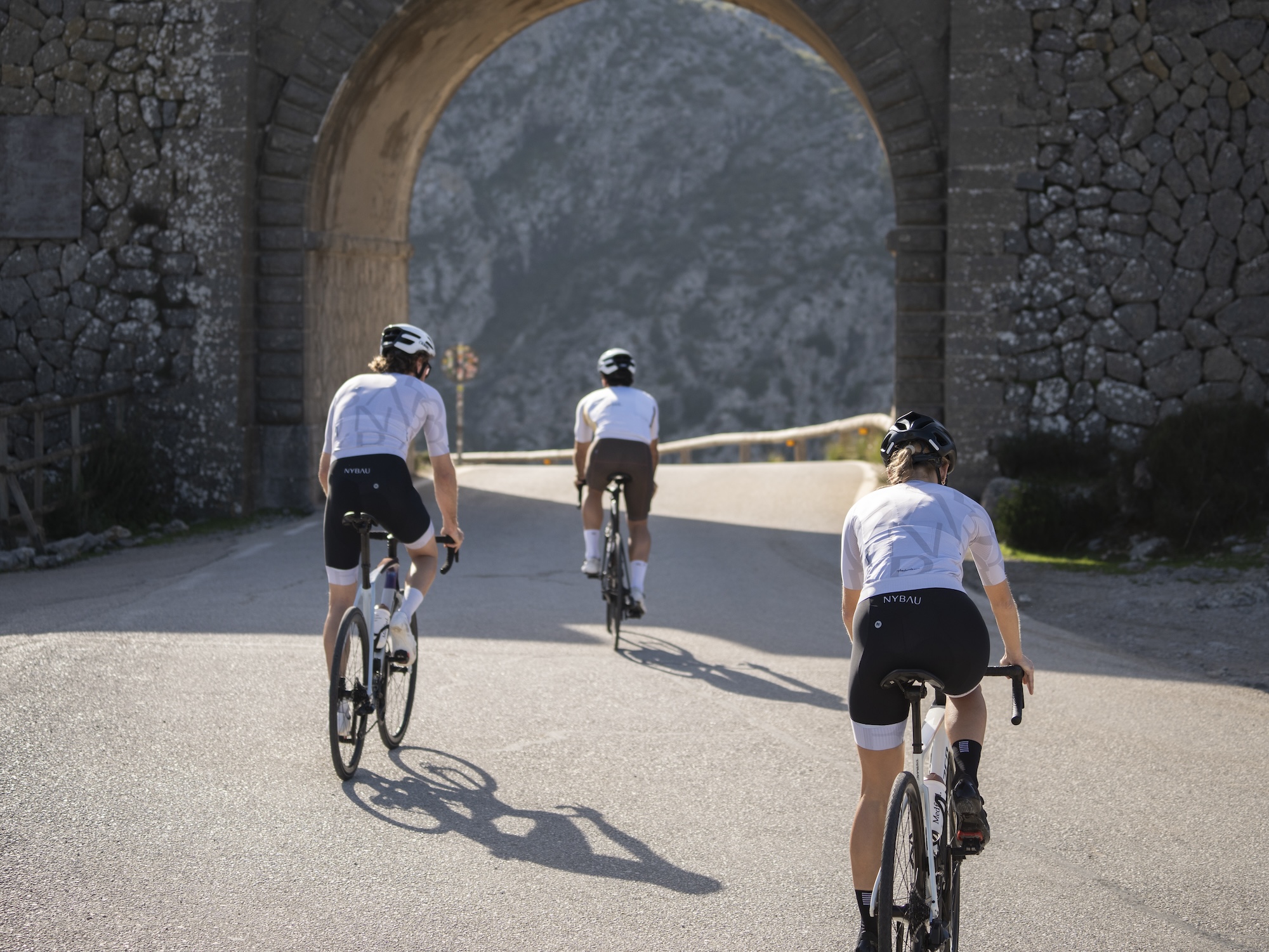
Ask five cyclists to name Mallorca's best climb and you'll probably hear the same answer first — Sa Calobra — followed by four different opinions.
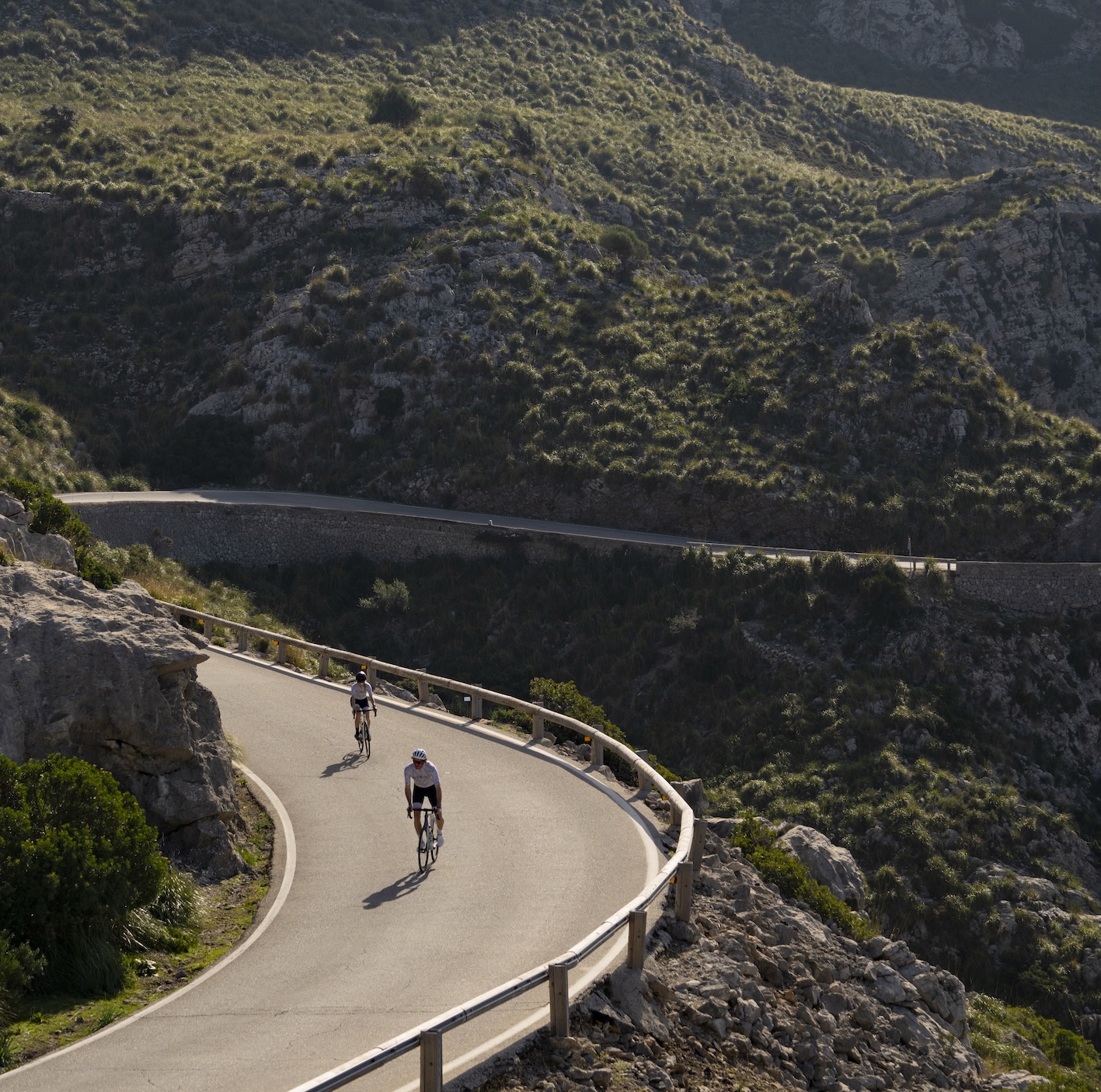
Quick answer
- Mallorca's defining climbs are Sa Calobra (9.5 km, 7.2%, 660 m), Puig Major (14.4 km, 5.7%, 815 m — the island's longest), Coll de Sóller (two distinct sides, north and south) and Cap de Formentor (a rolling coastal ride, not a single steady gradient).
- Sa Calobra is the only one on this list you have to descend before you climb — once you're at the bottom, the only way out by bike is back up the same 9.5 km.
- Coll de Sa Batalla, Coll de Femenia, Coll d'Honor and Sant Salvador are the quieter, shorter climbs (5–8 km) that fill out a real week of riding without repeating the same effort twice.
- Published figures for the same climb often disagree by several hundred metres of distance or half a percent of gradient — almost always because sources measure from a different starting point, not because anyone's wrong. We flag it wherever it matters.
- Best climbing conditions: February–May and September–November (12–22°C); Puig Major and Sa Calobra both exceed 30°C by mid-morning in July–August.
The Best Climbs in Mallorca — At a Glance
Every number below is Medfeel's own — the same distance, elevation and gradient our guides use when they build a client's route, measured start-to-finish on the exact segment named. Where a climb has more than one real approach (Coll de Sóller, Coll d'Honor), we list both rather than averaging them into a figure that describes neither.
| Climb | Starts from | Distance | Avg. gradient | Elevation gain |
|---|---|---|---|---|
| Sa Calobra (Coll des Reis) | Sa Calobra cove | 9.5 km | 7.2% | 660 m |
| Puig Major | Sóller | 14.4 km | 5.7% | 815 m |
| Coll de Sóller (north) | Sóller | 8.9 km | 5.3% | 473 m |
| Coll de Sóller (south) | Bunyola | 5.0 km | 5.1% | 258 m |
| Cap de Formentor | Port de Pollença | 10.8 km | 2.9% | 309 m |
| Coll de la Creueta | Port de Pollença | 3.4 km | 5.8% | 270 m |
| Coll de Sa Batalla | Caimari | 7.9 km | 5.0% | 386 m |
| Coll de Femenia | Pollença side | 7.2 km | 5.7% | 416 m |
| Coll d'Honor (Orient side) | Alaró / Orient | 6.2 km | 5.8% | 334 m |
| Sant Salvador | Near Felanitx | 4.9 km | 7.0% | 345 m |
Figures are Medfeel's own, measured on the exact segment named. Formentor's overall gradient looks gentle because the road undulates — it isn't a single steady ascent the way Sa Calobra or Puig Major are. See the Formentor section below.
What Makes Mallorca So Good for Climbing?
Mallorca gets compared to the Alps and the Pyrenees more often than the numbers actually support, and that's part of what makes it work as a climbing destination rather than a punishing one. The island's major ascents mostly avoid the sustained 10–12% ramps you'd find on a proper Alpine pass — Sa Calobra's 7.2% and Puig Major's 5.7% are demanding because of how long you hold them, not because any single kilometre tries to break you.
What replaces raw gradient is everything else: road surface that's consistently excellent even on the narrower mountain passes, traffic that thins out fast once you're off the MA-10 in peak season, and a concentration of distinct climbs — limestone hairpins, forest passes, a genuine coastal ascent — packed into an island you can cross in a long morning. Adrián Casanova, one of Medfeel's co-founders and a Mallorca guide for more than five years, puts it plainly: "Mallorca is our home, and every cycling trip we design reflects the roads, climbs, and local experiences we know and love." That's not a marketing line — it's the reason the figures in this guide come from our own guided rides rather than a single pass at a route-planning app.
1. Sa Calobra — Mallorca's Most Iconic Climb
Sa Calobra (officially Coll des Reis) is 9.5 km at an average 7.2%, gaining 660 m from the cove back up to the pass — and the only climb on this list you have to descend before you can ride it.
| Start / Finish | Sa Calobra cove → Coll des Reis |
| Distance | 9.5 km |
| Average gradient | 7.2% |
| Elevation gain | 660 m |
| Hairpins | 26, including the famous "tie-knot" curve that passes underneath itself |
| Best for | The one climb every visiting cyclist should ride at least once |
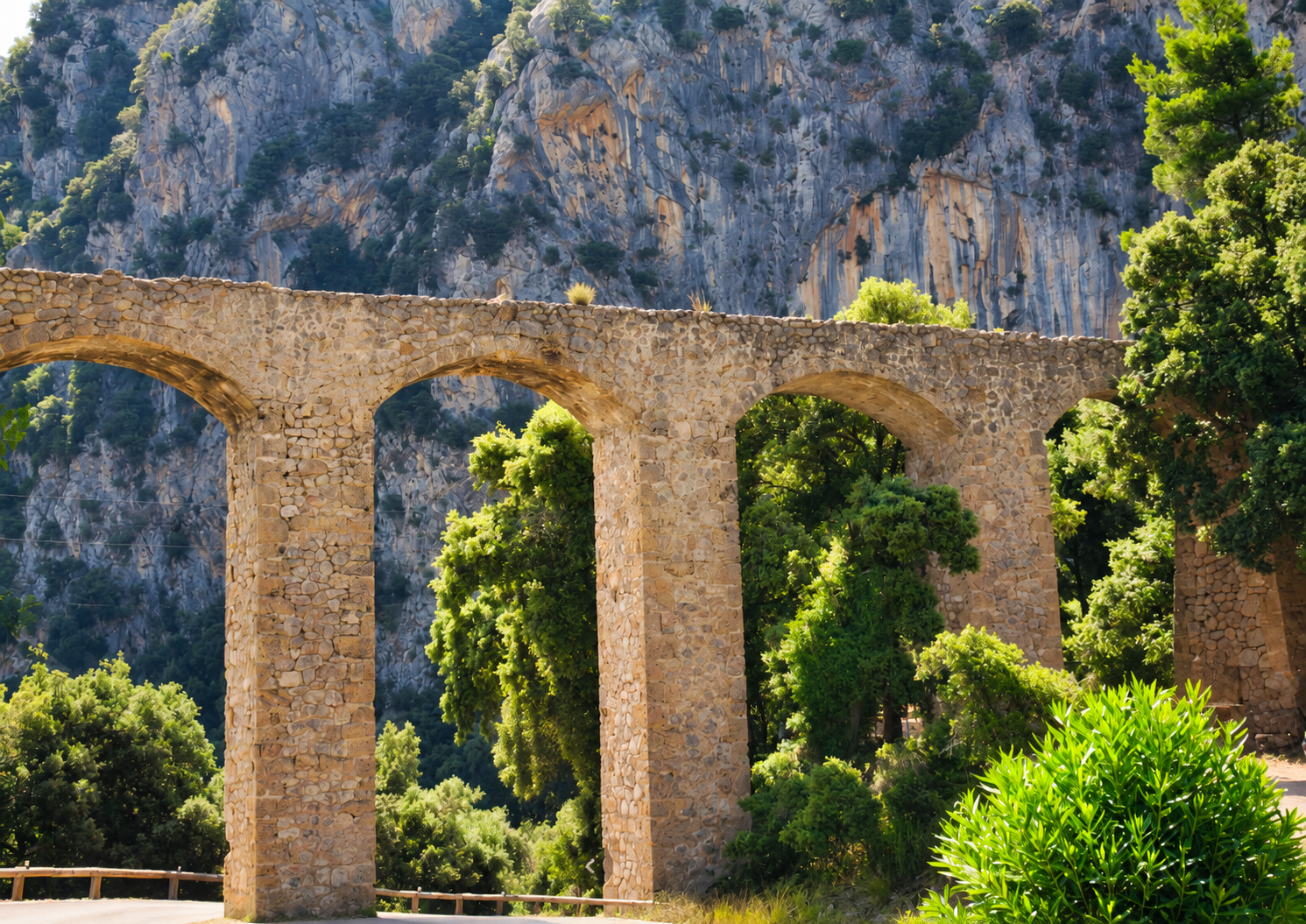
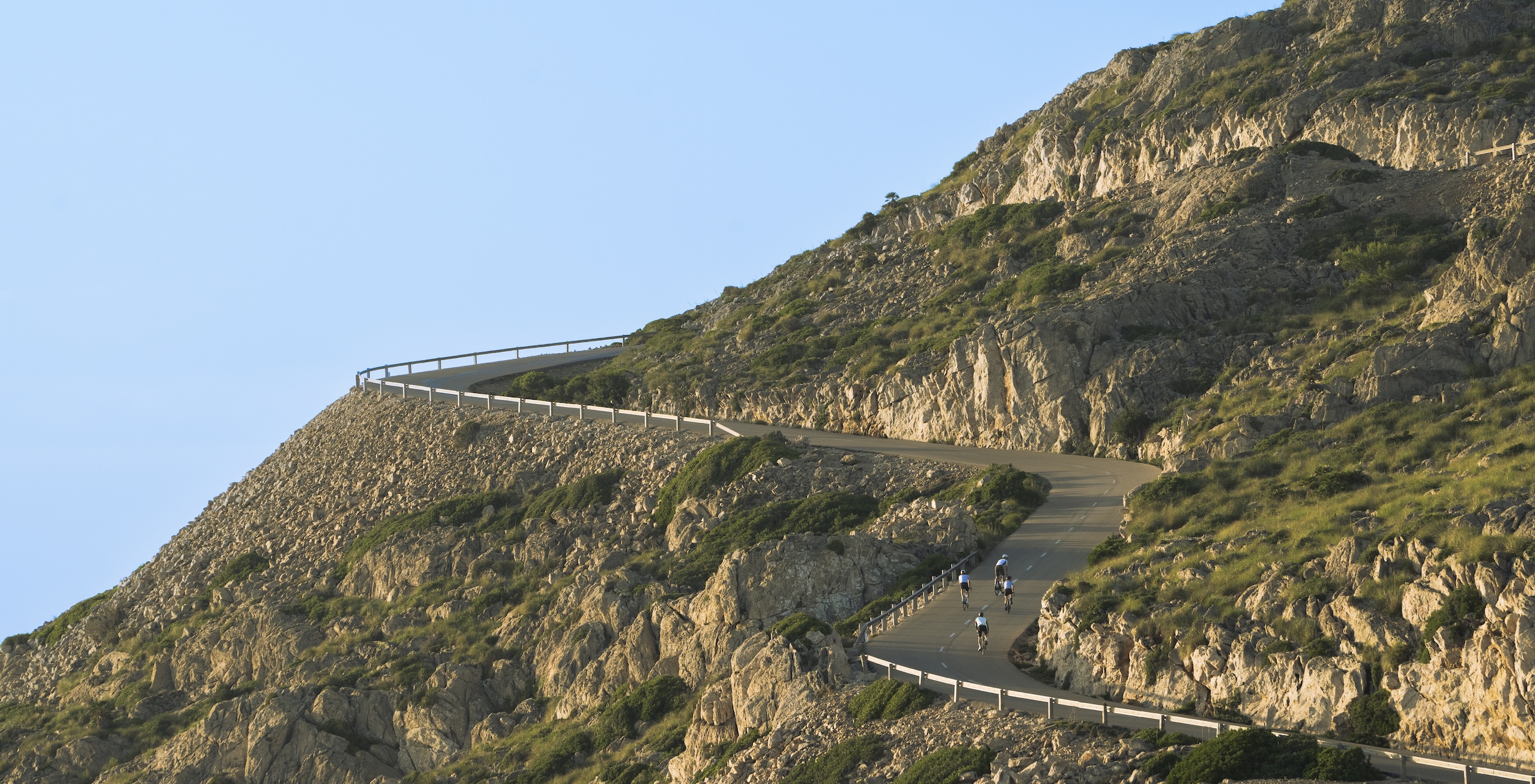
The road drops from the Coll des Reis pass down to sea level at the cove before turning around and climbing straight back up through limestone cliffs carved with 26 hairpins — the same road, ridden twice, in opposite directions. The gradient isn't extreme by Alpine standards, but it's sustained, and the final kilometres arrive after you've already spent the descent's momentum getting down there. There's no shortcut back: once you're at the cove, the 9.5 km climb is the only way out by bike.
You'll see the distance quoted anywhere from 9.4 to 10 km and the gradient anywhere from 7.0–7.1%, depending on which guide you read — almost every published source measures from a slightly different point on the pass, and a few include or exclude the short ramp at the very top near the acueducto. Our own figure (9.5 km, 7.2%, 660 m) is the one our guides actually use when they brief a client the night before, measured start-to-finish on the climb itself.
Our guides treat the descent and the return climb as one single effort when planning a client's day — not two separate items on an itinerary. Carry more water and food than you think you'll need, and if you're leading a mixed group, don't make the extension compulsory for everyone.
2. Puig Major — The Island's Longest Major Ascent
Puig Major climbs 14.4 km at 5.7% from Sóller, gaining 815 m to the highest paved point on the island — Mallorca's longest continuous ascent, and the one that punishes bad pacing more than any other on this list.
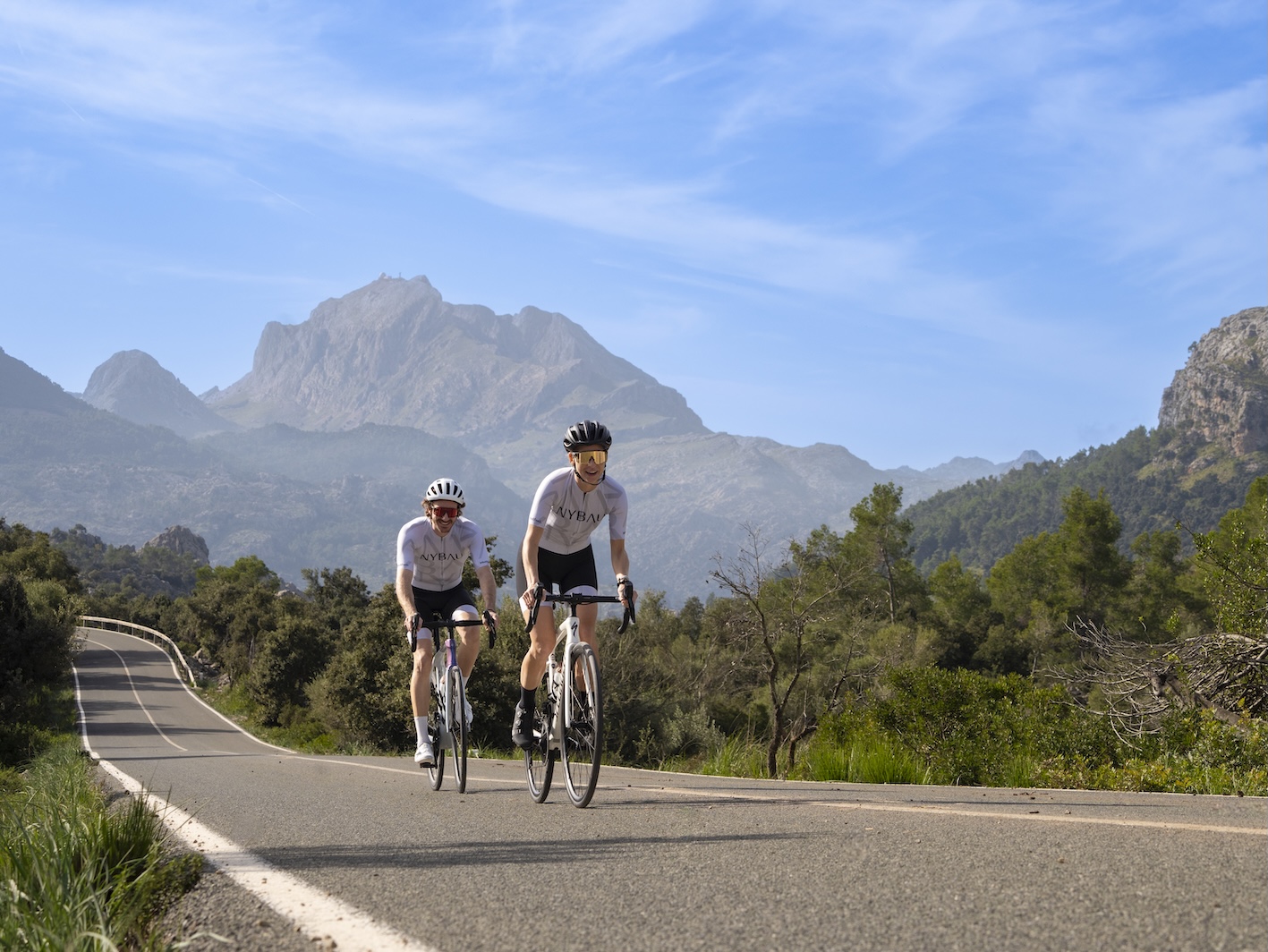
| Start / Finish | Sóller valley → Túnel de Monnàber |
| Distance | 14.4 km |
| Average gradient | 5.7% |
| Elevation gain | 815 m |
| Best for | Riders who'd rather hold one steady rhythm for 45 minutes than punch through a short ramp |
The true summit of Puig Major reaches 1,436 m, but it's occupied by a military installation cyclists can't ride to — the road climb tops out at the Túnel de Monnàber instead, still the highest point any rider reaches on paved road in Mallorca. You'll see slightly higher distance figures elsewhere (14.6–15.4 km) mostly because some sources start the clock a little further down the valley or extend the segment past the tunnel — our 14.4 km is measured from where the real climbing begins in Sóller.
What makes Puig Major hard isn't a single vicious ramp — it's the length. Riders who go out too hard in the first few kilometres, while the valley still feels close, are the ones who suffer in the final third, where the road opens up and gets genuinely mountainous. It rides differently depending on wind and time of day; the exposed upper section can be noticeably cooler and windier than the valley floor below.
It's often paired with Sa Calobra for a serious day: north from Pollença, over Coll de Sa Batalla and past Lluc and Gorg Blau to the base of Puig Major, then the decision of whether to add the descent into Sa Calobra at the end. That's a genuinely demanding day, not a casual add-on — plan it as the main event, not a detour.
3. Coll de Sóller — The Classic Hairpin Climb
Coll de Sóller is really two climbs, not one: 8.9 km at 5.3% from the north (Bunyola side), or 5.0 km at 5.1% from the south — and the two get confused constantly because most guides only describe one of them.
| Side | Distance | Gradient | Elevation |
| North (from Bunyola) | 8.9 km | 5.3% | 473 m |
| South (from Sóller) | 5.0 km | 5.1% | 258 m |
The north side, over 50 hairpins connecting Bunyola to Sóller through olive groves and dry stone walls, is the longer and more scenic of the two — closed to most heavy traffic since the modern tunnel took the through-traffic off this road, which makes it one of the quieter historic climbs on the island. The south side, climbing directly out of Sóller, is shorter and punchier, with the switchbacks and stone walls that show up in most photos of "the" Coll de Sóller — this is the side that appears in most postcards, but the north side is the one we send guests up when they want the fuller experience.
One clarification worth making explicit: this is not the same road as the modern Sóller tunnel that carries most car traffic to Palma. Follow the old MA-11A and the signed turn for Coll de Sóller — the tunnel bypasses the climb entirely.
Either side pairs naturally with Deià and Valldemossa for a scenic west-coast day, or as the final descent into Sóller after a bigger mountain loop.
4. Cap de Formentor — More Than Just a Climb
Cap de Formentor isn't one steady gradient — it's a rolling 10.8 km ride at a gentle overall 2.9% from Port de Pollença, built from two distinct real climbs and a lot of open coastal road in between.
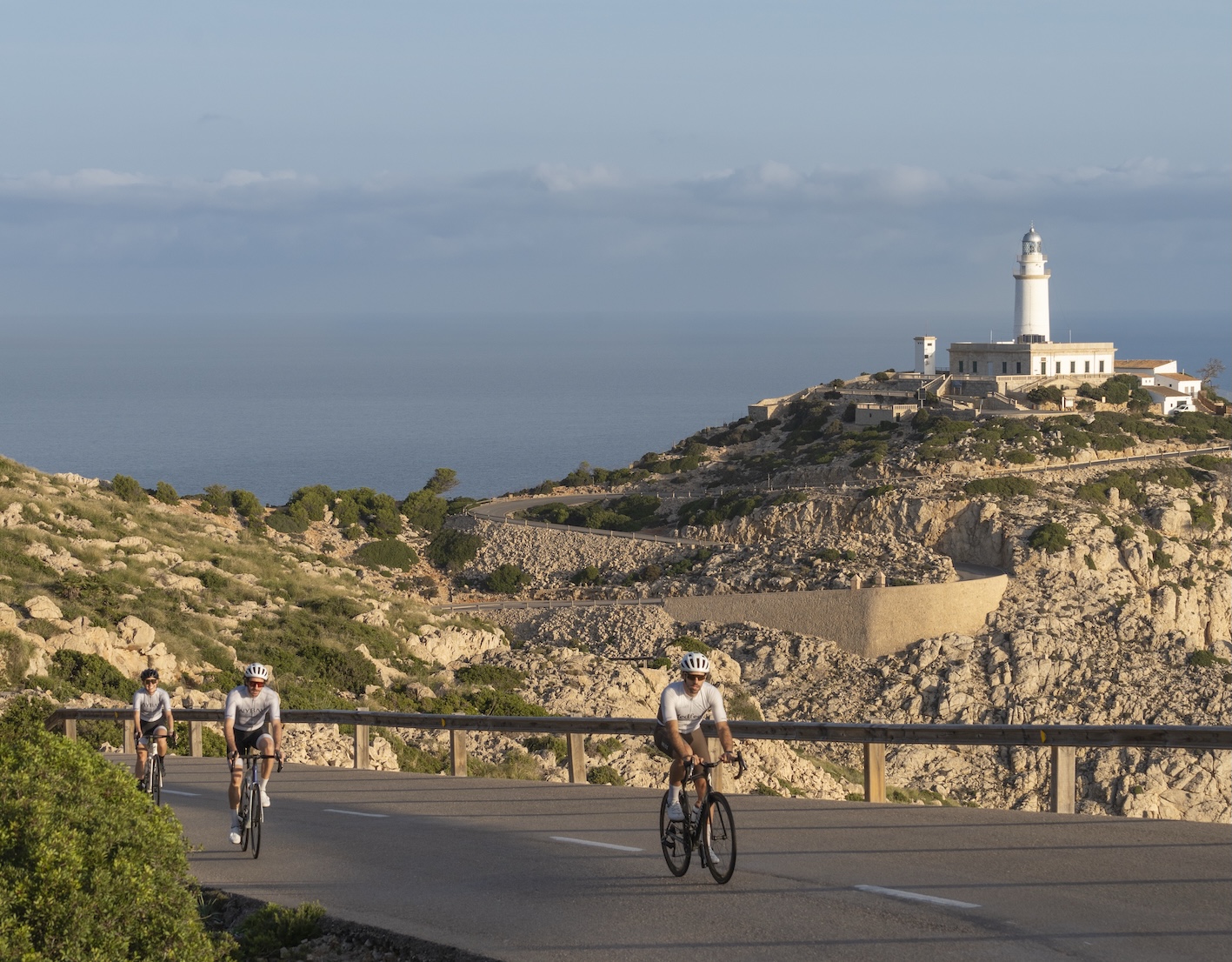
| Start / Finish | Port de Pollença → Formentor lighthouse |
| Distance | 10.8 km one way |
| Average gradient | 2.9% overall — undulating, not steady |
| Elevation gain | 309 m |
| Best for | Riders who rate scenery and photography as highly as pure climbing numbers |
Don't read that 2.9% average and assume Formentor is easy — it's the classic case of an average gradient hiding the real profile. The road opens with Coll de la Creueta, a proper 3.4 km climb at 5.8% that leads straight to the Mirador Es Colomer — the viewpoint over the Formentor peninsula that's arguably more photographed than the lighthouse itself, especially at sunrise. From there the road descends toward Formentor Beach before a series of shorter rolling ramps carries you the rest of the way to the lighthouse. Ride it as an out-and-back and the return leg can feel considerably harder than the way out, particularly if you spent too much energy chasing photos on the first climb.
The road is subject to seasonal vehicle restrictions during the busiest months, with bicycles generally exempt — but traffic regulations change year to year, so confirm the current dates before building a departure around them rather than relying on last season's schedule.
Start early — before 8:00 am ideally. Not only for the tour-bus traffic that builds from mid-morning, but because the light on the cliffs in that first hour is the version of this ride people actually remember.
5. Coll de Sa Batalla — The Gateway to the Tramuntana
Coll de Sa Batalla climbs 7.9 km at 5.0% from Caimari to Lluc, gaining 386 m — less famous than Sa Calobra or Puig Major, but the climb that opens the door to both.
| Start / Finish | Caimari → Lluc |
| Distance | 7.9 km |
| Average gradient | 5.0% |
| Elevation gain | 386 m |
| Best for | A manageable, steady warm-up before the bigger climbs it connects to |
The gradient here is moderate and remarkably consistent through forested slopes, which makes Sa Batalla one of the better warm-ups on the island before something harder — our guides use it exactly that way ahead of Puig Major or Sa Calobra, not as a stand-alone destination. There's a genuine café at the top, and from there the road opens onto the roads toward Lluc, Pollença or the approach to Sa Calobra, which is really the point: Sa Batalla's value is as much about what it connects to as the climb itself.
6. Coll de Femenia — The Northern Approach
Coll de Femenia is 7.2 km at 5.7%, gaining 416 m on the road out of Pollença — one of the main gateways into the Tramuntana for anyone based on the north coast.
| Starts from | Pollença side |
| Distance | 7.2 km |
| Average gradient | 5.7% |
| Elevation gain | 416 m |
| Best for | Riders based in Pollença, Port de Pollença or Alcúdia entering the mountains for the first time that day |
Riders sometimes see a shorter figure quoted for this climb — a handful of published guides measure only the steeper upper section rather than the full 7.2 km from the Pollença side, which is why the distance can look inconsistent depending on the source. Surrounded by cliffs and Mediterranean scrub, with light traffic and an excellent surface, it's not usually the headline climb of a Mallorca trip — but it's the natural link between the north coast and the Sa Calobra / Puig Major roads, which is exactly how our guides use it.
7. Coll d'Honor — A Quiet Alternative Near Palma
Coll d'Honor has two real sides worth knowing apart: a short 2.7 km ramp from Bunyola at 4.7%, and a fuller 6.2 km climb from the Alaró/Orient side at 5.8%, gaining 334 m.
| Side | Distance | Gradient | Elevation |
| From Bunyola | 2.7 km | 4.7% | 128 m |
| From Alaró / Orient | 6.2 km | 5.8% | 334 m |
This is the climb most likely to get a visitor lost in translation, because "Coll d'Honor" can mean two genuinely different rides depending which side of it someone means. The short pull up from Bunyola is little more than the final ramp into the pass; the longer, more complete climb runs from the Alaró/Orient side through quieter, wooded terrain that most guests never see because they're focused on the Tramuntana's coastal roads. Either way, it's a moderate, shaded climb that avoids repeating the exposed, high-traffic character of the island's more famous ascents — a good choice for a shorter day, or for a group that's already ridden Sóller and Sa Calobra and wants something different.
8. Sant Salvador — Mallorca's Best Southern Climb
Sant Salvador climbs 4.9 km at 7.0% near Felanitx, gaining 345 m to a hilltop sanctuary — proof that the Tramuntana doesn't have a monopoly on Mallorca's best climbing.
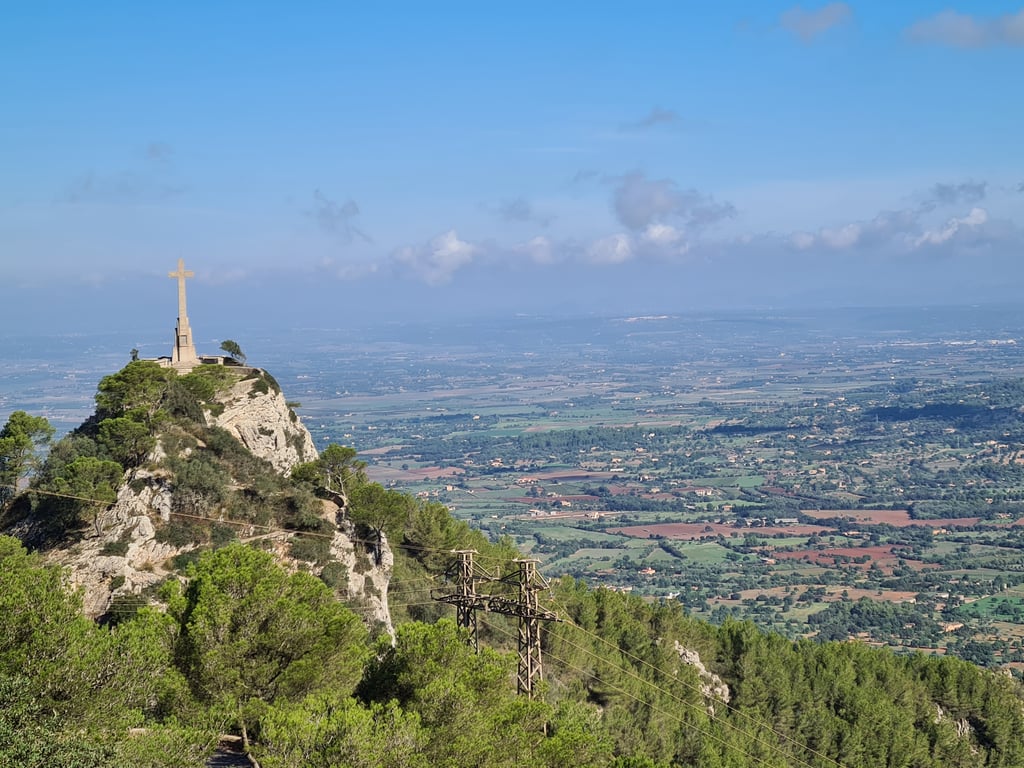
| Start / Finish | Near Felanitx → Santuari de Sant Salvador |
| Distance | 4.9 km |
| Average gradient | 7.0% |
| Elevation gain | 345 m |
| Best for | Riders staying in the southeast, or anyone wanting a short, steep summit finish away from the Tramuntana crowds |
Shorter than Puig Major or Sa Calobra, but steep enough in places to earn its 7.0% average — several ramps push well past that. The southeast of the island trades mountain drama for quieter roads and gentler terrain overall, which makes a focused climb like this stand out more than it would surrounded by bigger Tramuntana passes. It's also worth mentioning alongside Santuari de Cura near Algaida — a similar hilltop-sanctuary climb further west that pairs naturally with Sant Salvador on a day exploring the island's quieter half.
How Difficult Are Mallorca's Climbs?
Mallorca gets called an "easy" climbing destination because the gradients are generally moderate, and that's only partly true. None of the climbs above hold the sustained 10–12% found on some Alpine or Pyrenean passes — but difficulty on this island comes from somewhere else: the length of the climb, the total elevation gained across a full day, heat and humidity, wind on exposed roads, technical descents, traffic on the popular routes, the distance needed just to reach and return from a climb, and what happens when a day stacks two or three of these together rather than one.
A rider who can hold Puig Major's gradient for 45 minutes can still find themselves in real trouble on a 100 km route that adds Sa Calobra and two smaller climbs on top of it — the individual climb rating and the day's rating are not the same question.
| Rider profile | Suitable climbs |
|---|---|
| Regular recreational cyclist | Cap de Formentor, Coll de Sóller (south), Sant Salvador |
| Fit intermediate rider | Coll de Sa Batalla, Coll de Femenia, Coll d'Honor |
| Strong intermediate rider | Puig Major, Sa Calobra (ridden separately) |
| Advanced / well-prepared rider | Puig Major combined with Sa Calobra, or a Full MA10 in one day |
How to Plan a Mallorca Climbing Holiday
A week built around these eight climbs works best spread across the island rather than repeating the Tramuntana every day. A realistic structure: one day for Sa Calobra on its own (it deserves the full day's energy, not a tired finish to something else), one long mountain day pairing Coll de Sa Batalla into Puig Major, one coastal day at Formentor with the Creueta climb and the Mirador Es Colomer built in, one day around Sóller taking both sides of the Coll, and a lower-key day toward Coll d'Honor or Sant Salvador to let your legs recover before the next big effort.
That's the exact shape of the climbing our own guided tours are built around. The Signature Mallorca Bike Tour (7 nights, 430 km, 4,610 m of climbing) covers most of this list across a full week with hotel logistics and support already worked out. If you want the complete set in one trip, the Mallorca Epic Island Cycling Loop (8 days, 6,000 m elevation, rated for experienced riders) is the one we point serious climbers toward. For a shorter first taste, the Classic Mallorca Bike Short Tour (5 nights, 3,290 m) covers Sóller, Sa Batalla and the coastal roads without demanding a full week away.
Best Bases for Cycling the Climbs
Where you sleep decides how much of every riding day gets spent on a bike instead of in a transfer. For the north-coast climbs — Formentor, Coll de la Creueta, Coll de Femenia — basing in Pollença or Cala Sant Vicenç puts you at the start of the Formentor road within minutes; El Vicenç de la Mar in Cala Sant Vicenç and Can Aulí in Pollença are two of the properties we use most for this stretch of the island.
For Puig Major and both sides of Coll de Sóller, Sóller and Port de Sóller sit at the base of everything — Hotel Espléndido in Port de Sóller saves you the transfer entirely on your Puig Major morning. Sa Calobra doesn't have a base of its own — every route to it climbs Coll des Reis first, which is exactly why it's worth pairing with a Sóller or Pollença stay rather than trying to reach it cold.
When Is the Best Time to Ride?
February to May and September to November give the most reliable climbing temperatures, generally 12–22°C. July and August push past 30°C on exposed climbs like Puig Major and Sa Calobra by mid-morning — rideable, but it changes the day: earlier starts, more water, and a different pace than the numbers above assume.
Ride Mallorca's Climbs with Medfeel
Every figure in this guide comes from roads our own guides have ridden, repeatedly, not from a single pass through a route-planning tool. Medfeel builds guided and self-guided cycling holidays around these exact climbs — curated hotels, GPX-verified routes and the kind of local knowledge that tells you which side of Coll de Sóller to take and when to leave for Formentor.
FAQ: Mallorca Cycling Climbs
What is the hardest climb in Mallorca?
By sustained difficulty, Sa Calobra (9.5 km, 7.2%, 660 m) and Puig Major (14.4 km, 5.7%, 815 m) are Mallorca's two defining climbs. Sa Calobra is steeper and harder pound-for-pound; Puig Major is longer and demands better pacing. Combined in one day, they're the toughest single ride on the island.
How many hairpins does Sa Calobra have?
26, cut into the limestone cliffs above the cove, including the famous "tie-knot" curve where the road passes underneath itself.
Which side of Coll de Sóller should I ride?
The north side from Bunyola (8.9 km, 5.3%) is longer, quieter and more scenic, with over 50 hairpins through olive groves. The south side from Sóller (5.0 km, 5.1%) is shorter and features the switchbacks most photos show. Either works; the north gives you the fuller climb.
Can beginners cycle Mallorca's climbs?
Yes, selectively. Cap de Formentor, the south side of Coll de Sóller and Sant Salvador suit a regular recreational cyclist. Sa Calobra and Puig Major reward a strong intermediate level or better — not because the gradient is extreme, but because of the sustained effort and, for Sa Calobra, the commitment of the climb back out.
What is the best time of year to climb in Mallorca?
February–May and September–November, with temperatures generally 12–22°C. July and August exceed 30°C on exposed climbs like Puig Major and Sa Calobra by mid-morning.
Is the road to Cap de Formentor closed to traffic?
The road carries seasonal vehicle restrictions during the busiest months of the year, with cyclists generally unaffected — but the exact dates and hours are set annually, so confirm the current-year schedule before planning around it rather than relying on a previous season's dates.
Why do published figures for the same climb sometimes disagree?
Almost always because of where the measurement starts and ends. Sa Calobra, Puig Major and Coll de Sóller show the widest spread across published sources because guides differ on whether to include the final ramp near the top, where exactly "the valley" ends, or which of two genuinely different sides they're describing. The figures in this guide are Medfeel's own, measured on the specific segment named in each section.