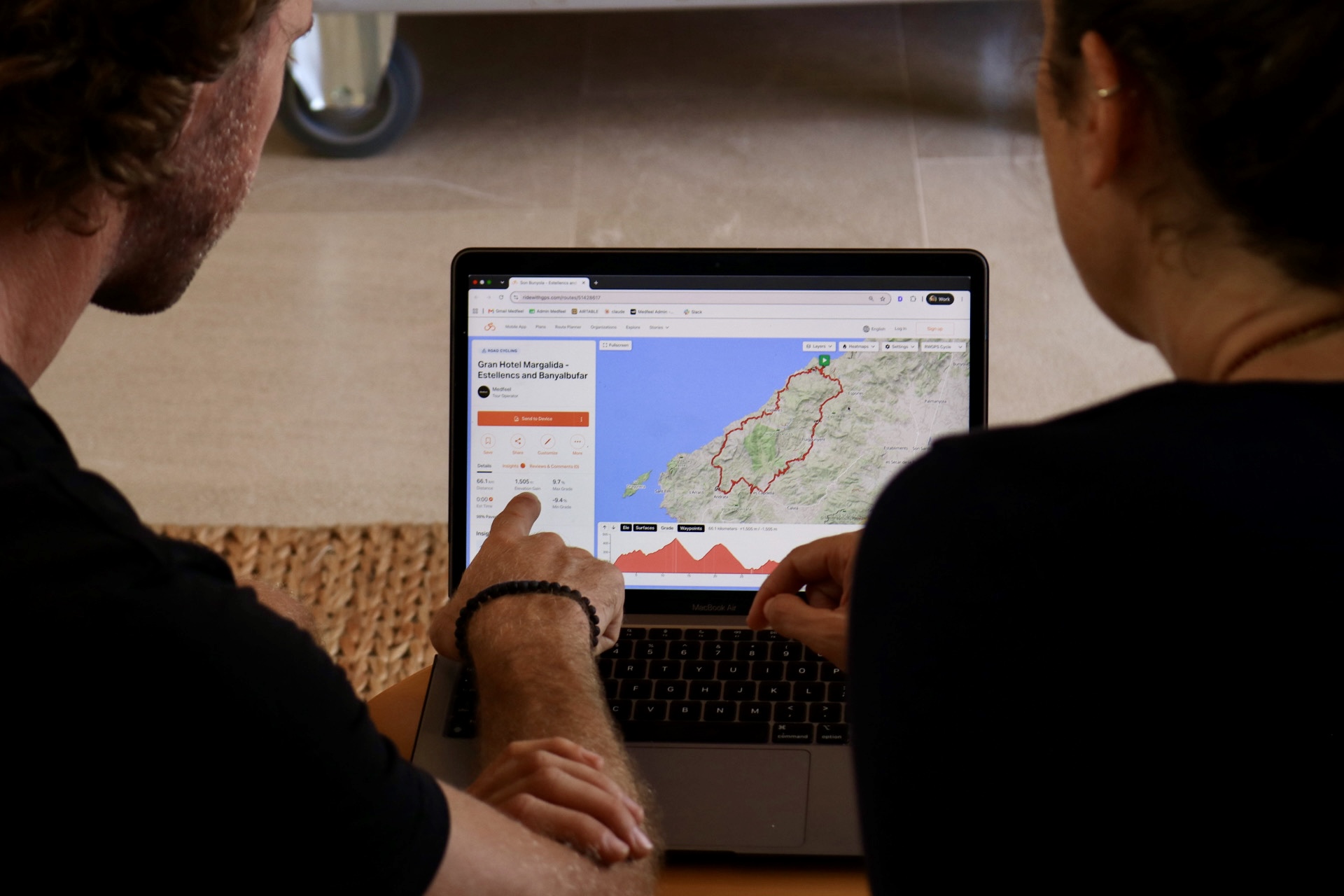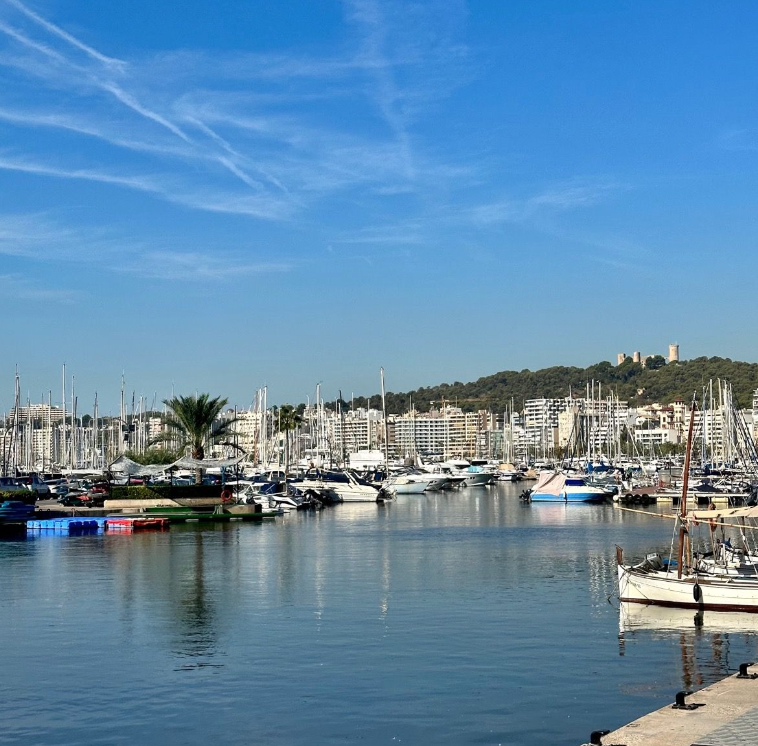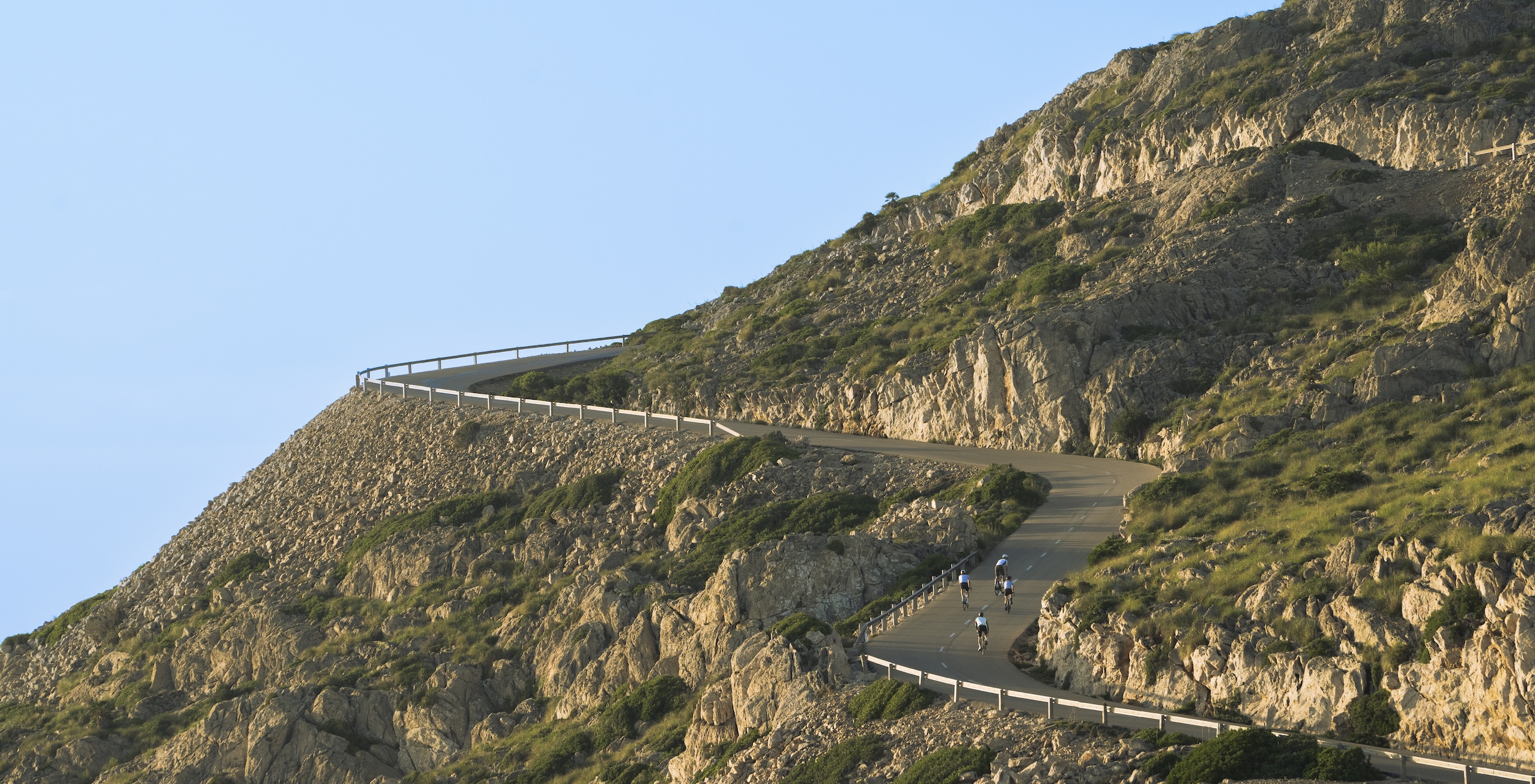
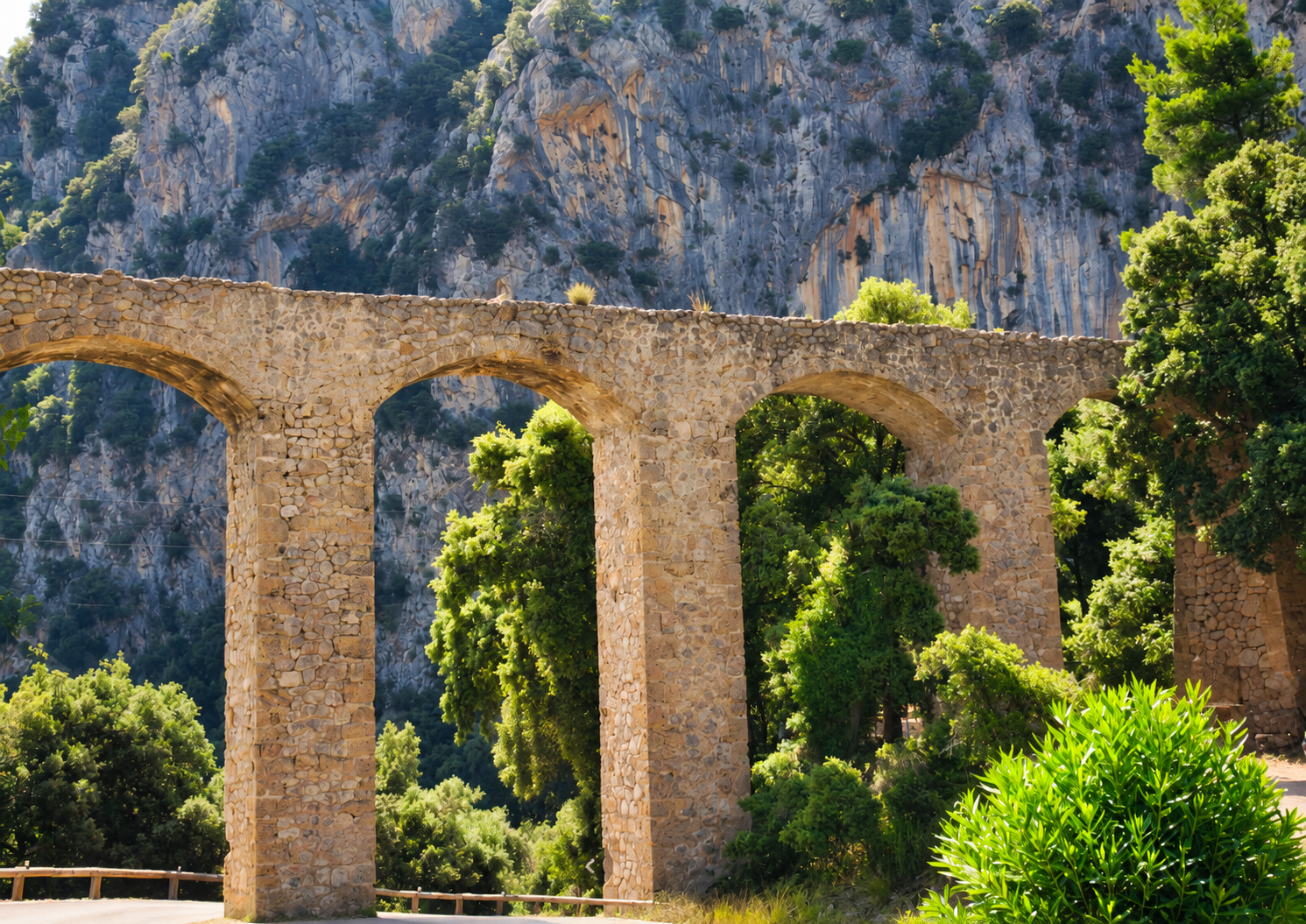
Smooth tarmac, quiet climbs, and real road bikes — what riding Mallorca on the drops actually looks like.
Cycling Holidays · Mallorca · 20 min readQuick answer
- Five of Medfeel's six Mallorca tours are pure road cycling, built around Serra de Tramuntana climbs rated Cat1 to Cat4 — from Coll d'Honor (334 m) up to Puig Major (815 m).
- Rental road bikes are real hardware: a Trek Domane SL6 with Shimano 105 Di2 from around €44 a day, or a Cannondale Supersix EVO with Shimano Ultegra Di2 from around €65 a day.
- Tours run from a 3-day taste (Weekend Cycling Escape, €950) to a full week of the island's marquee climbs (Signature Tour or Tramuntana Luxury Ride, from €2,320).
- The most reliable riding windows are April–June and September–October, when the Tramuntana's climbs are quiet and the heat is manageable.
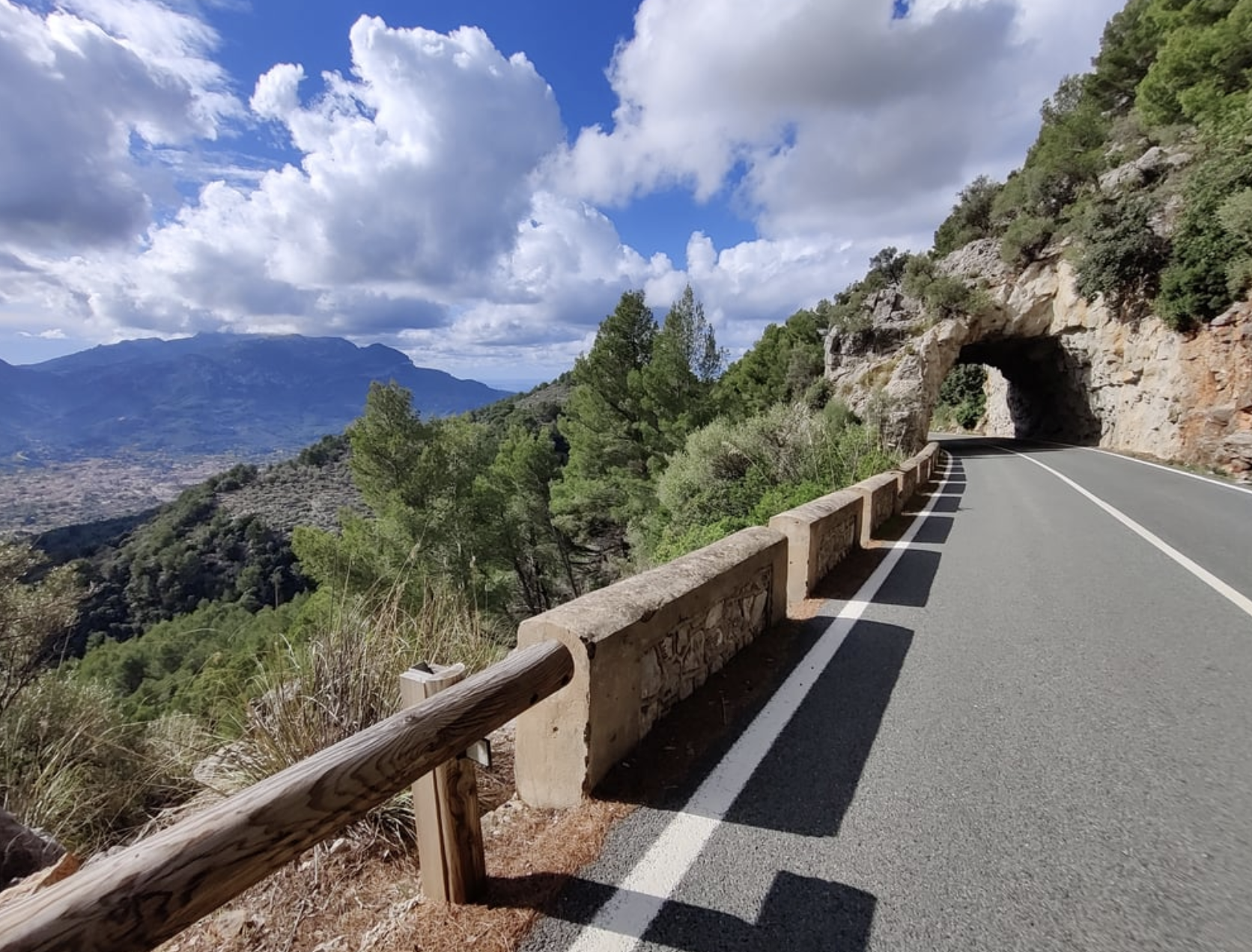
Mallorca's reputation as a road-cycling island isn't hype. It's low-traffic mountain roads, well-surfaced tarmac through the Serra de Tramuntana, and a training-camp culture that's brought WorldTour teams here every winter for over a decade — combined with a compact island size that lets you ride a serious mountain day, a coastal loop and a gentle recovery ride through the interior all within the same week, without ever changing islands.
This is the complete guide to what road cycling actually looks like here: the climbs worth knowing by name, the bikes you'll actually ride, where to base yourself, when to come, and which Medfeel tour matches your legs rather than your ambitions for them.
Why Mallorca Is a Road Cyclist's Island
The Serra de Tramuntana runs the length of the island's northwest coast, and its roads were built for cars and village traffic, not for cycling tourism — which is exactly why they work so well for it. Narrow, well-surfaced, and largely free of the truck traffic that spoils mainland climbs, they string together climbs from Cat4 (a few hundred metres, gentle) up to Cat1 (sustained efforts over 600 m of gain). Every Medfeel road tour is built from this same roster of real, named climbs — not generic "mountain roads" but specific ones with their own character.
It's also not only a mountain destination. Alongside the Tramuntana, there's quiet rolling riding through inland towns like Inca, scenic coastal roads in the south and southwest, and a well-developed network of bike-friendly hotels, cafés and rental support built specifically around cyclists. That combination — real mountains when you want them, real recovery riding when you don't — is what separates Mallorca from a destination that's just one famous climb with a hotel nearby.
The Climbs a Road Cyclist Rides Here
| Climb | Category | Length | Elevation gain | Avg. gradient |
|---|---|---|---|---|
| Puig Major (from Sóller) | Cat1 | 14.4 km | 815 m | 5.7% |
| Coll des Reis (Sa Calobra) | Cat1 | 9.5 km | 660 m | 7.2% |
| Coll de Sóller (north) | Cat2 | 8.9 km | 473 m | 5.3% |
| Coll de Sa Batalla | Cat2 | 7.9 km | 386 m | 5.0% |
| Cap de Formentor | Cat3 | 10.8 km | 309 m | 2.9% |
Hardest by elevation gain is Puig Major: 815 m over 14.4 km from Sóller, a long, sustained effort at a steady 5.7% average rather than a punishingly steep one — it rewards even pacing more than raw power. Hardest by average gradient is Sa Calobra: 9.5 km at 7.2% on average, with ramps toward 11–12% near the top. Riding both in the same day is a genuine test, and one we only recommend once a group has a mountain day or two already in their legs.
Sa Calobra (officially Coll des Reis) is also Mallorca's most photographed and most famous climb, and it earns that reputation honestly: the road drops from the pass to sea level through 26 hairpin bends carved into limestone cliffs, including the celebrated "tie-knot" bend where the road passes beneath itself. There's no way out of the cove except back up the same 9.5 km — every ride here is a commitment, not a casual detour. Our own advice: treat it as the day's main event rather than an add-on, start early, and carry more water than you think you'll need, since there's no refill point on the climb itself. Coll de Sóller's north side has its own quieter claim to fame — more than 50 hairpins between Bunyola and Sóller on a road that's closed to heavy traffic and largely forgotten next to its more famous neighbours.
For the fuller list of climbs Medfeel guides ride regularly, see our complete guide to Mallorca's best climbs.
The Bikes: What You're Actually Riding
Medfeel's road rental fleet is Trek and Cannondale, not generic hire-shop bikes, and pricing runs by day-rate rather than a flat trip fee, dropping the longer you rent:
| Model | Groupset | Day rate (approx.) |
|---|---|---|
| Trek Domane SL6 GEN4 | Shimano 105 Di2 | €44-64 |
| Trek Madone SL6 GEN 8 | Shimano 105 Di2 | €47-69 |
| Cannondale Supersix EVO Carbon 2 | Shimano Ultegra Di2 | €65-89 |
Sizing runs from XS to XL (or, for the Domane SL6, by frame centimetres), so fit isn't an afterthought — it's part of the booking. Renting is usually the simpler choice for a holiday: bikes are delivered and fitted at your hotel, with helmet, pedals and daily insurance included, and there's no flight bike-bag logistics to manage. Bringing your own still makes sense if you're particular about your position and components, already run a specific bike-fitting setup, or are training for a specific event — just budget time for packing, transfers and a pre-ride mechanical check on arrival.
On gearing: a compact or semi-compact setup — 50/34 chainrings with an 11-30 or 11-32 cassette — suits most riders on these climbs. If you're not a strong climber, or you simply prefer a lower cadence on the steeper ramps of Sa Calobra or Puig Major, ask for an 11-34 cassette when you book. There's no advantage to a harder gear that has your cadence collapsing halfway up the mountain.
If you'd rather not ride the climbs above on your own legs at all, the same routes are also ridden on Trek e-bikes on the Easygoing Tour; we compare that trade-off directly in our guide to Mallorca tours for every level.
Matching a Road Tour to Your Legs
| Tour | Days / Riding days | Distance / Elevation | From |
|---|---|---|---|
| Weekend Cycling Escape | 3 / 2 | 130 km / 1,850 m | €950 |
| Classic Bike Short Tour | 5 / 3 | 330 km / 3,290 m | €1,250 |
| Signature Mallorca Bike Tour | 7 / 5 | 430 km / 4,610 m | €2,320 |
| Tramuntana Luxury Ride | 7 / 5 | 455 km / 4,670 m | €4,850 |
| Epic Island Cycling Loop | 8 / 6 | 375 km / 6,000 m | €5,850 |
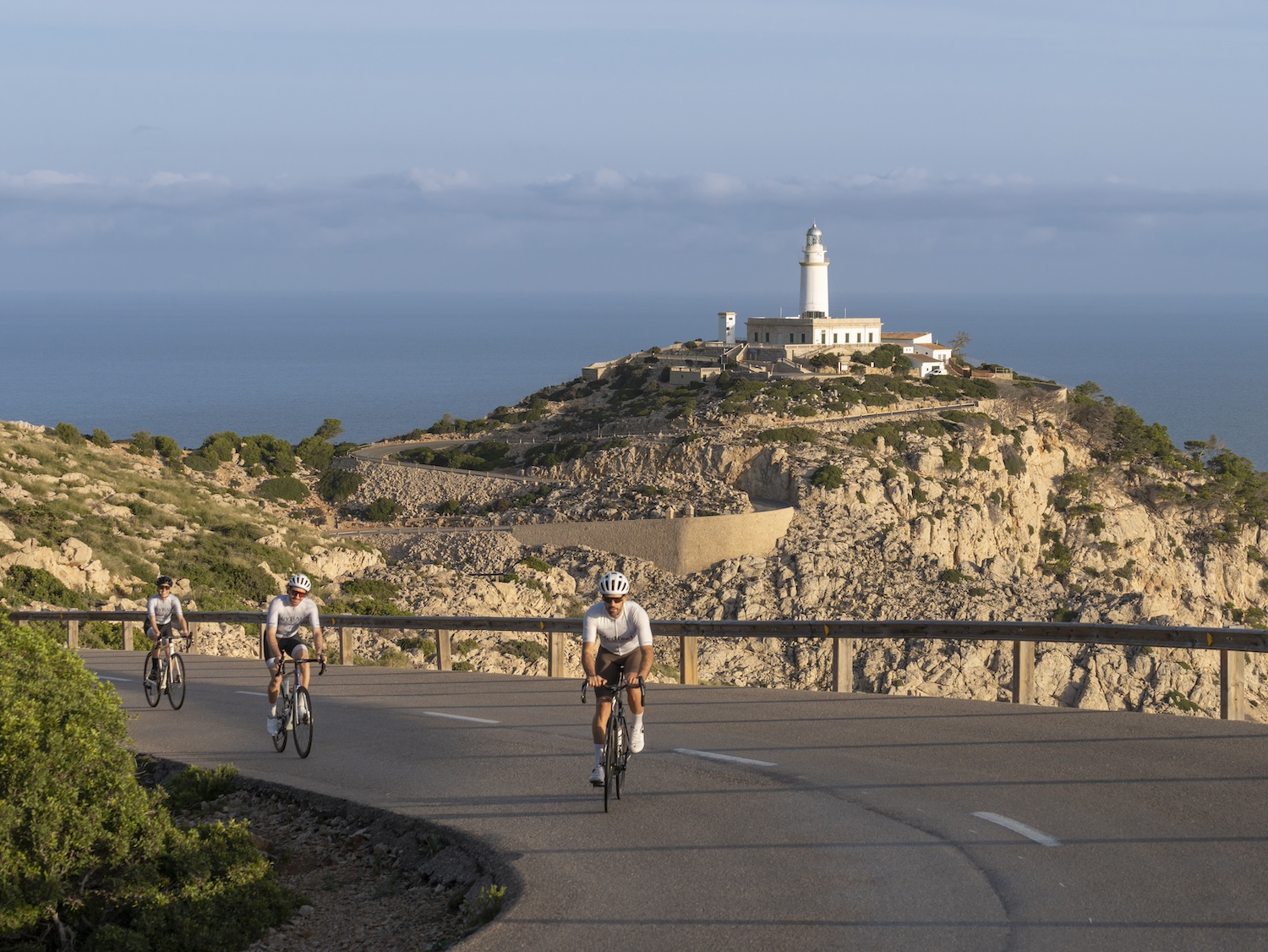
A rider comfortable with a few big climbing days but not a full week of them usually starts with the Classic Bike Short Tour; a rider building toward a real week-long block goes straight for the Signature Tour or, for a step up in comfort and pace, the Tramuntana Luxury Ride. Every one of these can run fully guided or self-guided with GPX routes and full logistics support — see our private-versus-group comparison and our guide to designing a private ride if you want more control over the itinerary. Riders training toward a specific goal often go further still — see our piece on the routes WorldTour riders like Remco Evenepoel train on in Mallorca.
Where to Base Yourself
| Base | Best for | Cycling advantages |
|---|---|---|
| Pollença / Port de Pollença | First-time visitors, mixed groups | Cap de Formentor, Coll de Femenía, easy access north into the Tramuntana |
| Sóller / Port de Sóller | Mountain-focused riders | Puig Major, both sides of Coll de Sóller, and the west coast on your doorstep |
| Deià | Private groups wanting quiet luxury | Same Tramuntana roads, a smaller and more intimate base |
| Palma | Short stays, mixed-interest groups | City and culture alongside routes into the interior and south |
| Calvià | Combining coast and foothills | Southwest coast roads plus medium-intensity climbs inland |
Pollença is usually the most practical first base — it gives access to both classic mountain routes and more relaxed northern roads. Sóller is the better choice if your priority is direct access to the Tramuntana itself. Medfeel's Signature Mallorca Bike Tour combines several of these across one itinerary, so you experience different parts of the island without the same hotel every night.
When to Ride: Best Time of Year
| Period | What to expect |
|---|---|
| February | Quiet roads and green landscapes, but cooler and less predictable mountain weather |
| March–May | Excellent conditions for climbing and long road rides, improving through May |
| June | Warm and generally reliable; early starts become worthwhile |
| July–August | Hot; start at sunrise and avoid exposed climbs in the middle of the day |
| September–October | Warm and comfortable, ideal for combining riding with a swim afterwards |
| November | Quiet roads and mild days, with shorter daylight |
| December–January | Ridable, but mountain conditions turn cooler, windier and more variable |
In summer, a route that feels comfortable at 8:00 a.m. can turn uncomfortably hot by midday; in winter, conditions can be pleasant on the coast while noticeably colder near Puig Major and the higher stretches of the Tramuntana. For the full picture, see our month-by-month guide to cycling in Mallorca and our closer look at riding in October, November and December.
Getting Ready: Fitness, Safety & What to Carry
How fit do you need to be?
You don't need to be a racer, but you should be honest with yourself about your normal riding distance. For a comfortable week on a tour like the Signature Mallorca Bike Tour — 430 km and 4,610 m of climbing across five riding days, with a recovery day built in — most guests are comfortable with three to four hours in the saddle, riding on consecutive days, and a sustained 45–60 minute climb without stopping. If that sounds like a stretch, start with the Classic Bike Short Tour, or ask about the e-bike option, rather than going straight into a full week of Tramuntana days. Our guide to how many days you actually need goes deeper on matching trip length to fitness.
Safety, lights & what to carry
Mallorca's mountain roads are public roads, not a closed circuit, so ride them accordingly: keep groups compact, ride single file when traffic approaches, and descend to the conditions rather than your maximum ability — a damp patch in the shade or gravel washed onto a bend catches out more riders than the gradient does. Spanish traffic law requires vehicles to leave at least 1.5 m when overtaking a cyclist, but front and rear lights are still worth carrying: several Tramuntana tunnels aren't lit, even during the day. On the climbs themselves — especially Sa Calobra and Cap de Formentor — carry more water than the route profile suggests; neither has a reliable refill point along the way, and the heat builds faster than expected once you're out of the morning shade.
Why Ride With Local Guides
The difference between a good week of riding and a memorable one is rarely the number of kilometres. It's the timing, the pacing, which café you stop at, and the decision to take one road instead of another — the kind of judgment call that's hard to get from a route sheet alone, and exactly what our own guides bring to every trip.
A few things we tell every group before their first ride:
- Start earlier than feels necessary, especially from June onward.
- Don't make Sa Calobra your first climb of the trip.
- Build in at least one recovery day if you're riding more than three days in a row.
- Carry more water than the route suggests — cafés and fountains aren't guaranteed exactly when you want them.
- Leave room in the itinerary for a swim, a long lunch, or a village you hadn't planned to stop in.
Tell us your FTP, your longest recent ride, or just how you'd describe your current form at Plan Your Trip, and a Medfeel Travel Agent will match the tour, the base and the bike to it.
Frequently Asked Questions
Which Medfeel tours are pure road cycling?
Five of six: the Weekend Cycling Escape, Classic Bike Short Tour, Signature Mallorca Bike Tour, Tramuntana Luxury Ride, and Epic Island Cycling Loop are all road cycling. The Easygoing Tour runs the same roads on e-bikes.
What's the hardest road climb in Mallorca?
By elevation gain, Puig Major from Sóller (815 m over 14.4 km). By average gradient, Coll des Reis, the descent to Sa Calobra (7.2% over 9.5 km, with ramps up to around 12%) — both are rated Cat1.
What's the most famous cycling climb in Mallorca?
Sa Calobra. The road drops to sea level through 26 hairpin bends cut into limestone cliffs, including the famous "tie-knot" bend where it passes beneath itself, then climbs back out the same way — there's no other route out by bike.
Do I need to bring my own road bike?
No — our rental fleet includes Trek Domane and Madone models with Shimano 105 Di2, and the Cannondale Supersix EVO with Shimano Ultegra Di2, sized from XS to XL. Riders who prefer their own bike can also arrange to bring it; we handle the transfer and a pre-ride mechanical check.
How much does a road bike rental cost per day?
From around €44 a day for a Trek Domane SL6 up to around €89 a day for the Ultegra Di2-equipped Cannondale Supersix EVO, with the daily rate dropping the longer the rental runs.
Is Mallorca's road surface actually good for road bikes?
Yes, generally — the Serra de Tramuntana roads Medfeel rides regularly are well-surfaced and low-traffic, the same reason WorldTour teams base winter training camps here. As on any mountain road, still expect the odd narrow section, gravel near a bend, or a damp patch in the shade — descend to the conditions, not just your legs.
Which road tour includes the most climbing?
The Epic Island Cycling Loop, at 6,000 m across six riding days — nearly double the Tramuntana Luxury Ride's 4,670 m despite covering less total distance.
What's the best time of year for road cycling in Mallorca?
April to June and September to October give the most reliable combination of temperature, daylight and quiet roads. July and August are ridable if you start at sunrise and respect the midday heat — see our month-by-month guide for the detail.
Is Sa Calobra suitable for a first big climb?
Usually not. You descend before you climb, there's no way out but back up the same 9.5 km, and the effort is easy to underestimate. We generally point first-timers toward Cap de Formentor, Coll de Femenía or the south side of Coll de Sóller first, and save Sa Calobra for once you've got a mountain climb or two already in your legs.
Do professional cyclists train in Mallorca?
Yes — the island's mild winters, reliable climbs and short transfers between terrain types have made it a regular pre-season base for WorldTour teams and serious amateurs alike. See our piece on the routes Remco Evenepoel trains on here. You don't need to be anywhere near that level to enjoy the same roads.
Is it safe to cycle in Mallorca?
Generally, yes — it's one of Europe's most cycling-friendly islands, with good surfaces and drivers used to sharing the road, especially in the Tramuntana. Spanish law requires vehicles to leave at least 1.5 m when overtaking a cyclist. As anywhere, ride single file when traffic approaches, use lights in the unlit mountain tunnels, and descend within your limits.
Should I rent a road bike or an e-road bike?
A road bike if you want to ride at your own effort and enjoy the climbing itself; an e-road bike if you're travelling with a stronger or weaker partner, returning to cycling after time off, or would rather prioritise the scenery over the suffering. Both use the same roads — see our guide to Mallorca tours for every level for how the two compare.
Whichever climbs are on your list, a road bike and the right tour are what get you up them properly. Start planning at Plan Your Trip.