
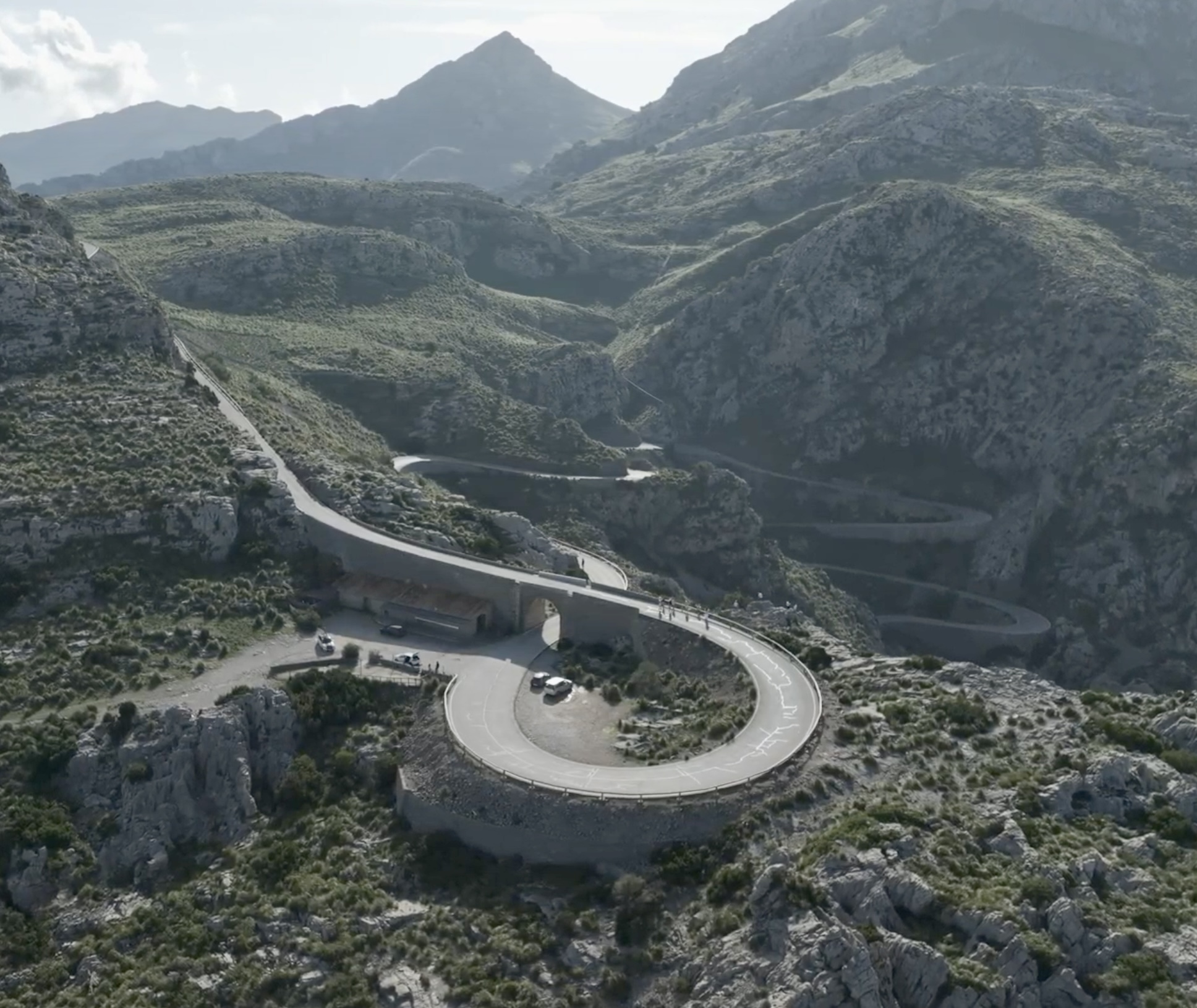
Sa Calobra is 9.5 km at 7.2% back up from the sea, but the climb is only a third of the day: every Medfeel route that includes it climbs 1,830 to 2,898 m in total.
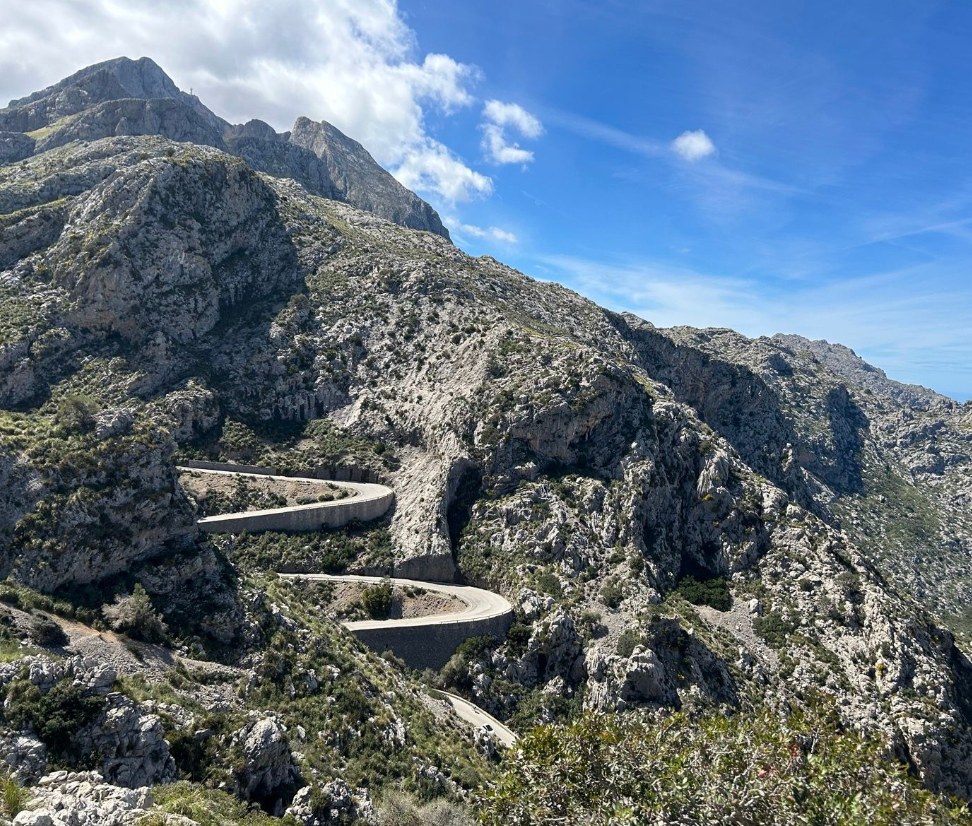
Ride Sa Calobra if you can hold a steady effort for 40 to 80 minutes on a 7% road after a long morning in the mountains: a strong intermediate rider or better, or anyone on an e-bike. The climb gains 660 m through 26 hairpins, and you ride down it first.
Timing matters as much as fitness: spring or autumn, and down the descent before 10am in summer. Below: the climb, the descent and the real routes we use to get there.
Quick answer
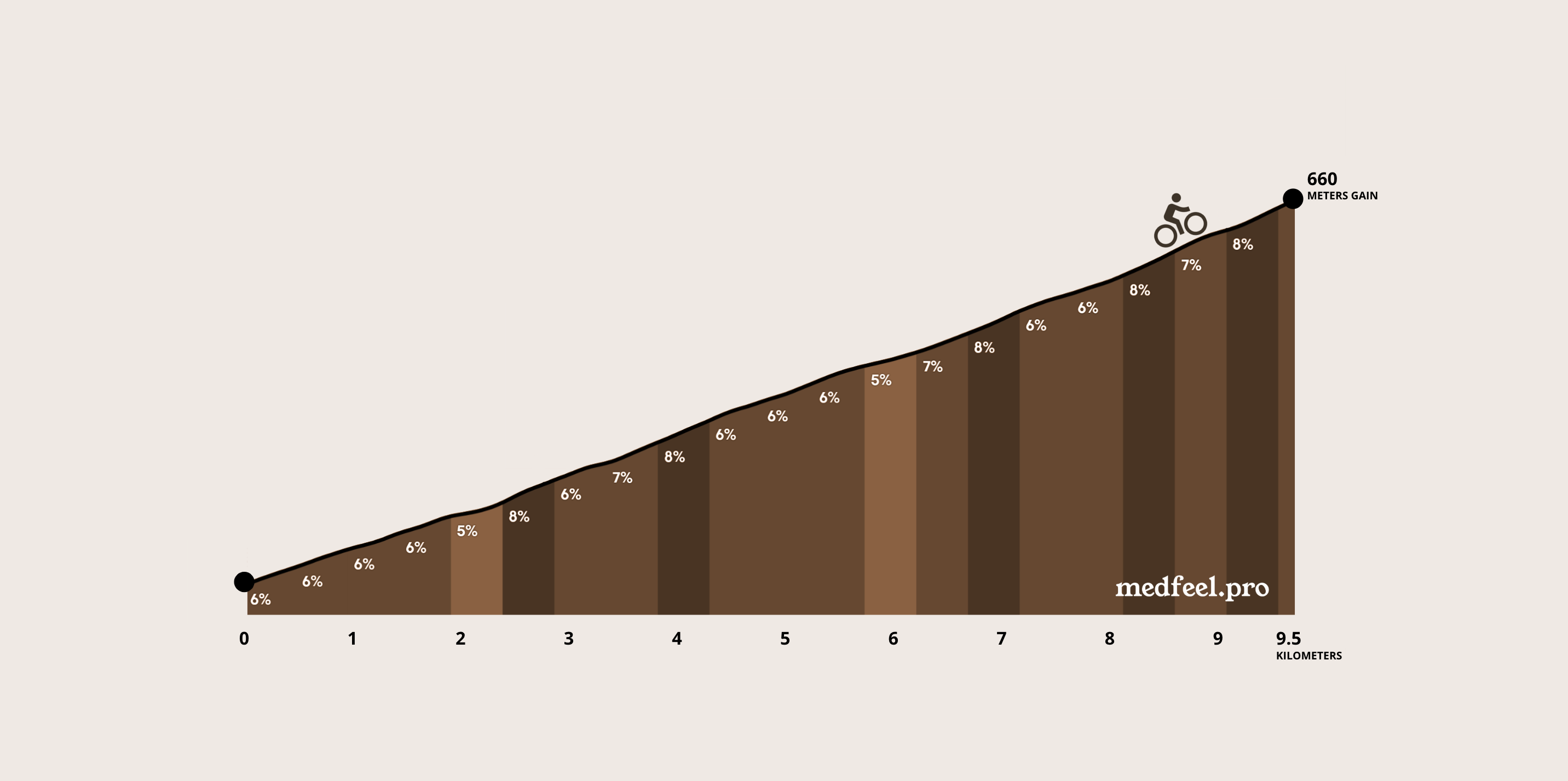
- The climb: 9.5 km at 7.2% average, 660 m of gain, 11.4% at its steepest, from the cove at sea level to Coll des Reis.
- Time on the climb: about 40 minutes at 1,000 m of climbing per hour, 66 minutes at 600 m/h, 79 minutes at 500 m/h.
- The day: no hotel sits at the bottom. Our routes that include it run 77 to 145 km with 1,830 to 2,898 m of climbing.
- When: spring and autumn, and on the road before the coaches. From mid-June to August, be down and climbing before 10am.
- Who: strong intermediate riders and up, or e-bike riders. On our tours it is always an optional extension, decided at the top.
How hard is Sa Calobra?
Sa Calobra is a Category 1 climb: 9.5 km at an average 7.2%, gaining 660 m, with a steepest ramp of 11.4%. It is harder per kilometre than Puig Major (5.7%) and steadier than its numbers suggest. What makes it hard is the setting: you start it at sea level, already tired, with no way out except up.
| Climb | Distance | Avg. | Max. | Gain |
|---|---|---|---|---|
| Sa Calobra (Coll des Reis) | 9.5 km | 7.2% | 11.4% | 660 m |
| Puig Major from Sóller | 14.4 km | 5.7% | 7.0% | 815 m |
| Coll de Sa Batalla | 7.9 km | 5.0% | – | 386 m |
| Acueducto ramp above Escorca | 2.1 km | 7.3% | 9.7% | 151 m |
Once you leave the cove you settle into a 7% rhythm with no flat sections to recover on. Riders who go out hard in the first two kilometres pay for it under the Nus de sa Corbata, the loop near the top where the road passes beneath itself. For a full breakdown of every major climb on the island, see our guide to the best cycling climbs in Mallorca.
How long does the Sa Calobra climb take?
Expect between 40 and 80 minutes, depending on how many metres of height you gain per hour (VAM). A rider holding 1,000 m per hour reaches the top in about 40 minutes; a steady 600 m per hour takes 66 minutes. Know your own climbing rate before you go, and pace to it.
| Climbing rate (VAM) | Time to the top | Typical rider |
|---|---|---|
| 500 m/h | 79 min | Fit leisure rider, steady and seated |
| 600 m/h | 66 min | Regular club rider on a long day |
| 800 m/h | 50 min | Strong amateur riding at threshold |
| 1,000 m/h | 35 min | Well-trained racer |
The times are 660 m divided by the climbing rate, without photo stops. If you don't know your rate, check it on a 20-minute climb at home and take it 10% lower on the day: you will start this one with 50 to 90 km in your legs.
What is the descent to Sa Calobra like?
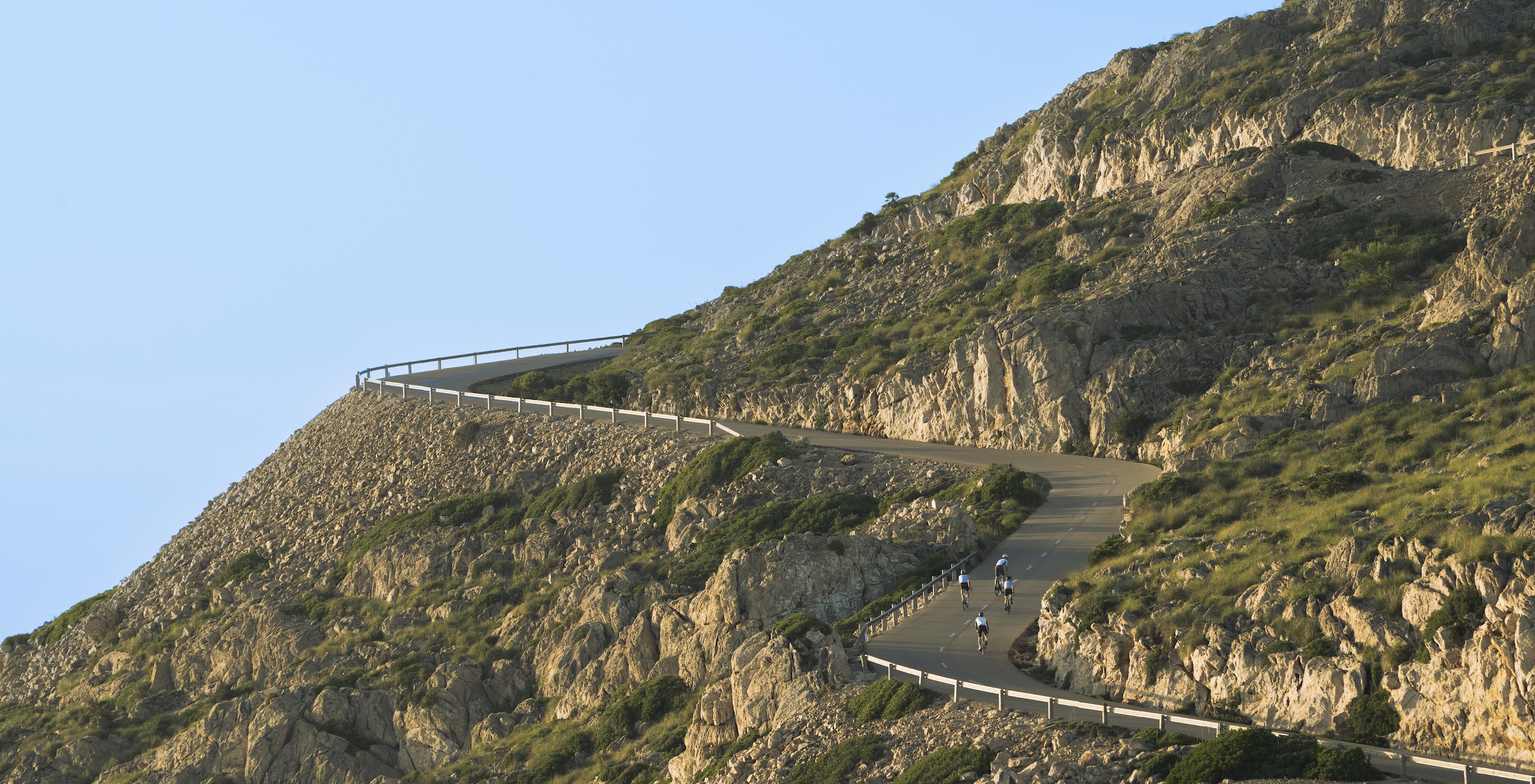
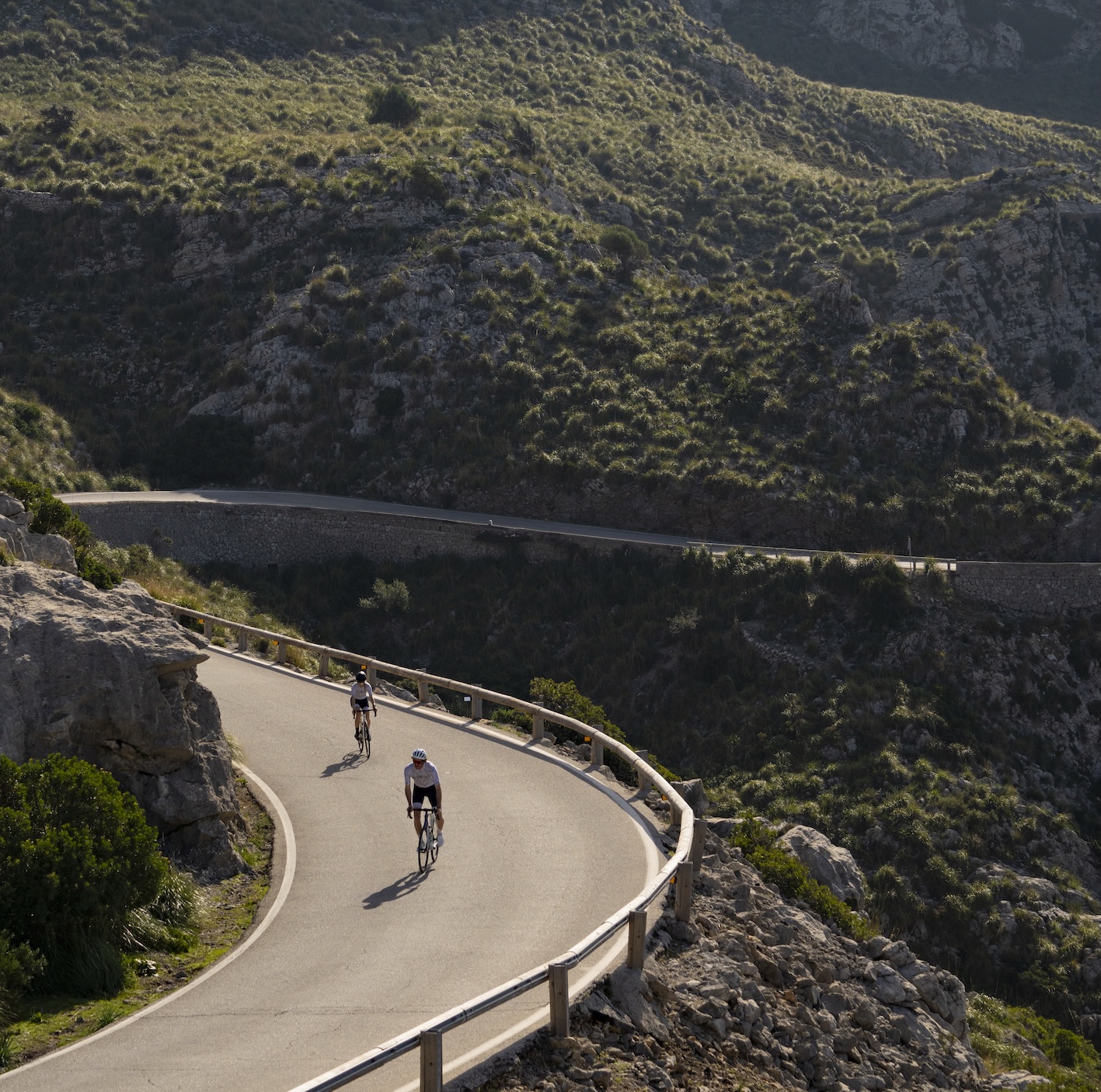
The descent is the same 9.5 km, ridden first, and it asks more of your attention than your legs. It is narrow, has 26 hairpins and is shared with cars, coaches and riders coming up. Ride it at a pace that lets you stop inside the distance you can see, because on most bends that is very little.
Three things catch people out. Coaches: on a hairpin a coach needs the whole road, so wait on the outside of the bend rather than squeeze past. Shade: the cliffs keep parts of the road out of the sun for much of the morning, so in March or November it can be cold and damp when the coast is already warm. Photo stops: stop on a straight, never at the apex of a bend.
How long is a Sa Calobra ride from your hotel?
Count on a full day. No Medfeel hotel sits at the bottom, so the 19 km down and back up is always added to a ride into the Tramuntana. Our routes that include Sa Calobra run from 77 to 145 km and 1,830 to 2,898 m of climbing, and our route files plan six to eight hours for most of them.
| Start (area) | Distance | Climbing | Sa Calobra share |
|---|---|---|---|
| Jumeirah (Port de Sóller), via Puig Major | 77 km | 2,118 m | 31% |
| The Lodge | 84 km | 1,830 m | 36% |
| La Residencia (Deià) | 93 km | 2,405 m | 27% |
| Can Aulí (Pollença) | 94 km | 1,960 m | 34% |
| El Vicenç de la Mar (Cala Sant Vicenç) | 107 km | 2,050 m | 32% |
| Jumeirah (Port de Sóller), via Sa Batalla | 121 km | 2,622 m | 25% |
| Palma old town, via Sa Batalla | 141 km | 2,596 m | 25% |
| Son Bunyola (west coast) | 145 km | 2,898 m | 23% |
"Sa Calobra share" is the climb's 660 m as a percentage of the route's total climbing. The table also tells you where to sleep: 77 km from Port de Sóller, 145 km from the west coast. If Sa Calobra is the ride of your trip, base yourself in Sóller or the north. Our guide to the best cycling bases in Mallorca compares the areas. The full route file for our Sa Batalla and Sa Calobra Medfeel Challenge from Port de Sóller has its own page, and the rest of our rides are on the Mallorca cycling routes page.
When is the best time to ride Sa Calobra?
Ride Sa Calobra in spring (late April to early June) or autumn (mid-September to October), and start the descent early. In those months the climb is cool enough to hold a steady pace. From mid-June to August, be on the way down before 10am: after that, the heat and the coach traffic build together on the same narrow road.
- Time of day: early is better in every month for traffic, and in summer for heat. The exception is winter and early spring, when we wait for the sun to reach the descent before riding down.
- Winter (November to February): quiet roads, but longer shade on the descent and many mountain hotels in the north closed. Coach and boat timetables to the cove, café hours and access on the mountain roads also change outside the summer season, so check them the day before. Ride it from Port de Sóller with full winter layers.
- The Mallorca 312 weekend in April: roads and hotels in the north fill with event riders. Unless you are riding it, pick another day, and check the current year's date.
Weather at the top is not the weather at the coast: the pass sits about 660 m above the cove, and wind and cloud can change in an hour. For the month-by-month picture, see our best time to cycle Mallorca guide.
Where do you decide whether to ride down?
At the top, at Coll des Reis, before the first hairpin. Once you are at the cove, the only way back by bike is the 9.5 km climb, so the decision has to be made with honest legs and a look at the clock. On every Medfeel tour that passes here, Sa Calobra is an optional extension, never a requirement.
Our rule of thumb: if you reach the turn-off with energy, food and at least three hours of daylight to spare, go down. If you are already riding in your easiest gear on the approach from Coll de Sa Batalla (7.9 km at 5.0%) or Puig Major, carry on to Sóller or the north coast and come back another day. That is how it works on our Signature Mallorca Bike Tour: day 3 crosses the Tramuntana (95 km, 2,148 m) to Hotel Espléndido in Port de Sóller, with Sa Calobra offered on the way.
What should you carry, and where can you stop?
Carry two full bottles, food for the climb and a windproof layer. The last reliable stops before the descent are the Sa Batalla café near the top of Coll de Sa Batalla and the Santuari de Lluc. In our experience the cafés at the cove keep seasonal hours, so in winter do not count on them.
- Gearing: a compact chainset (50/34) with at least a 30-tooth sprocket if you expect to climb at 600 m/h or slower. A 7% hour is easier to pace in the right gear.
- Stops worth the time: the Mirador de s'Entreforc above the gorges and, at the cove, the short walk to the mouth of the Torrent de Pareis.

Who should ride Sa Calobra?
- Strong intermediate and experienced riders: yes. Ride it on a day with nothing else big in the legs, from Sóller or the north.
- Fit intermediate riders: yes, on a shorter route such as the 77 km loop from Port de Sóller, and only after a day of easier climbing on the island.
- Newer riders or a partner who rides less: ride it on an e-bike, or ride our Coll de Sa Batalla and Femenia loop from Pollença (52 km, 819 m) and leave Sa Calobra for a later trip.
- July and August, late starters: pick another climb. Coll de Sóller or Formentor at sunrise is a better day.
Want Sa Calobra in your trip? The shortest way in is our Mallorca Weekend Cycling Escape (intermediate level, from €950 per person): day 2 is the Sa Batalla loop from The Lodge (83 km, 2,297 m) with Sa Calobra as the optional extension.
Plan your Mallorca cycling trip with Medfeel and tell us your dates, your level and who is riding.
Prices are from, per person, based on double occupancy. Flights, travel insurance and food and drink beyond breakfast are not included. A guide is optional on every tour, from €280 per guided day, and e-bikes are available. Mountain weather changes quickly: carry a windproof on every Tramuntana ride. We recommend travel insurance.
Frequently asked questions
Can you ride Sa Calobra on an e-bike?
Yes. Our e-bike fleet includes the Trek Domane+ and Checkpoint+ SL 5, and Sa Calobra is one of the days where an e-bike changes the most. Plan the battery for the whole route: the climb is only a quarter to a third of the day's climbing.
Do you need a guide to ride Sa Calobra?
No. The route is easy to follow and every Medfeel tour includes the GPX files. A guide helps with pacing, the timing of the descent and the call at the top. On our tours a guide is optional, at €280, €310 or €340 per day for a short, medium or long ride. Our comparison of guided and self-guided cycling in Mallorca explains which days benefit most.
Can you ride Sa Calobra from Palma?
Yes, but it is a long day: our route from the old town via Sa Batalla is 141 km with 2,596 m of climbing, and our route file plans eight hours. Most riders who stay in Palma do better with a transfer or a night in Sóller or the north.
Is the Sa Calobra road open to cars and coaches?
Yes. It is a public road and the only road access to the cove, so cars and tour coaches use it alongside cyclists, mostly from mid-morning in season. In winter, coach and boat timetables, opening hours at the cove and access on the mountain roads change, and bad weather can close roads for a time, so check current conditions before you ride.
Is Sa Calobra the same climb as Coll des Reis?
Yes. Riders call the climb Sa Calobra after the cove where it starts. The pass at the top is Coll des Reis, which is why our climb page and route files use that name.
Sources and methodology
- Climbs: Medfeel's climb database (distance, average and maximum gradient, elevation gain), checked 28 October 2026.
- Routes: Medfeel's route database, every route linked to the Sa Calobra climb, with distance, elevation gain and planned hours. "Sa Calobra share" is 660 m divided by each route's total climbing.
- Climbing times: calculated as 660 m divided by each climbing rate. They exclude stops.
- Tours and prices: Medfeel's public tours (itineraries, level, inclusions and starting prices), October 2026. Guide prices as confirmed by Medfeel in October 2026.
- Seasonal and traffic advice: our guides' experience on this road with guests. Event dates and traffic rules change each year: check the current year before you travel.