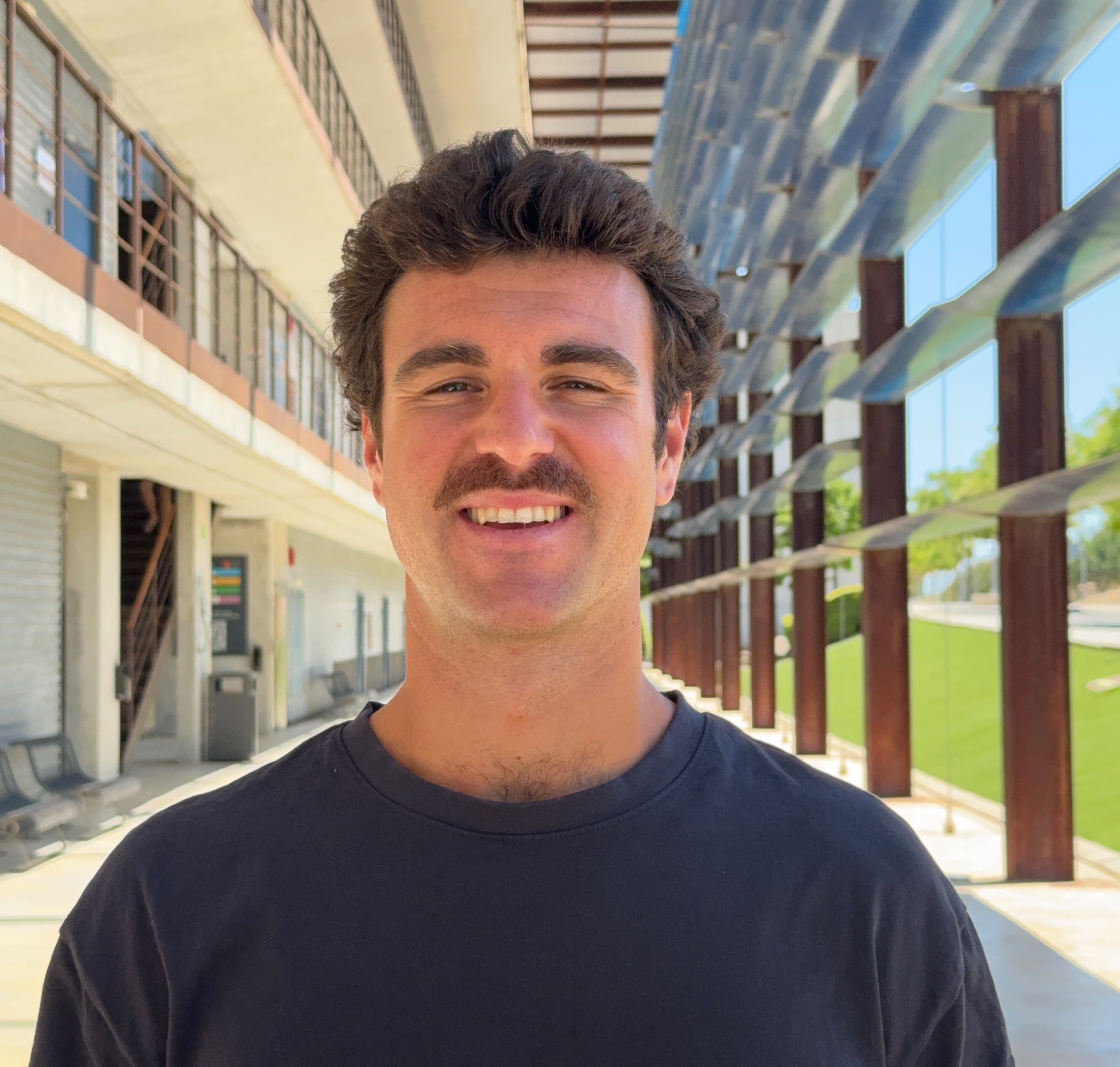
Seven days, three hotels, one crossing of the Serra de Tramuntana — this is the week our own co-founders would ride if they only had one shot at Mallorca.
Cycling Holidays · Mallorca · 9 min readQuick answer
- The best seven-day cycling holiday in Mallorca covers 430 km and 4,610 m of climbing across 5 riding days, moving between just 3 hotels: Pollença, Port de Sóller and Palma.
- The route rides Cap de Formentor on day 2, crosses the Serra de Tramuntana via Coll de Sa Batalla (with Sa Calobra as an optional detour) on day 3, then works south down the west coast through Deià, Valldemossa, Estellencs, Banyalbufar and Andratx.
- One full recovery day is built in on day 4, so the hardest two days are never back to back.
- Best months to ride it: March–June and September–November, when temperatures sit around 15–24°C.
- Medfeel runs this exact route as the Signature Mallorca Bike Tour, from €2,320pp, guided or self-guided.
Five days is enough to sample Mallorca. Seven is enough to actually cross it. This itinerary isn't a "best of" list stitched together from a map — it's the route our co-founder Adrian Casanova has been refining for five years of guiding on this island, built around a simple piece of logic most Mallorca guides skip: put the biggest mountain day early, while the legs are fresh, and save the quietest, most dramatic roads — the west coast switchbacks through Estellencs and Banyalbufar — for the last full day in the saddle, when everyone's fit enough to actually enjoy them.
We move base three times, not seven — Pollença, then Port de Sóller, then Palma — so you're never packing a bag at 6am. And the one climb every visiting cyclist asks about, Sa Calobra, is built in as an option, not an obligation.
The Route at a Glance
| Total distance | 430 km |
| Total elevation gain | 4,610 m |
| Riding days | 5 (out of 7 days / 6 nights) |
| Hotels | 3 — Pollença, Port de Sóller, Palma |
| Level | Intermediate (e-bike option available) |
| Average per riding day | ~86 km / ~922 m |
| From | €2,320 per person |
Your Seven-Day Route, Day by Day
Day 1 — Welcome to Mallorca
You land, and that's it for cycling today. Settle into Can Aulí in the old town of Pollença — a 5-star historic boutique hotel with bike storage, recovery massages and nutrition-focused dining, chosen specifically because you'll want all three by day 3. Bikes are fitted and delivered to the hotel the same afternoon, so tomorrow morning you're straight out the door.
Itinerary day: No riding · Accommodation: Can Aulí, Pollença
Day 2 — Ride to Cap de Formentor
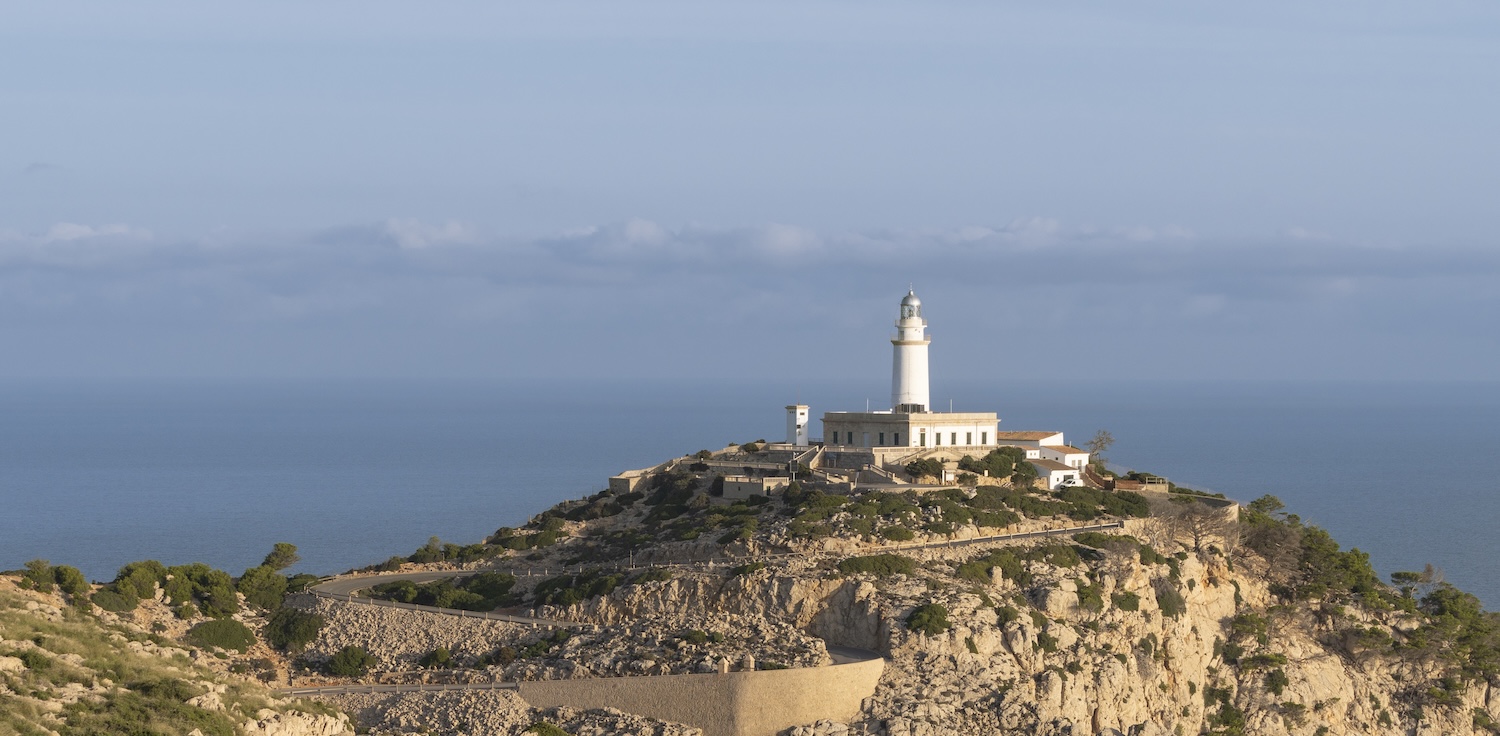
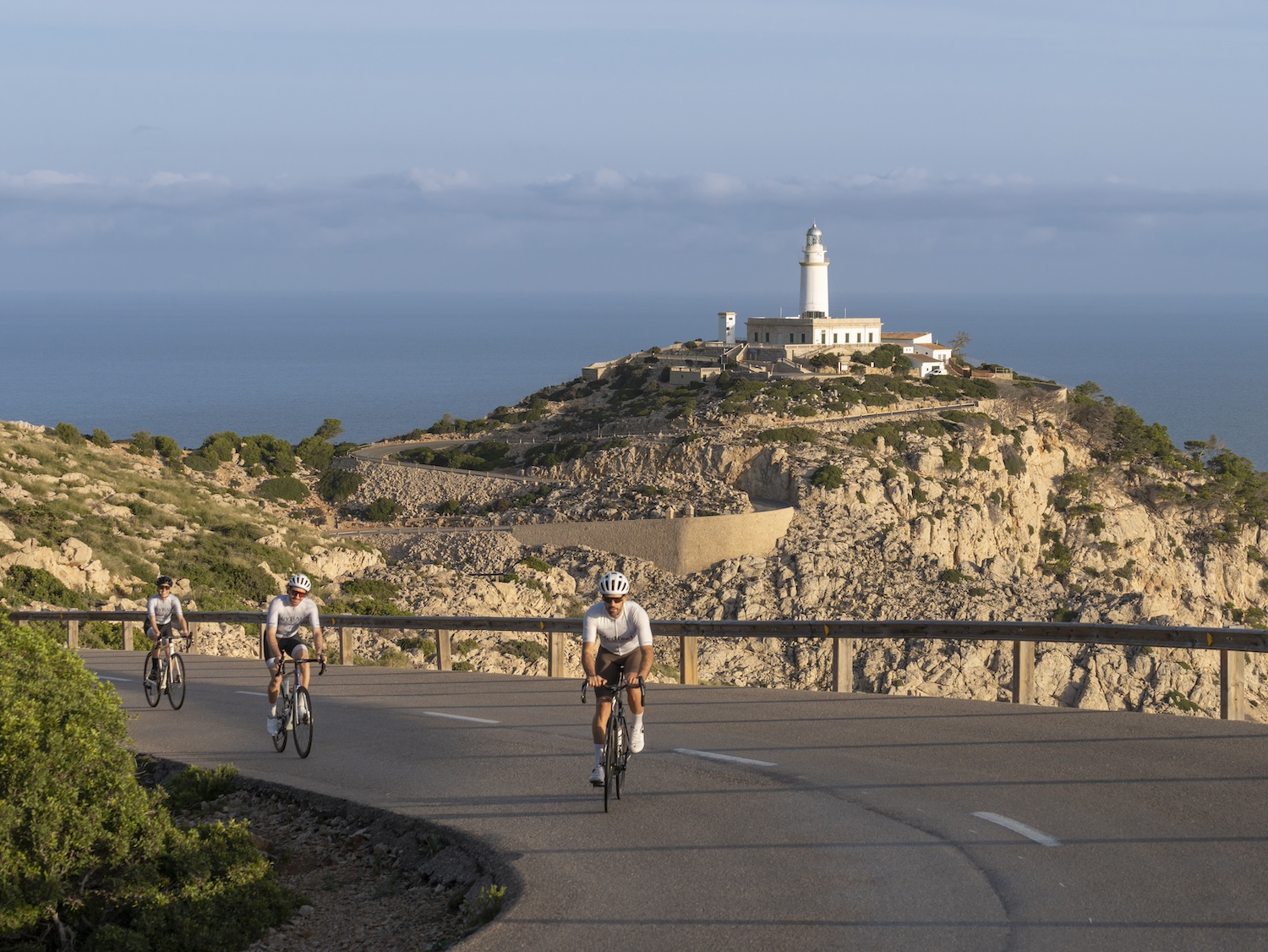
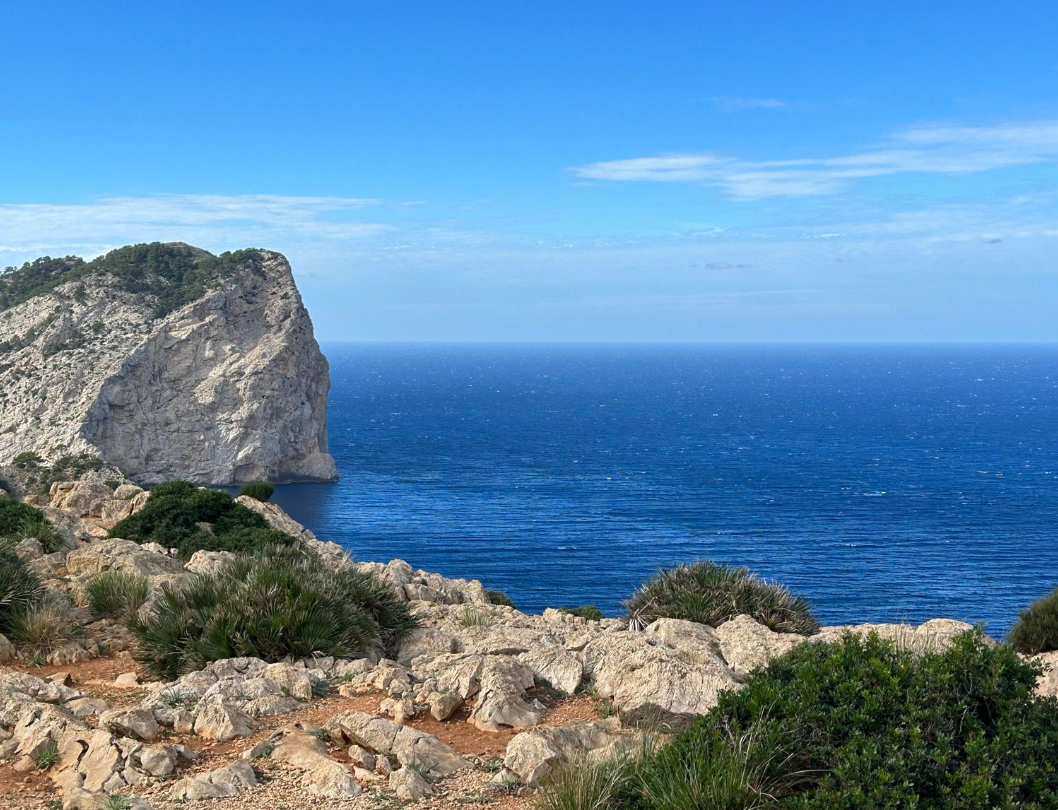
49 km · 1,108 m elevation gain. This is the ride most people book the whole trip for. From Port de Pollença you follow the coast road out onto the Formentor peninsula, passing the Mirador Es Colomer before the final run to the lighthouse. The named climb itself — Cap de Formentor — is 10.8 km at a deceptively gentle 2.9% average, but don't let that fool you: there are ramps up to 18.3% hiding in the middle section, and there's no water refill point anywhere on the climb, so start with full bottles.
Itinerary day: Distance: 49 km · Elevation: 1,108 m · Accommodation: Can Aulí, Pollença
Day 3 — Crossing the Serra de Tramuntana
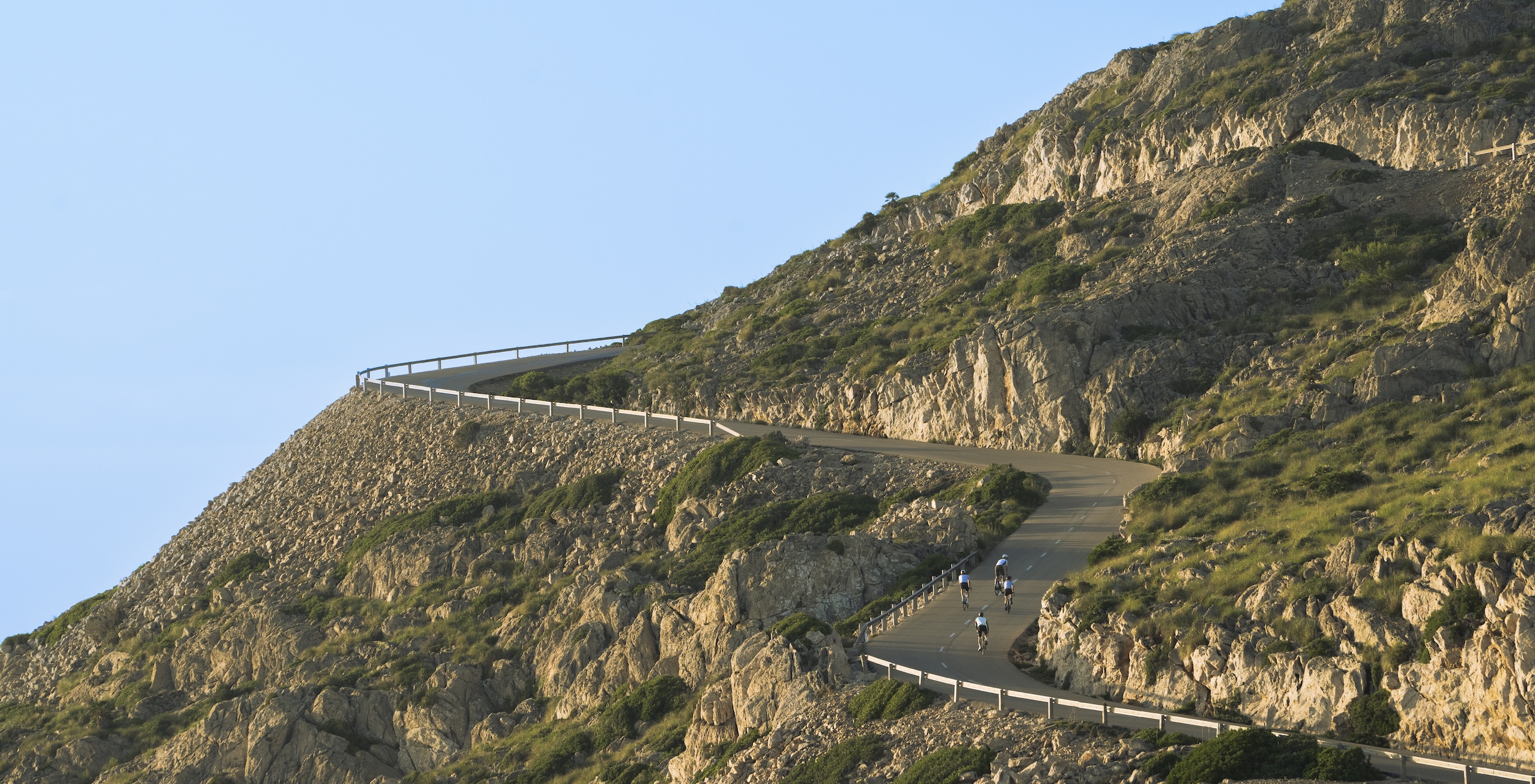
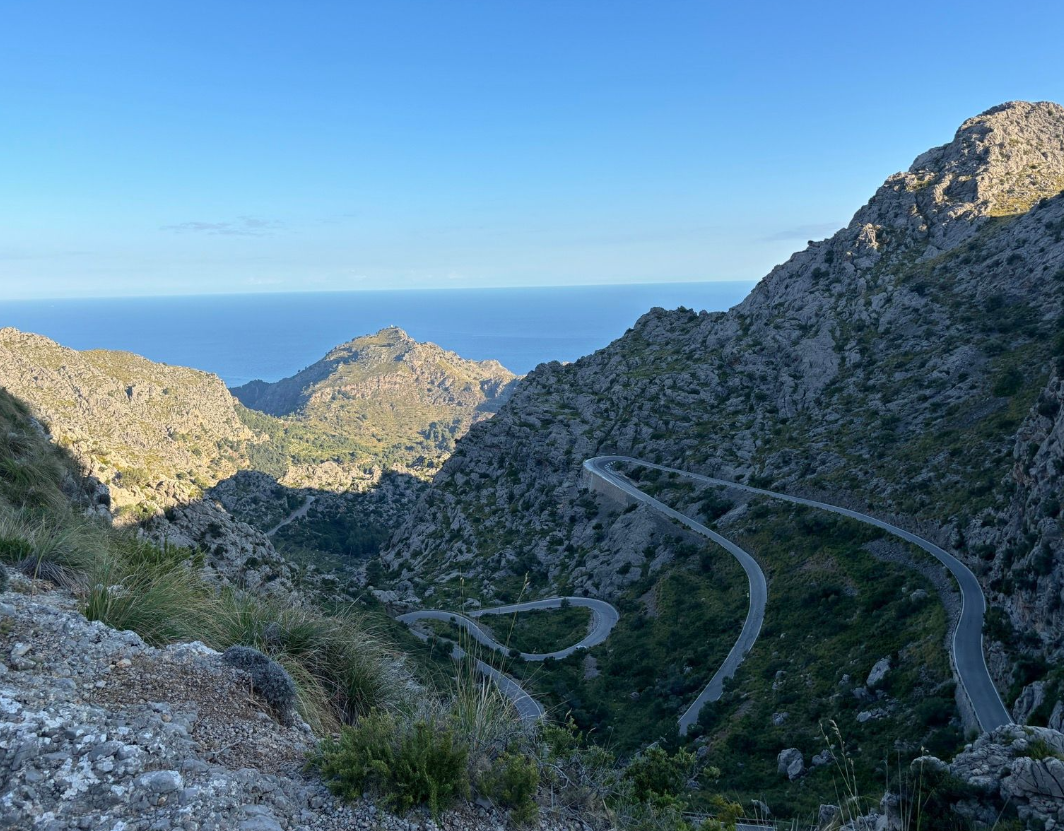
95 km · 2,148 m elevation gain. The hardest day of the week, deliberately scheduled while you're still fresh rather than at the end. The route climbs Coll de Sa Batalla (7.9 km at 5.0%, starting near Caimari, with a café at the summit) before working west toward Sóller. The famous descent to Sa Calobra and its return climb up Coll des Reis — 9.5 km of 26 hairpins at 7.2% average, 11.4% at its steepest — is offered as an optional detour, not a requirement. Riders who'd rather skip the tour-bus traffic at the bottom can bypass it and still finish with a full, hard day in the mountains.
Itinerary day: Distance: 95 km · Elevation: 2,148 m (Sa Calobra detour optional) · Accommodation: Hotel Espléndido, Port de Sóller
Day 4 — Recovery in the Sóller Valley
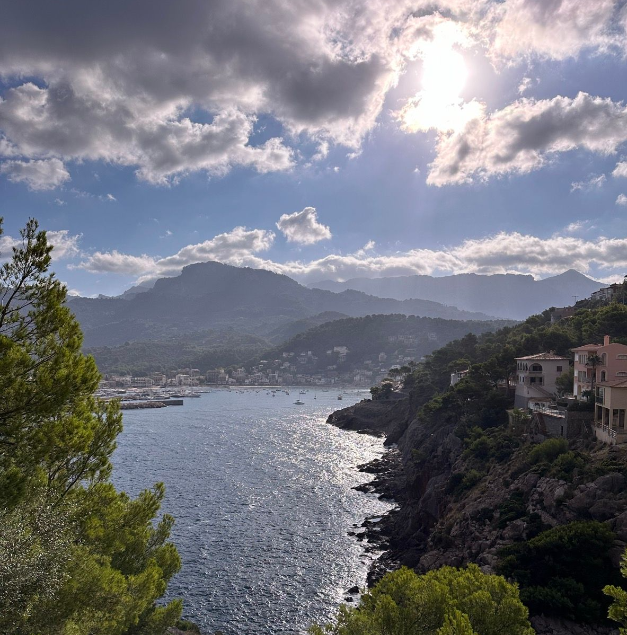
30 km · 320 m elevation gain. A deliberately short, flat day, and the reason yesterday's effort doesn't cost you the rest of the week. Ride out through the orange groves to the villages of Fornalutx and Biniaraix, then loop back via the lighthouse at Far des Cap Gros above Port de Sóller. You'll stay a second night at Hotel Espléndido, which sits on the bay with its own bike maintenance area — useful, since tomorrow starts the second half of the trip.
Itinerary day: Distance: 30 km · Elevation: 320 m · Accommodation: Hotel Espléndido, Port de Sóller
Day 5 — Deià, Valldemossa & Sa Foradada
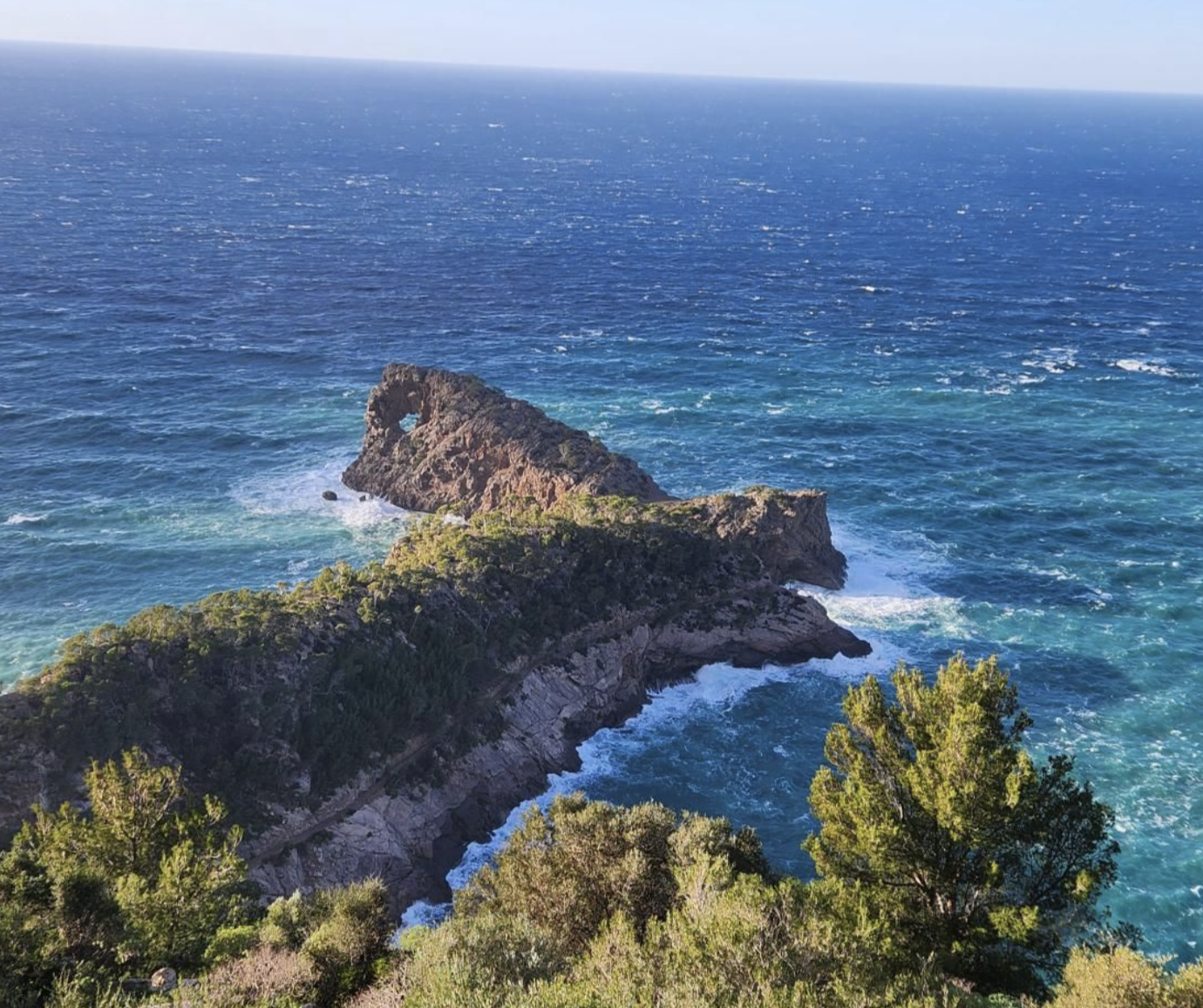
55 km · 1,188 m elevation gain. Legs recovered, you move south through two of the island's most photographed mountain villages. Above Deià, the road climbs Coll Can Costa (Sa Pedrissa) — 6.3 km at 4.9%, cliffside the whole way — before a detour down to Sa Foradada, the natural rock arch that juts into the Mediterranean below the village; it's worth the extra ten minutes off the bike. The day finishes through Valldemossa and down into Palma, where you check into El Llorenç Parc de la Mar in the old town for the final two nights.
Itinerary day: Distance: 55 km · Elevation: 1,188 m · Accommodation: El Llorenç Parc de la Mar, Palma
Day 6 — The Wild West Coast
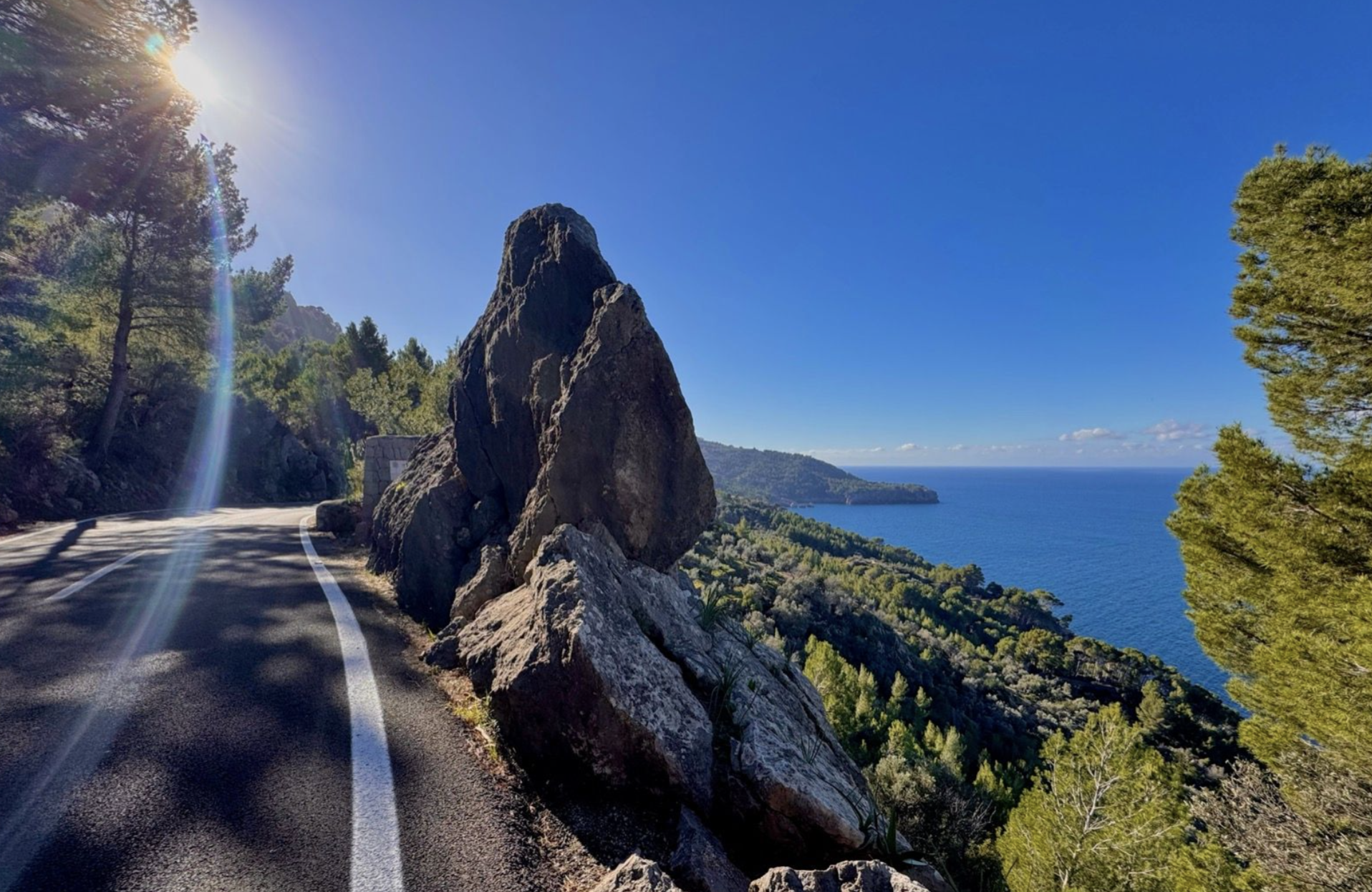
66 km · 1,341 m elevation gain. The last full riding day, and by design the most dramatic. The road runs through Estellencs and Banyalbufar — their terraced hillsides dropping straight to the sea — via two short, punchy climbs: Coll de Sa Gramola (3.5 km, 5.2% average, ramps to 9.6%) and Coll de Sa Bastida (3.1 km, 6.1% average, up to 9.7%). The route finishes through Andratx and back to Palma. It's less famous than Formentor or Sa Calobra, and that's exactly why we put it last — by day 6, most riders tell us it's the road they remember best.
Itinerary day: Distance: 66 km · Elevation: 1,341 m · Accommodation: El Llorenç Parc de la Mar, Palma
Day 7 — Farewell Mallorca
No riding. A last morning to walk Palma's old town or simply have a slow breakfast on the rooftop before your airport transfer.
Itinerary day: No riding · Airport transfer included
Where to Stay Across the Week
The whole point of a three-hotel structure is that each stop earns its place — you're never staying somewhere just because it's on the way.
| Hotel | Town | Stars | Why here |
|---|---|---|---|
| Can Aulí | Pollença | 5-star | Historic boutique property in the old town, closest base to Formentor and the Tramuntana's northern gateway climbs; recovery massages and nutrition-focused dining before the big day 3 crossing. |
| Hotel Espléndido | Port de Sóller | 4-star | Right on the bay, with its own bike maintenance area — the natural place to land after the Tramuntana crossing and to base the recovery day from. |
| El Llorenç Parc de la Mar | Palma | 5-star | Historic-center boutique hotel with secure bike storage and rooftop sea views — two nights here means the final two riding days start and end in the same bed, with the city itself as the reward. |
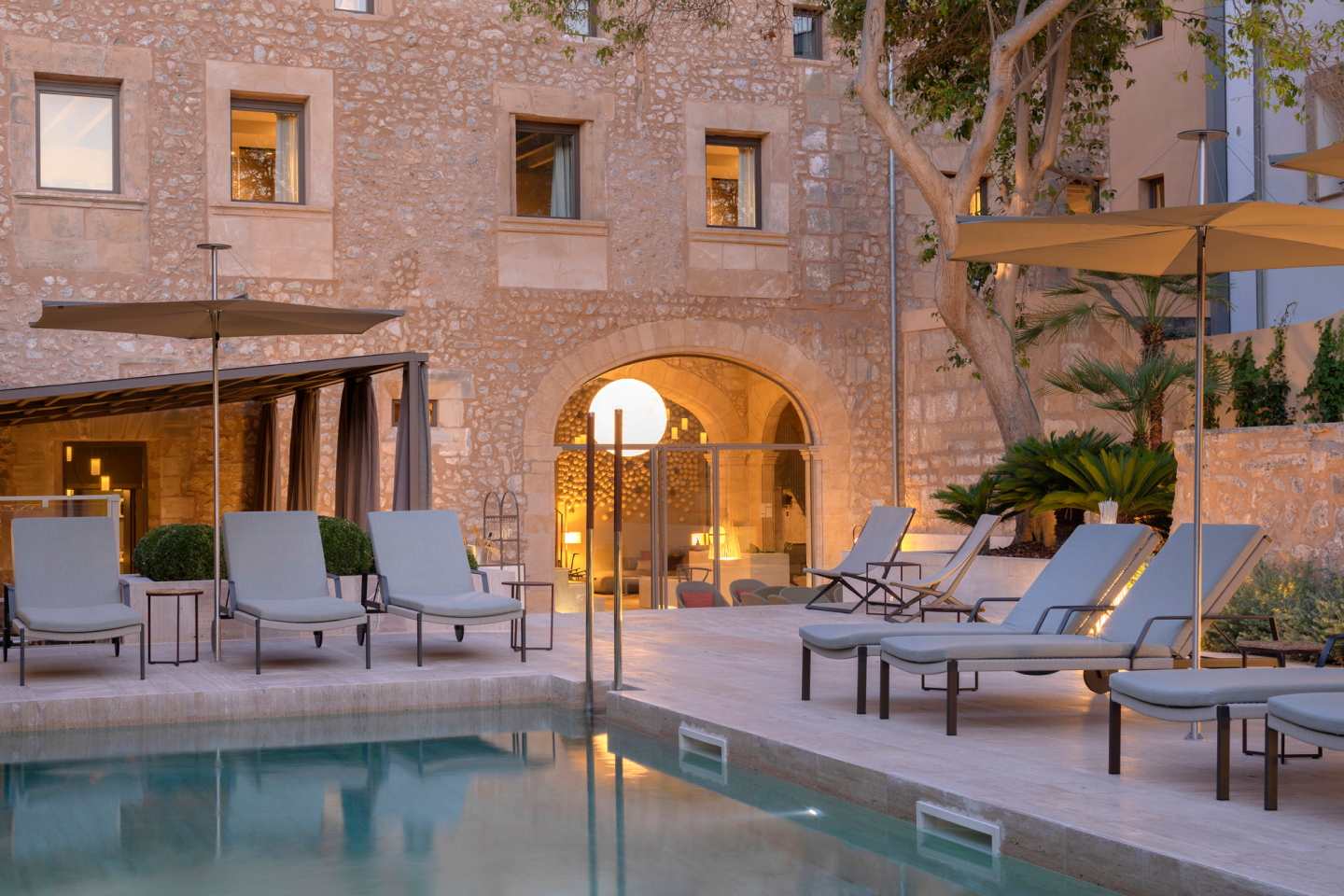
Your luggage moves between all three hotels for you each time you change base — you only ever carry what fits in a jersey pocket for the day's ride.
Is Seven Days Enough Time to Cycle Mallorca?
Yes, for the island's core Tramuntana loop. Seven days won't show you all of Mallorca — the east coast and the interior plains aren't part of this route — but it is enough to ride both signature roads (Formentor and the Sa Calobra climb), cross the full length of the Serra de Tramuntana range, and still have a genuine rest day built in around the midpoint. Riders wanting to add the east coast or the Mallorca 312 route typically extend to Medfeel's 8-day Epic Island Cycling Loop instead; those with less time or a lighter fitness goal often start with a shorter 5-day version covering the northern half of this same route.
How Fit Do You Need to Be for This Itinerary?
This route is rated Intermediate. You should be comfortable riding 3-4 hours in the saddle on back-to-back days, and climbing continuously for 45–60 minutes without needing to stop (Coll des Reis and Puig Major-adjacent roads both demand that on day 3). That said, the itinerary isn't fixed in stone: any day can be shortened, the Sa Calobra detour is optional by design, and Medfeel runs a fleet of Trek Domane+ and Charter+ e-bikes for anyone who'd rather flatten the climbs than grind them — several of the reviews on our own site are from riders in their 60s who did this exact route on e-bikes, Formentor included.
When to Ride It: Best Months for a Seven-Day Trip
Spring (March–June) and autumn (September–November) are the two best windows for this itinerary, with daytime temperatures around 15–24°C and noticeably lighter traffic at Formentor and Sa Calobra than in peak summer. July and August are ridable if you start early to beat the heat, but expect more tour buses at the classic viewpoints. Winter (December–February) is mild and popular with pro teams doing base training on these same roads, though wind and occasional storms can affect the high mountain sections — check conditions on Puig Major and the Formentor ridge before committing to a winter date.
Three Ways to Ride This Itinerary
Independently. You can string this route together yourself: rent a bike in Palma or Pollença, book the three hotels separately, and follow published GPX tracks for each day. The trade-off is logistics — Can Aulí, Hotel Espléndido and El Llorenç Parc de la Mar all run at limited capacity in peak season, and moving your own luggage between three towns adds a full morning of admin you'd rather spend riding. If a bike or a body breaks down on the Tramuntana crossing, you're also on your own to sort it out.
Through a general operator. Several tour companies sell set-departure Mallorca weeks, usually on a fixed group schedule with standard hotel partnerships rather than the specific properties in this guide. That can work well if a fixed date and a larger group suit you, but you'll have less control over which hotel you land in each night and less flexibility to skip a climb you'd rather not do.
With Medfeel. This is the exact route we run as the Signature Mallorca Bike Tour, and the reasoning behind the day order — hardest day early, recovery built in, west coast saved for last — comes directly from how our own guides ride it themselves. As Adrián Casanova, Medfeel co-founder and a Mallorca cycling guide for more than five years, puts it:
"Mallorca is our home, and every cycling trip we design reflects the roads, climbs, and local experiences we know and love. No two riders are the same, so no two itineraries should be either."
Booking with Medfeel means the three hotels, bike logistics, luggage transfers and airport transfers are handled, with the choice of a private guide riding alongside you or a fully self-guided week backed by GPX files and 24/7 support — and a dedicated Medfeel Travel Agent if your plans change once you're on the island.
Frequently Asked Questions
How many kilometers do you ride each day?
Daily distances range from 30 km on the built-in recovery day to 95 km on the Tramuntana-crossing day, averaging around 86 km and 922 m of climbing across the 5 riding days.
Do you stay in the same hotel for the whole week?
No — you move between 3 hotels over 6 nights: Can Aulí in Pollença, Hotel Espléndido in Port de Sóller, and El Llorenç Parc de la Mar in Palma. Luggage is transferred between hotels for you each time you move.
Is riding down to Sa Calobra mandatory on this itinerary?
No. Sa Calobra and the return climb up Coll des Reis (9.5 km at 7.2% average) is an optional detour on day 3, alongside the compulsory Coll de Sa Batalla climb — you can skip it and still complete a full, hard mountain day.
What fitness level do you need for this trip?
The route is rated Intermediate: comfortable with 3–4 hours in the saddle and continuous climbs of 45–60 minutes. Any day can be shortened, and e-bikes (Trek Domane+ and Charter+) are available for riders who want assistance on the climbs.
When is the best time of year to do this ride?
March–June and September–November, when temperatures sit around 15–24°C and the roads are quieter than midsummer. Winter is mild and rideable but windier on the high mountain sections.
Is this itinerary guided or self-guided?
Both options are available. You can ride with a Medfeel guide handling pacing and logistics, or self-guided using GPX files and 24/7 support — many riders mix the two across the week.
What's included in the price?
From €2,320 per person, the Signature Mallorca Bike Tour includes all 6 nights across the 3 hotels with daily breakfast, a Trek road bike or e-bike rental with helmet and pedals, daily bike insurance, GPX files, energy nutrition, luggage and airport transfers, and a dedicated Medfeel Travel Agent. Flights, travel insurance and food beyond breakfast aren't included.
If this is the week you've been putting off booking, the route above is exactly what we run as the Signature Mallorca Bike Tour — three hotels, five riding days, and a route order we've spent five years getting right. Get in touch and we'll build your dates around it.