A high pass that is perfect in July can be under snow in April. An island that is ideal in March can be too hot to climb in August.
Start with the month, not the map. Mallorca is the best all-rounder, riding well from February to November. The Dolomites, the French Alps and the Stelvio are the best high-mountain weeks, usually from about June to September.
Girona and the Costa Brava, Provence, the Pyrenees, Lake Como, Flanders and the Canary Islands fill the rest of the calendar. That is why this guide is organised by season first and scenery second.
Quick answer
- Best all-rounder: Mallorca. It works from February to November and has climbs like Sa Calobra (9.5 km at 7.2%) within reach of most hotels.
- Best for high mountains: the Dolomites, the French Alps and the Stelvio. Most high passes usually open from about June to September.
- Best for a culture-and-cycling mix: Girona and the Costa Brava, where pro riders train on climbs like Rocacorba and the coast is close by. It is best in spring and autumn.
- Best in winter: the Canary Islands. Gran Canaria and Tenerife have climbs that top out well above 1,500 m while most of Europe is cold.
- Medfeel runs trips in three of these places: Mallorca (from €950 per person), Girona (from €4,650) and Veneto and the Dolomites (from €3,950).
To make this list, a destination needed a reliable road network, at least one climb that is worth the trip by itself, hotels that are set up for bikes and a clear season. We know Mallorca, Girona and Veneto from guiding there. We know the others from riding them ourselves and from published route information. Each section says which kind it is.
Where to cycle in Europe, month by month
The month you travel narrows the choice more than anything else. From November to February, the Canary Islands and southern Mallorca are the safest choices. March to May and September to October are best for the Mediterranean (Mallorca, Girona and the Costa Brava). June to September is the window for the high Alps, the Dolomites and the Pyrenees, when the passes are usually clear of snow.
| Destination | Jan–Feb | Mar–Apr | May–Jun | Jul–Aug | Sep–Oct | Nov–Dec | Medfeel trip? |
|---|---|---|---|---|---|---|---|
| Mallorca | Good (cool mornings) | Best | Best (May), hot by late June | Early starts only | Best | Good (Nov), quiet (Dec) | Yes, live |
| Girona & Costa Brava | Possible, cold inland | Good (Mar), best (Apr) | Best | Hot inland, coast OK | Best | Possible (Nov) | Yes, live |
| Veneto & Dolomites | Passes closed | Lowlands only | Lowlands best, passes open from about June | Best for passes | Best (Sep), weather-dependent (Oct) | Passes closed | Yes, live |
| French Alps | Ski season | High passes closed | Opening from June | Best | Best (Sep) | Closed | No |
| Provence (Ventoux) | Summit road often closed | Lower slopes good | Best | Hot, ride early | Best (Sep) | Windy, cold summit | No |
| Pyrenees | Closed high up | Valleys only | Good from June | Best | Best (Sep) | Closed high up | No |
| Lake Como & Stelvio | Lakeshore only | Lakeshore good | Good; Stelvio from about June | Best for Stelvio | Best (Sep) | Stelvio closed | No |
| Flanders | Cold, wet | Classics season | Good | Good | Good (Sep) | Cold, wet | No |
| Canary Islands | Best | Best | Good | Hot, windy | Good | Best | No |
This matrix reflects what usually happens. It is not a forecast. Alpine and Pyrenean pass opening dates depend on each year's snowfall, and road authorities announce them every season. If a specific pass is the reason for your trip, check its status before you book flights.
Mallorca, Spain: the most complete all-rounder
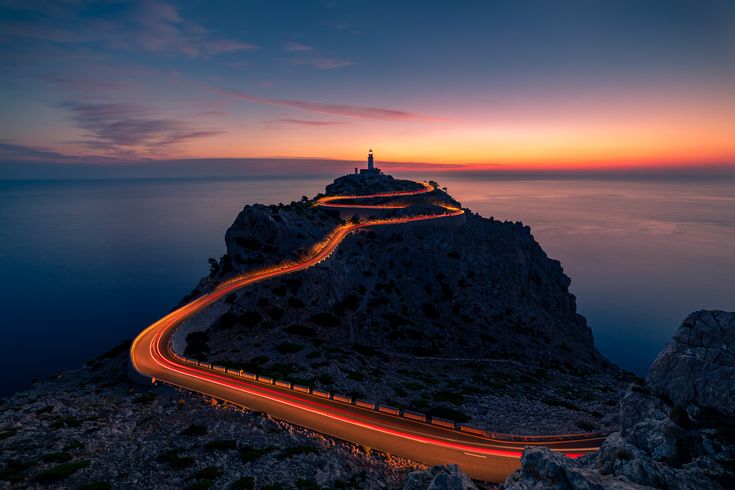
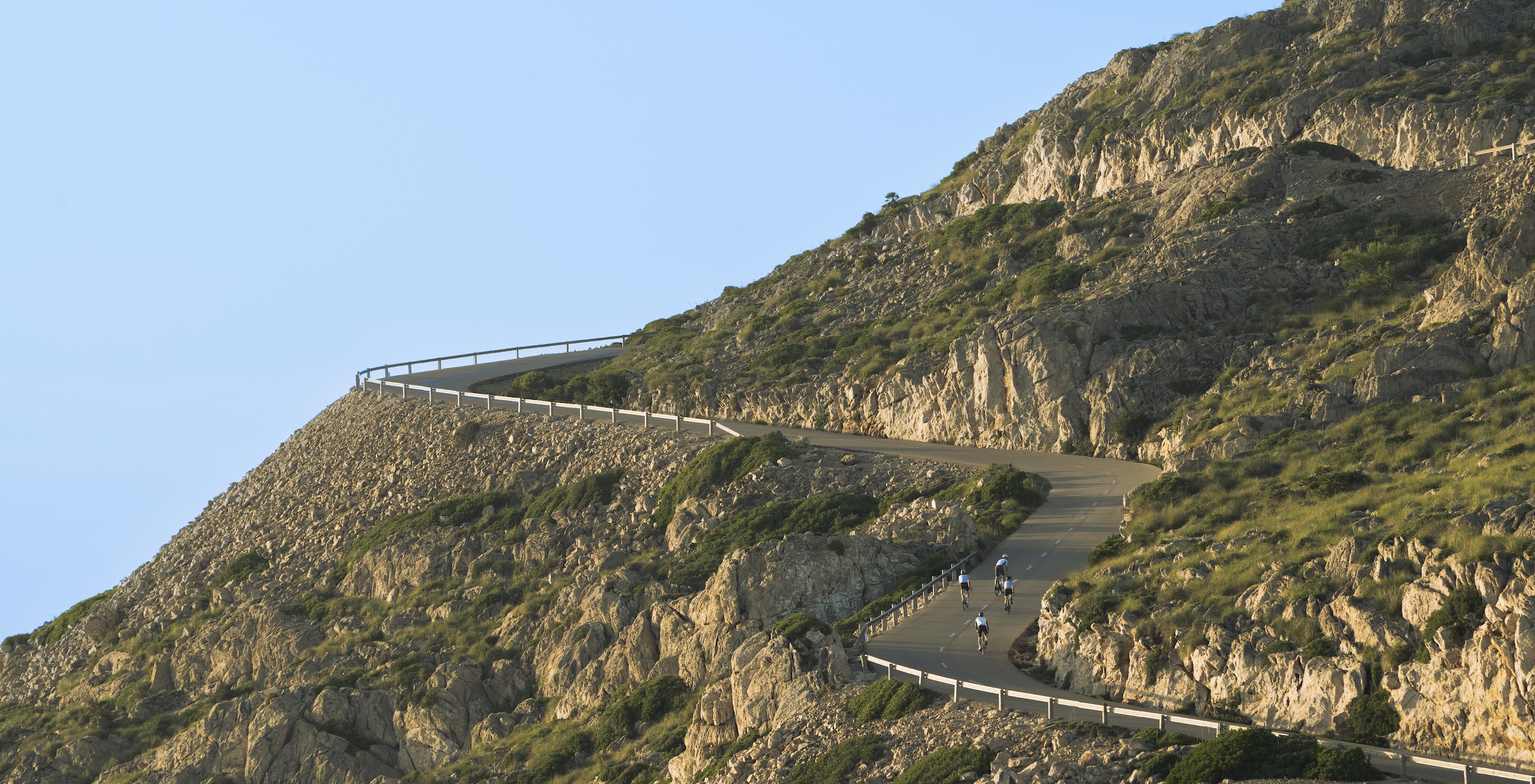
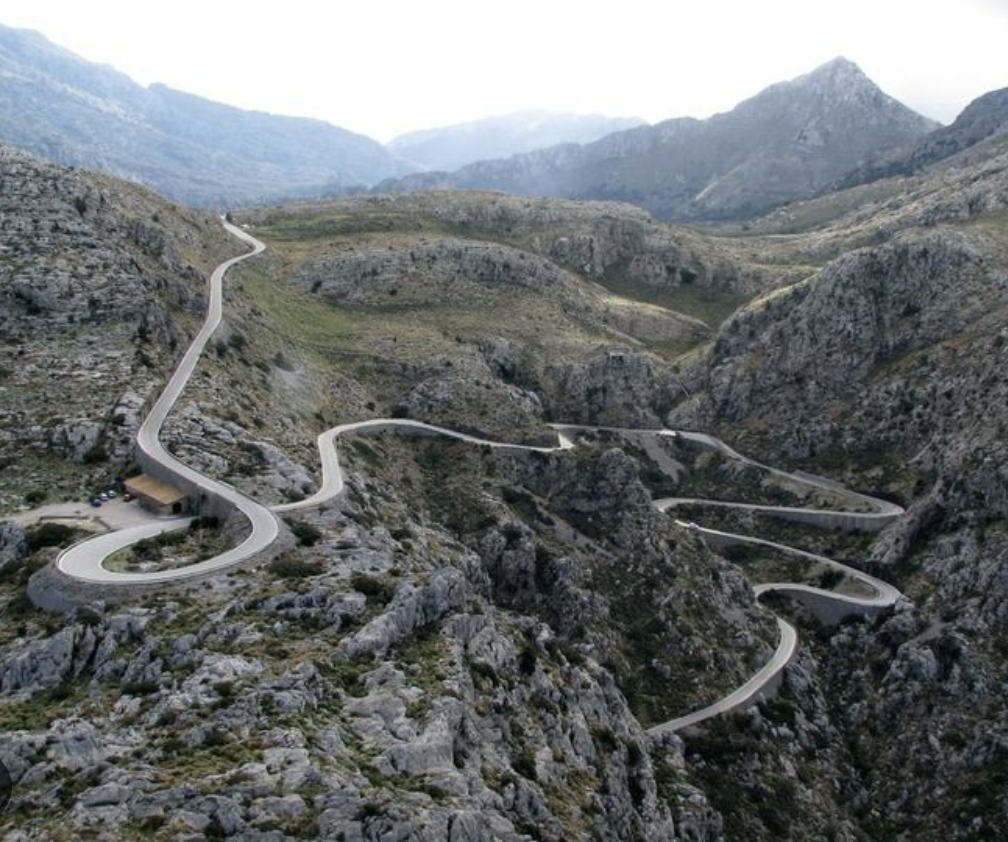
Mallorca is the best all-round cycling destination in Europe because it has the longest usable season of any mountain destination on this list. It also has a full mountain range, the Serra de Tramuntana, about an hour or less from most hotels, and a quiet interior for easy days. On one island you can ride a Cat 1 climb, a flat coastal loop and a recovery spin.
The two signature climbs are Sa Calobra (Coll des Reis), at 9.5 km, 660 m of climbing and an average of 7.2%, and Puig Major from Sóller, at 14.4 km and 815 m of climbing. Both appear in our route database. Two warnings apply. Sa Calobra is a road down to the sea and back, so after descending you have to climb the full 9.5 km again unless a vehicle picks you up. The very top of Puig Major is a military zone, so the road climb ends below the summit.
Mallorca is not the right choice if you want true high-altitude riding. Nothing on the island compares with a 2,000 m Alpine pass, and in July and August the heat means riding at dawn.
We run several Mallorca trips. They range from the 3-day Mallorca Weekend Cycling Escape (130 km, 1,850 m of climbing, Intermediate, from €950 per person) to the 7-day Signature Mallorca Bike Tour (430 km and 4,610 m over 5 riding days, Intermediate, from €2,320 per person).
Girona and the Costa Brava: where the pros live
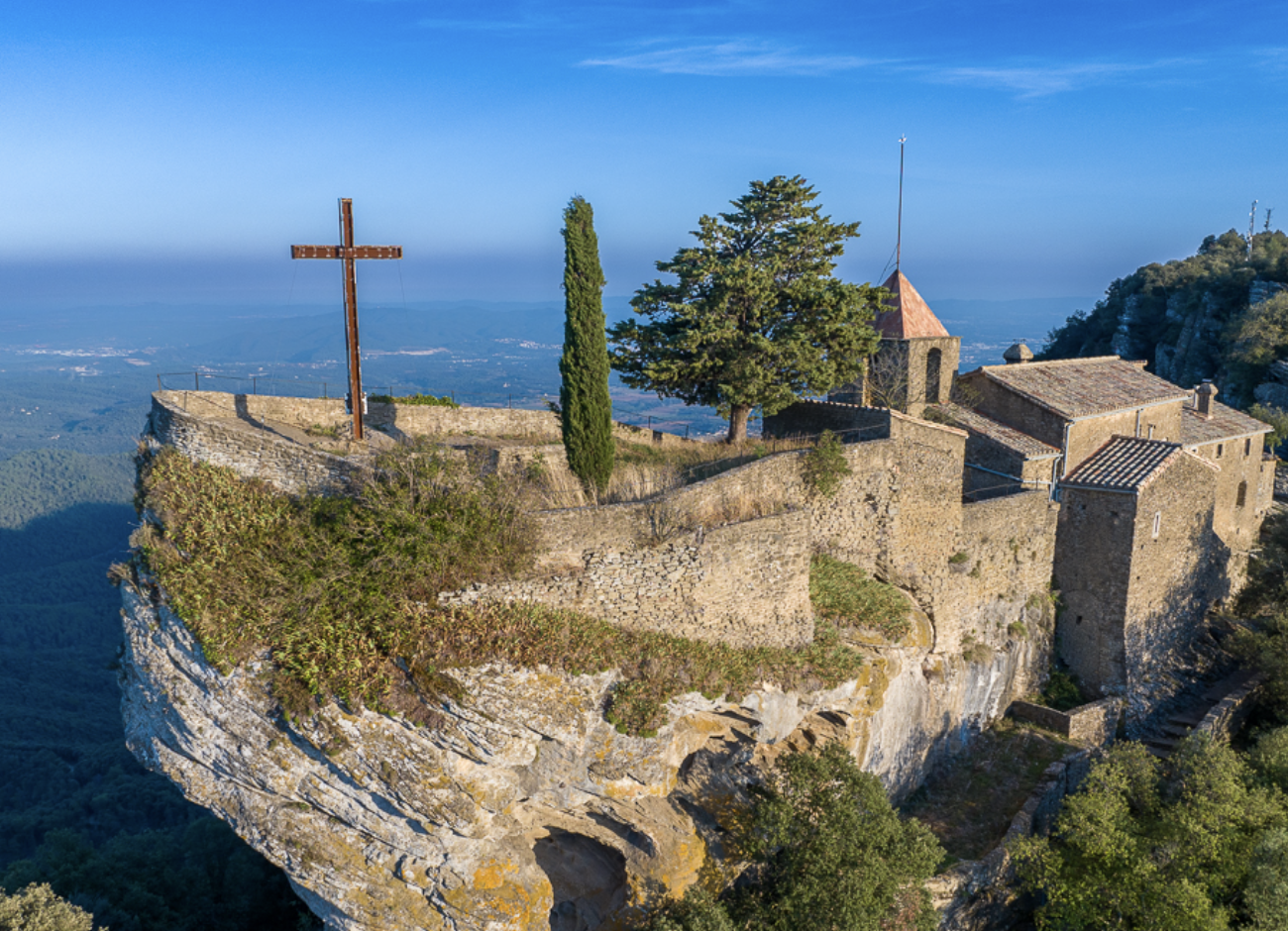
Girona is Europe's best destination if you want to train where professional riders train and also spend time in a medieval city and on a wild stretch of coast. Many pro riders live there because of its mix of terrain. Climbs like Rocacorba, gravel in Les Gavarres, coastal roads through Begur and Cap de Creus, and the Empordà plain are all within one region.
The climbing is more compact than in the Alps. A day like Lake Banyoles and Rocacorba on our itinerary covers 79 km with 1,220 m of climbing. Cap de Creus and Cadaqués add 67 km with 1,040 m of climbing. Girona also has some of the best gravel in southern Europe, so it suits riders who want to mix road and gravel in the same week. Inland it is hot in July and August, and it can be cold from December to February.
Our Girona Luxury Cycling Vacation covers 338 km and 4,740 m over 5 riding days, is rated Intermediate and costs from €4,650 per person. It moves through three hotels: Palau Fugit in Girona's old town, Mas de Torrent and Hotel Peralada.
Veneto and the Dolomites: high mountains at an Italian pace
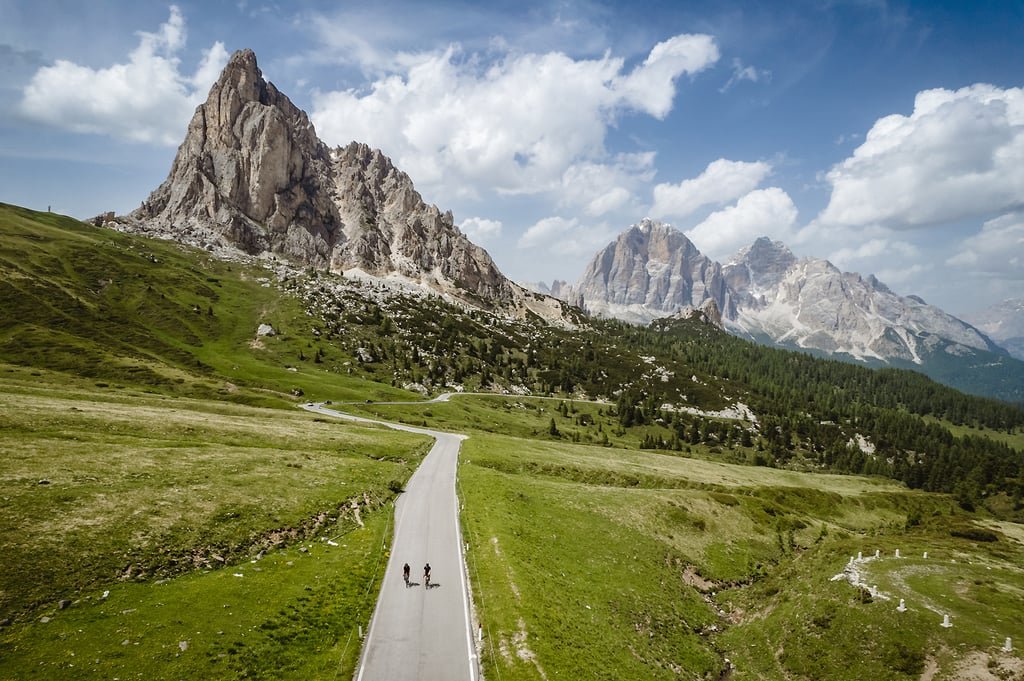
The Dolomites are the best European destination for high-mountain scenery, with long switchback climbs through some of the most dramatic peaks in the Alps. Most passes are usually rideable only from about June to September. Pairing them with the lower Veneto, which includes the Prosecco Hills, Asolo and Treviso, gives you easier days before the big climbs.
That is how we built our Veneto & Dolomites Luxury Cycling Vacation. It starts in Asolo and continues through the UNESCO-listed Prosecco Hills and over Passo San Boldo with its tunnels and stacked hairpins. It then transfers to Cortina d'Ampezzo for Passo Giau (a 45 km day with 1,400 m of climbing) and a gravel day to Lago di Landro. In total it covers 295 km and 4,670 m over 5 riding days. It is rated Experienced and costs from €3,950 per person.
The Dolomites are not the right choice for an early-spring trip or for riders who don't enjoy long descents. Passo Giau's summit sits at 2,236 m, and the weather at the top can be very different from the weather in the valley, even in summer.
France: the Alps, Provence and the Pyrenees
France is the best country in Europe for riding famous Tour de France climbs, and you can ride three distinct mountain areas in one country. The Alps have the Col du Galibier (2,642 m) and the 21 hairpins of Alpe d'Huez. Provence has Mont Ventoux (1,909 m). The Pyrenees have the Col du Tourmalet (2,115 m). We don't run trips in France, but we ride there ourselves.
In the French Alps, the climbs are long. Expect to spend well over an hour going up the bigger cols, and plan to ride one big climb a day rather than three. Mont Ventoux is a single, exposed climb, and its bare upper slopes are known for wind. The summit road is often closed in winter, and you should not try it on a windy day. The Pyrenees are usually quieter than the Alps, with long valley approaches and fewer tour buses. In all three areas, the high roads usually open in late spring and close in autumn.
France is not the right choice if you are travelling before June and the high passes are your goal, or if you want to ride from one hotel without daily transfers. In the Alps the climbs are spread across separate valleys.
Lake Como and the Stelvio: from lake level to 2,757 m
Lake Como is the best European destination if you want lakeside riding and one of the highest paved passes in the Alps in the same trip. The lake roads and the climb to the Madonna del Ghisallo chapel (the patron saint of cyclists) are good from spring onwards. The Stelvio Pass, at 2,757 m, is the summer goal. It is usually open only from about June to the autumn.
The lakeshore roads can be narrow and busy in summer, and the Stelvio is a long day's drive or ride from the lake. Most riders who want both spend at least one night closer to Bormio or the Val Venosta side. We don't run trips here.
Flanders: cobbles, short climbs and Classics culture
Flanders is the best European destination if you love the spring Classics. The cobbled climbs used in the Tour of Flanders, such as the Oude Kwaremont, the Paterberg and the Koppenberg, are short and steep, often under a kilometre. Cycling here is part of the culture rather than a tourist activity.
Flanders suits strong riders and fans of racing history. It is not the place for mountain scenery or reliable sunshine. Expect wind, rain and cold in early spring, which is part of the experience. We don't run trips here.
The Canary Islands: the winter alternative
The Canary Islands are the best European cycling destination from November to February. Gran Canaria's roads climb to about 1,950 m near Pico de las Nieves, and Tenerife's roads go above 2,000 m inside Teide National Park. Both have mild coastal temperatures in the middle of the European winter. Professional teams use Tenerife for altitude training.
The trade-off is variety. The climbs are long and very similar from one day to the next, the descents can be windy, and getting to the islands means a longer flight for most of Europe. If you want winter sun with more varied scenery on shorter rides, southern Mallorca from January to February is the alternative to compare. Our guide to the best time to cycle Mallorca covers what each winter month is like there.
Coming next: Tuscany, Sardinia, Sicily, Calpe and the Basque Country
We are preparing trips in Tuscany, Sardinia and Sicily in Italy, and in Calpe and the Basque Country in Spain. None of them can be booked with us yet. We list them here because they are strong destinations in their own right. Tuscany has vineyard roads and hilltop towns. Sardinia has coastal riding and the Supramonte mountains. Sicily has the slopes of Mount Etna. Calpe is a winter base for professional teams, and the Basque Country has steep green climbs.
Until they open, we can only give you general advice for these places, not a full Medfeel itinerary. If one of them is your first choice, tell us. Early interest helps us decide which destination opens next.
Our take: the best destination for each type of rider
If you only remember one thing from this guide, use it to match the place to the rider and the month. These are the recommendations we give most often when riders ask us where to go.
- First European cycling holiday, any level: Mallorca, in spring or autumn. It has the most options for each day and the shortest transfers, and an e-bike is easy to arrange.
- Strong rider who wants big mountains: the Dolomites or the French Alps, from late June to mid-September.
- Couple or group who care about food, culture and hotels as much as riding: Girona and the Costa Brava, or Veneto with a final stay in Cortina.
- Road and gravel in the same week: Girona.
- Racing fan: Flanders in spring, or the Tour climbs in France in July.
- Winter sun: the Canary Islands, with Mallorca as the more varied alternative.
- Can't choose between the three Medfeel destinations: read our Mallorca vs Girona vs the Dolomites comparison. If you are mainly deciding between Spanish regions, see our guide to the best cycling destinations in Spain.
Not sure which destination fits your dates? Tell us when you can travel, how much climbing you enjoy and who is coming with you. We'll tell you plainly whether Mallorca, Girona or the Dolomites fits, or whether somewhere we don't run trips would suit you better.
Plan your trip with Medfeel · or start with the Signature Mallorca Bike Tour (7 days, from €2,320 per person)
Prices are "from", per person, based on double occupancy unless stated otherwise. Flights, travel insurance and food and drink beyond daily breakfast are not included. We recommend travel insurance. Cancellation terms are listed on each tour page.
Frequently asked questions
Do I need to bring my own bike on a European cycling holiday?
No. Most established destinations have good rental fleets, and on our trips a high-end Trek road bike or e-bike is included. It is fitted to your measurements before you arrive and delivered to your first hotel. Bring your own pedals, saddle or shoes if you like them, but flying with a full bike is rarely worth the cost and the risk.
How fit do I need to be for a cycling holiday in the mountains?
For Intermediate trips, you should be comfortable riding 60–90 km with 1,000 m or more of climbing on consecutive days. For an Experienced trip in the Dolomites, plan for long climbs above 2,000 m. Each Medfeel tour lists its level, and an e-bike makes most itineraries accessible to riders who train less.
Is an e-bike a good option on a European cycling holiday?
Yes, especially for mixed-level couples and groups. An e-bike lets a less-trained rider do the same route and climbs as a stronger partner. You still pedal, but the assistance evens out the pace. Battery range matters on long mountain days, so tell your operator your route in advance so they can plan charging stops if needed.
How many days do I need for a cycling holiday in Europe?
Seven days with five riding days is the format we recommend most often. It gives you an arrival day, a recovery day partway through and room to move a ride if the weather changes. A three-day weekend works well in Mallorca because transfers are short. For the Alps or the Dolomites, a week is the minimum that makes the travel worthwhile.
What is the difference between a guided and a self-guided cycling holiday?
On a guided trip, a local guide rides with you, chooses the line on descents, sets the pace and adapts the route each day. Self-guided means you ride with GPX files and support on call, and your luggage and hotels are handled for you. On our trips you can choose either format, or mix them and book a guide only for the hardest days.
Can a partner who doesn't cycle come along?
Yes, and the destination matters here. Mallorca, Girona, the Costa Brava and Veneto all have towns, beaches, food and other activities, such as hiking or golf in Mallorca, within reach of the cycling hotels. Remote Alpine bases have less to do off the bike, so they are better for couples who both ride.
Sources & methodology
- Medfeel destinations (Mallorca, Girona, Veneto & Dolomites): route, climb and tour data from Medfeel's own database (distances, climbing, levels, prices and hotels), checked October 2026, plus our guiding experience.
- Non-Medfeel destinations (French Alps, Provence, Pyrenees, Lake Como & Stelvio, Flanders, Canary Islands): summit altitudes and climb names from widely published route information and our own riding. We have not verified these figures against an official source for this article, so check exact data and road status for your dates.
- Seasons: the month-by-month table shows what usually happens, based on our experience. Mountain-pass opening dates vary each year and are set by local road authorities.
- "Coming soon" destinations: Tuscany, Sardinia, Sicily, Calpe and the Basque Country are not yet bookable with Medfeel as of October 2026.