We've ridden all three. Here's how we'd actually choose.
Cycling Holidays · Spain & Italy · 14 min readQuick answer
- Choose Mallorca if you want one week where a relaxed coastal spin and a legendary mountain day both work from the same hotel — our Mallorca Epic Island Cycling Loop covers 375 km and 6,000 m of climbing over 8 days, from €5,850.
- Choose Girona if you want the week built around the riding first and everything else second — our Girona Luxury Cycling Vacation mixes La Traka gravel, the Costa Brava and Cap de Creus over 338 km and 4,740 m across 7 days, from €4,650, rated Intermediate.
- Choose the Dolomites for the most dramatic, most demanding riding — our Veneto & Dolomites Luxury Cycling Vacation climbs Passo Giau (9.9 km at an average of 9.3%) after two lowland days through the Prosecco Hills, 295 km and 4,670 m over 7 days, from €3,950, rated Experienced.
- Season-wise, Mallorca and Girona both run comfortably from March to June and September to November; the Dolomites' high passes are realistically only open from late May/June through September.
- All three run on the same Trek fleet (road or e-bike), the same guided-or-self-guided structure, and the same 35-day full-refund cancellation policy — the real difference between them is the riding, not the logistics.
People ask us this question more than almost any other, and it's a fair one — we're one of the only operators that actually runs founder-guided trips in Mallorca, Girona and the Dolomites, so we don't have a favourite to sell you. What we have is three very different weeks on a bike, and a clear sense of which rider each one suits.
Mallorca vs Girona vs the Dolomites at a glance
| Destination | Best for | Riding season | Medfeel itinerary | Difficulty |
|---|---|---|---|---|
| Mallorca | Mixed-ability groups, couples, a complete holiday | March–June, Sept–Nov | Epic Island Cycling Loop — 8 days, 375 km, 6,000 m, from €5,850 | Moderate–high, fully adjustable |
| Girona | Riders who want the bike to be the whole trip | March–June, Sept–Nov | Girona Luxury Cycling Vacation — 7 days, 338 km, 4,740 m, from €4,650 | Intermediate |
| Dolomites | Legendary passes, alpine drama, a shared challenge | Late May/June–Sept | Veneto & Dolomites Luxury Cycling Vacation — 7 days, 295 km, 4,670 m, from €3,950 | Experienced |
Mallorca: the island built for a complete cycling holiday
Mallorca's advantage isn't any single climb — it's that the whole Serra de Tramuntana, a UNESCO World Heritage mountain range, sits within an hour of the coast, the vineyards and a five-star hotel bed. That compactness is what lets a group with three different fitness levels ride three different routes and still meet for lunch.
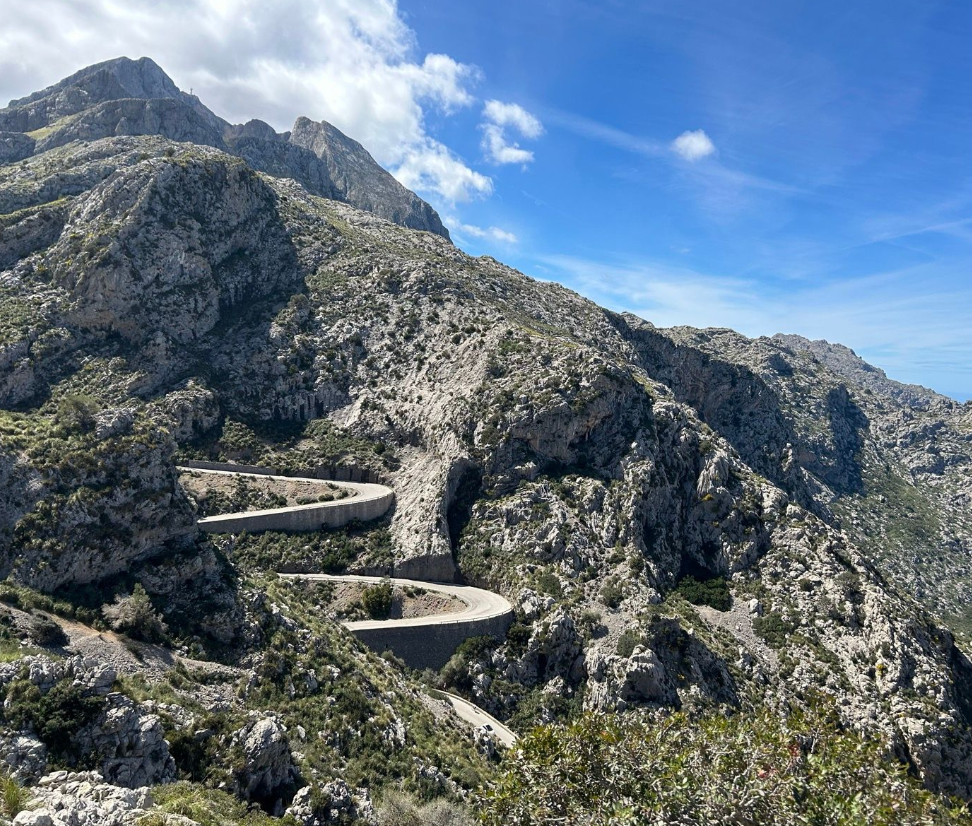
Coll des Reis, better known as Sa Calobra, is the climb everyone comes for: 9.5 km, 660 m of elevation gain, a 7.2% average that never lets up and a stretch of stacked hairpins engineered by Antonio Parietti in the 1930s. What most write-ups skip is the logistics: you descend into Sa Calobra first, so the famous hairpins are the way out, at the end of the ride, not the start — plan your nutrition for that, not for a fresh-legs effort.
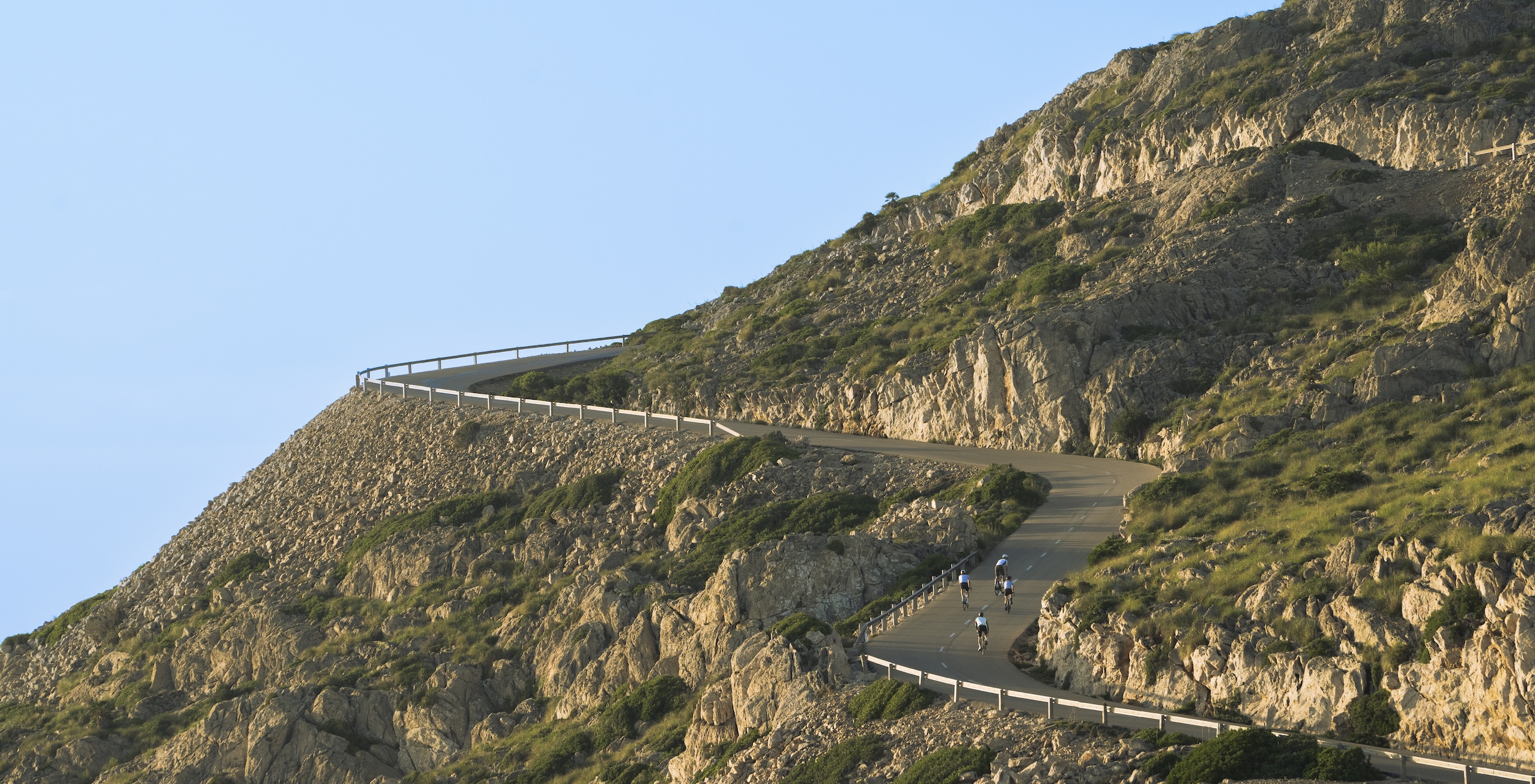
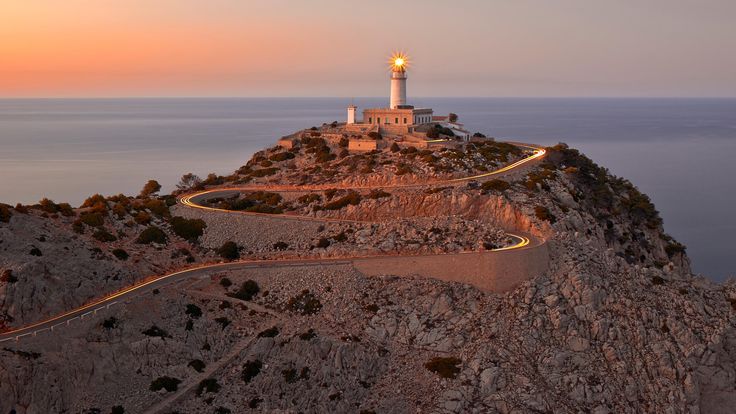
Puig Major, the island's highest paved climb, runs 14.4 km from Sóller at a 5.7% average for 815 m of gain — a longer, steadier effort than Sa Calobra, and one we pair with Orient and the Tramuntana's quieter back roads on our Puig Major climb page. The road to Cap de Formentor is a different kind of day: only 309 m of gain over 10.8 km, but the exposed cliffs and the sequence of rolling headlands make it about position and scenery, not gradient. Further south, Sant Salvador above Felanitx (345 m, 4.9 km, 7%) and Santuari de Cura (254 m, 4.7 km, 5.5%) are the climbs that make our Epic Island Cycling Loop a genuine coast-to-coast, not a Tramuntana-only lap.
Ride structure that works: a demanding mountain day, a shorter coastal or inland day, one recovery day with wine or a spa, then repeat. Riding Sa Calobra and Puig Major back to back is a young pro's itinerary, not a holiday.
"Mallorca is our home, and every cycling trip we design reflects the roads, climbs, and local experiences we know and love," says Adrián Casanova, Medfeel co-founder and a Mallorca ride leader for more than five years. "No two riders are the same, so no two itineraries should be either."
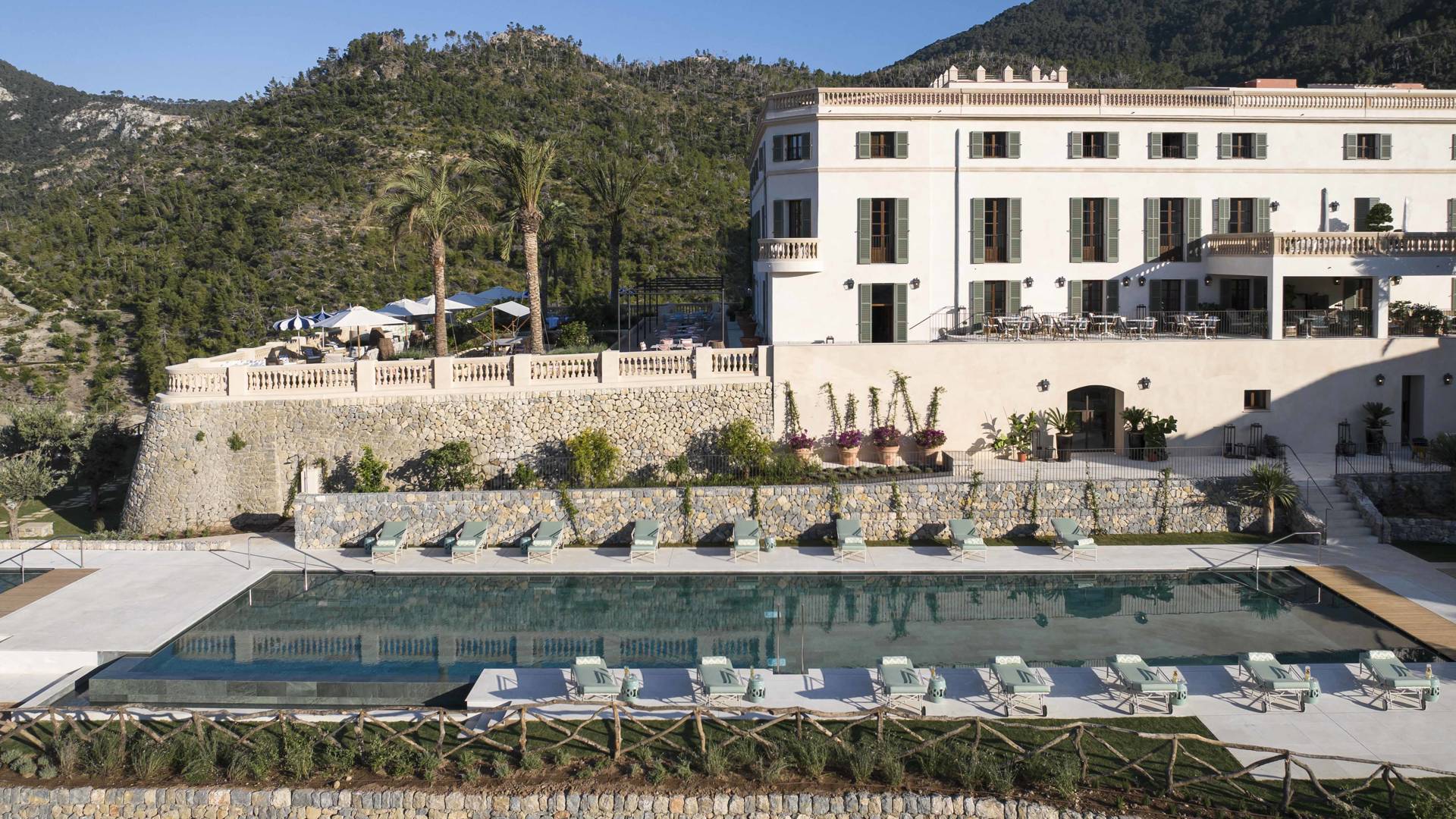
Our five hotel picks in the Tramuntana:
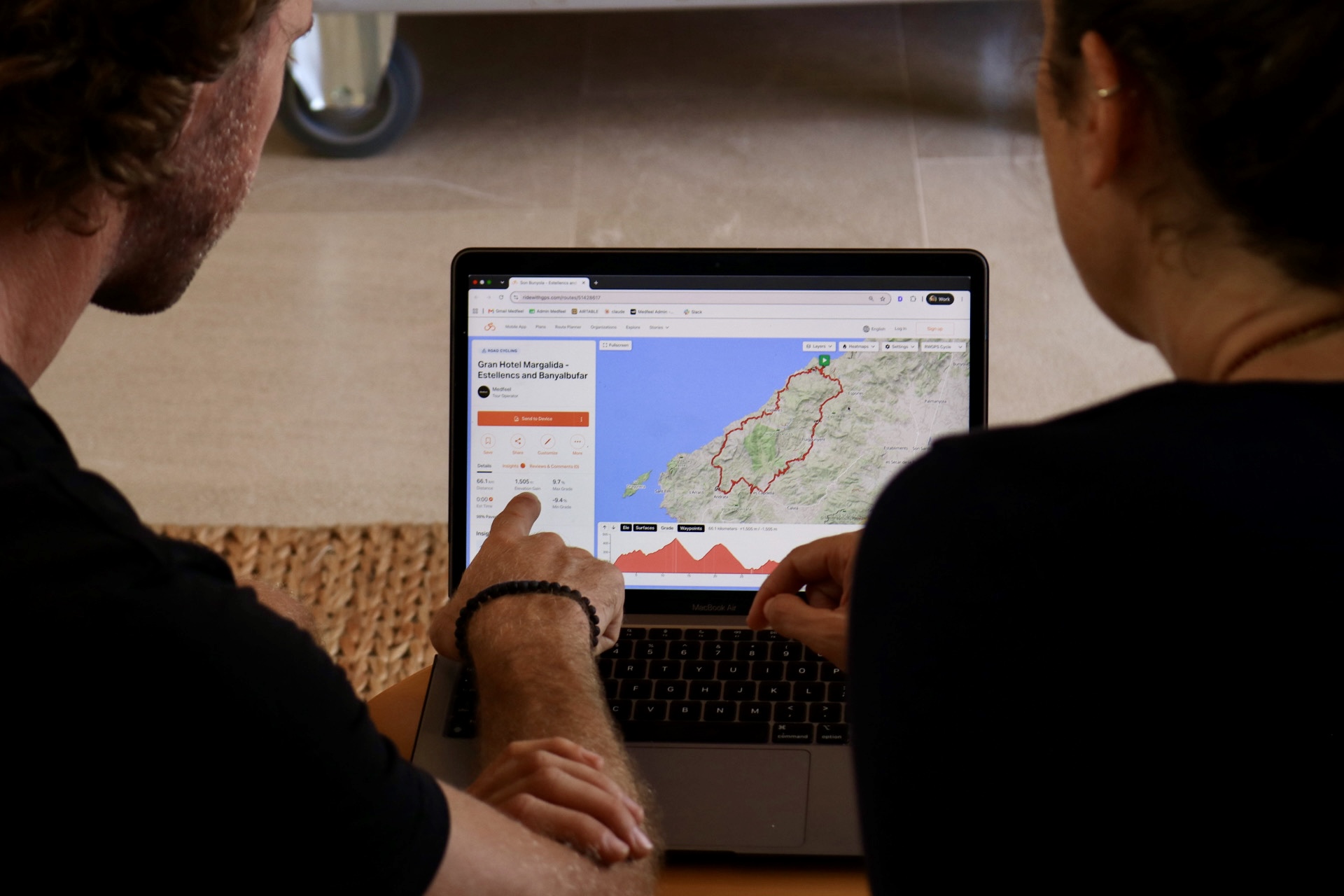
- Son Bunyola — Banyalbufar, for a mountain-first week.
- Hotel El Vicenç de la Mar — Pollença, close to Formentor.
- Can Aulí — Pollença, our smaller boutique base.
- Hotel Espléndido — Port de Sóller, near Puig Major.
- The Lodge — Campanet, near Coll de Sa Batalla.
Girona: where the ride is the reason for the trip
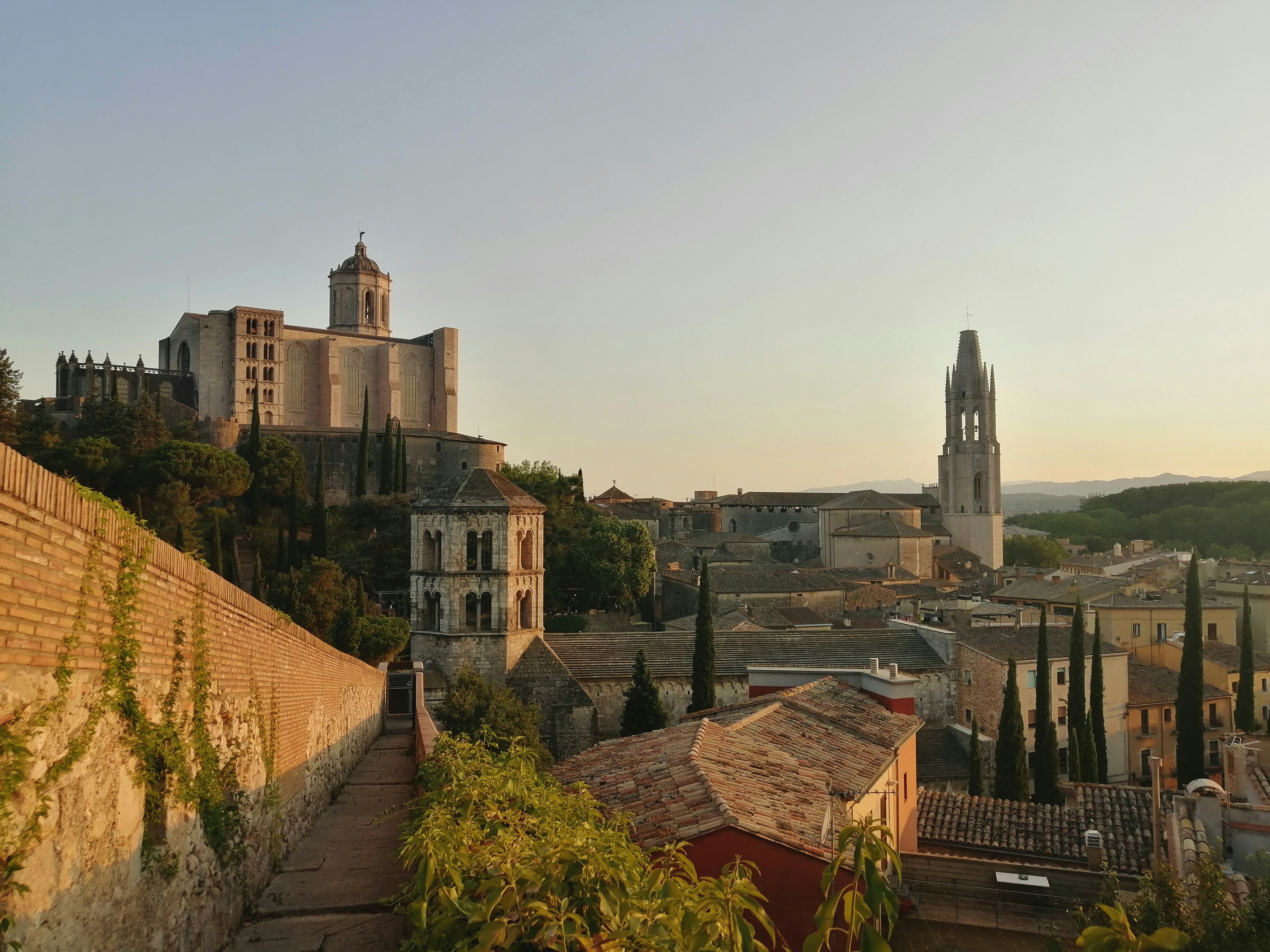
Girona's difference from Mallorca isn't scenery — it's culture. This is where a meaningful share of the professional peloton actually lives and trains, and it shows in the roads: quiet, well-surfaced, and built around a riding habit rather than a tourist route.
Our Girona Luxury Cycling Vacation starts in Les Gavarres, on the gravel roads of La Traka — the route behind Girona's best-known gravel event — before moving to the Costa Brava's medieval towns and coastal roads, then north into the Alt Empordà for Cap de Creus, the fishing village of Cadaqués made famous by Dalí, Port de la Selva and the Albera Natural Park on the French border. It's rated Intermediate for a reason: 338 km and 4,740 m over 5 riding days, roughly 68 km and 950 m a day — enough to feel like a proper week, not so much that it excludes a strong club rider's partner.
No trip to the region is complete without at least hearing about Rocacorba, the climb from Sant Gregori that's become the benchmark for the pros based here: roughly 9 km at an average gradient of around 7.5%, close to 700 m of gain, with pitches into the mid-teens near the top. We don't currently run it as part of our fixed Girona itinerary, but any guest who asks gets pointed at it.
Girona's other card to play is gravel. Between La Traka's network and the greenways running north towards the Pyrenees and France (the long-distance Pirinexus circuit uses some of the same corridors), this is the destination where a road-and-gravel mixed week makes the most sense of the three.
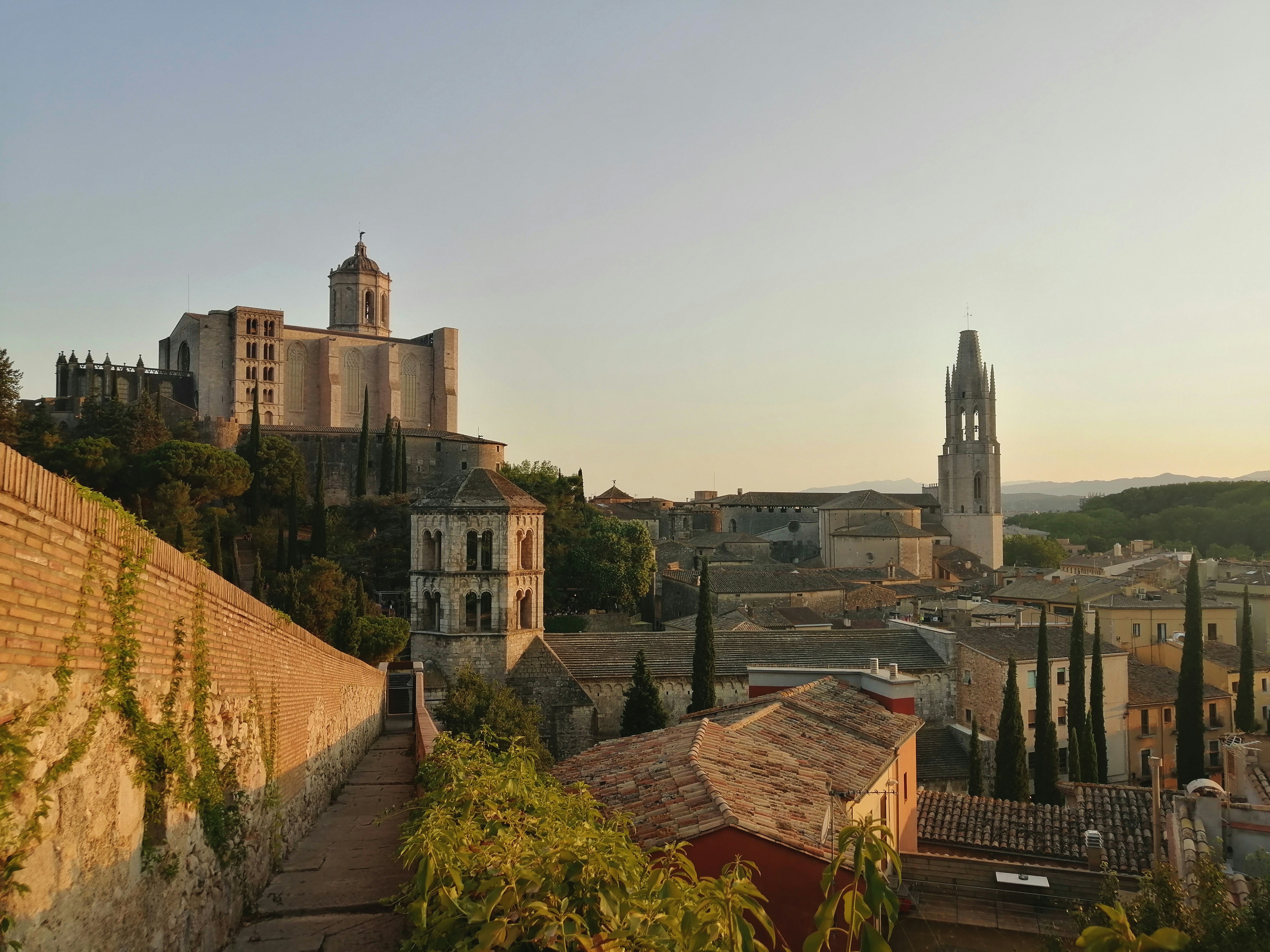
Our hotel picks in Girona:
- Palau Fugit — Girona's historic centre, for a city-based week.
- Mas de Torrent — a rural Empordà base.
- Hotel Perelada — a cycling-and-wine itinerary in the Empordà's vineyards.
The Dolomites: alpine drama, with the elevation numbers to match
The Dolomites are the odd one out on this list, and deliberately so. Our Veneto & Dolomites Luxury Cycling Vacation doesn't drop you into the high mountains on day one — it starts along the Venice lagoon, moves through the Prosecco Hills (a UNESCO World Heritage Site) and historic Treviso, and finishes its lowland stretch in the Venetian villa town of Asolo. Only then does the route climb into the Dolomites proper.
The mountain centrepiece is Passo Giau: 9.9 km at an average gradient of 9.3% for roughly 920 m of climbing, with a summit plaque honouring Fausto Coppi and a place in Giro d'Italia history that few other roads in Europe can match. It's paired on our itinerary with Lago di Landro, a glacial lake ringed by Dolomite peaks that's as much a reward as a photo stop. Across the full trip that's 295 km and 4,670 m over 7 days — an average of 934 m of climbing on every riding day, which is why the tour is rated Experienced, though our Trek Domane+ and Charter+ e-bikes genuinely do flatten that out for a wider range of riders.
If your group wants to go further, the wider region's other classic is the Sellaronda — the loop connecting Campolongo, Gardena, Sella and Pordoi passes around the Sella massif. It isn't part of our standard Veneto & Dolomites itinerary, but for strong riders staying in the area it's an easy, and famous, addition.
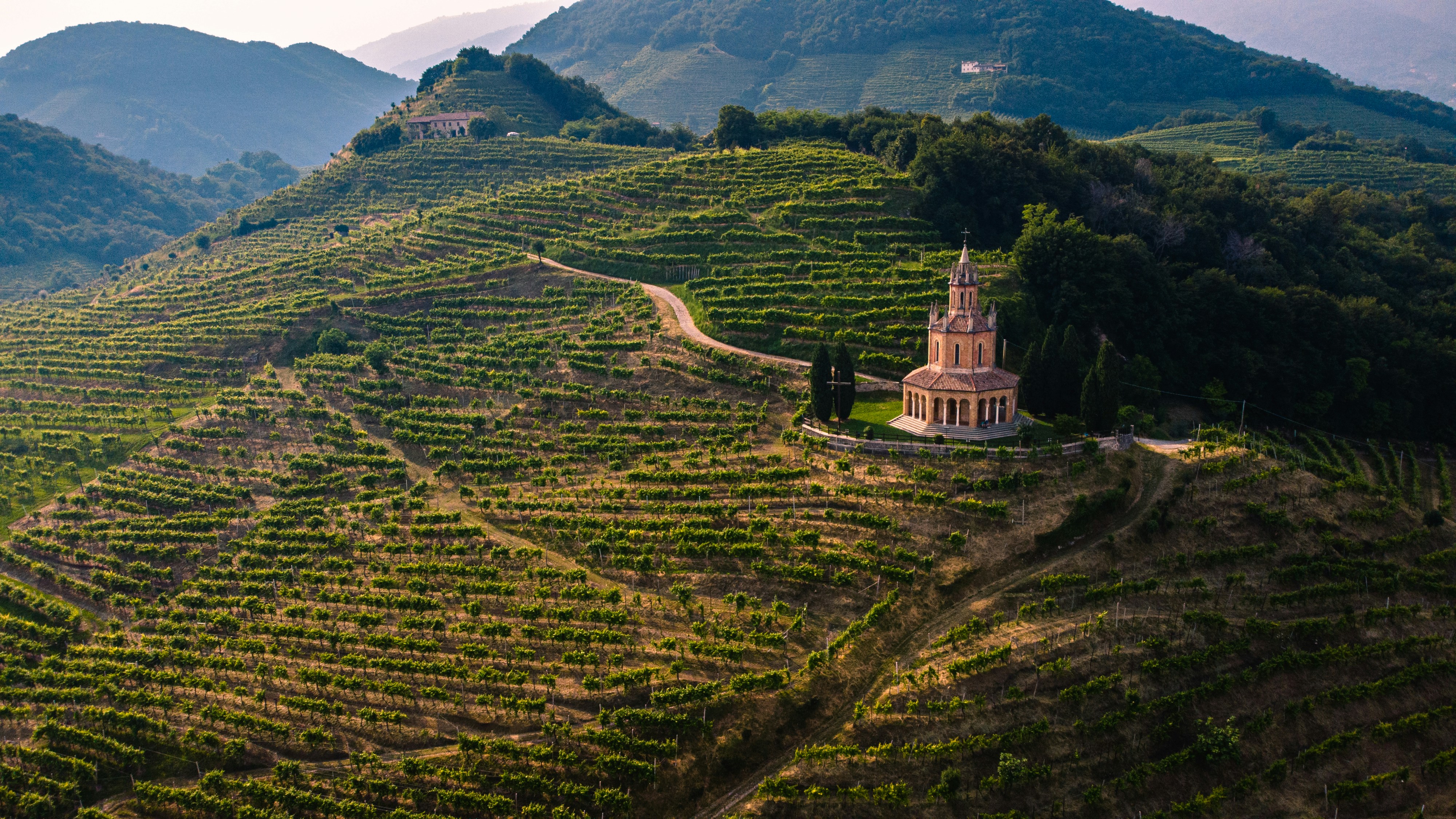
Our hotel picks follow the two halves of the trip:
- The St. Regis Venice — Venice, the lowland stage.
- Hotel Cipriani Asolo — Asolo, the lowland stage.
- Rosapetra Spa Resort — Cortina d'Ampezzo, an Alpine spa in the mountains.
- Hotel CastelBrando — Cison di Valmarino, an Alpine spa in the mountains.
Which destination fits your group?
If your group spans a strong rider and a partner who cycles occasionally, Mallorca is the easiest to design well — a 50, 80 or 120-kilometre route can leave from the same hotel, and the non-riding half of the day (beach, spa, a winery) is never an afterthought. If everyone in the group actually wants to ride, and ride seriously, most days, Girona gives you the most route variety per kilometre — road one day, gravel the next, a rest day built around the old town and Empordà wine. If the trip's entire premise is "let's do the Dolomites together," build it around the Dolomites and don't dilute it — a shared mountain day is the whole point, and the Alpine hotels and spas are there to make the recovery match the effort.
Key cycling events to know about in 2027
If your trip is built around a specific date, or you'd simply rather avoid the crowds and closed roads that come with one, these are the three fixed points on the 2027 calendar worth planning around. Confirm exact dates on each event's official site closer to the time, since gran fondo organisers do occasionally adjust them.
- Mallorca 312 — 24 April 2027. A closed-road event with three course-length options and roughly 8,500 riders; book hotels, bikes and support well ahead if you're travelling around it.
- Sellaronda Bike Day — 5 June and 11 September 2027. The Campolongo, Gardena, Sella and Pordoi passes close to motorised traffic (typically around 9:00 a.m.–4:00 p.m.) for one of the only chances to ride all four without cars.
- Maratona dles Dolomites — 4 July 2027, its 40th edition, based in Alta Badia. One of the most prestigious amateur gran fondos in Europe, and reason enough on its own to time a Dolomites trip around it.
Mallorca vs Girona vs the Dolomites: final comparison
| Criteria | Mallorca | Girona | Dolomites |
|---|---|---|---|
| Medfeel itinerary | 8 days, 375 km, 6,000 m | 7 days, 338 km, 4,740 m | 7 days, 295 km, 4,670 m |
| Fitness rating | Experienced (adjustable) | Intermediate | Experienced |
| From | €5,850 (Epic Loop) / €950 (weekend) | €4,650 | €3,950 |
| Signature climb | Sa Calobra (9.5 km, 660 m, 7.2%) | Rocacorba (~9 km, ~700 m, ~7.5%) | Passo Giau (9.9 km, ~920 m, 9.3%) |
| Terrain mix | Coast, inland, high mountain | Road, gravel, coast, countryside | Lowland vineyards, then high alpine |
| Best season | March–June, Sept–Oct | March–June, Sept–Nov | Late May/June–September |
| Best for | Mixed-ability groups, couples | Serious, ride-first travellers | A shared mountain challenge |
Frequently asked questions
Mallorca or Girona — which is better for cycling?
Mallorca if you want Mediterranean scenery, a mountain range on your doorstep and a wider spread of non-cycling activities. Girona if the riding itself is what you're optimising for — more route variety per kilometre, a genuine gravel scene, and a slower, more local pace once you're off the bike. Neither is "better" in the abstract; they're built for different weeks.
Which destination works best for a couple when only one of you rides seriously?
Mallorca. The non-riding partner has real options within twenty minutes of most hotels — the beach and Formentor coastline from El Vicenç de la Mar, the spa and harbour at Hotel Espléndido in Port de Sóller, or the quiet gardens at The Lodge near Campanet — while the other rides Sa Calobra or Puig Major and you're both back for dinner. Girona and the Dolomites can be adapted for this too, but the terrain naturally pulls the whole group toward a similar effort level each day.
Which destination is best for mixed-ability groups?
Mallorca — riders can choose flat, rolling or mountainous routes and still meet back at the same hotel. Girona is nearly as flexible. The Dolomites are the exception: even a shorter day usually means real elevation gain, so it's harder to soften route by route.
Is Girona only for serious or professional-level cyclists?
No. The Girona Luxury Cycling Vacation is rated Intermediate, not Experienced, and runs on the same Trek Domane+ and Charter+ e-bikes used everywhere else. The professional cycling reputation is part of the region's atmosphere, not a requirement for booking.
Which destination is best if you're a strong, performance-focused rider?
Girona for the culture and the road-plus-gravel range; Mallorca for concentrated, repeatable climbing that suits a training-camp week; the Dolomites for a single, unforgettable mountain test rather than a structured block of volume. Strong riders tend to pick based on what they want the week to feel like, not just the numbers.
Can beginners cycle in Mallorca, Girona or the Dolomites?
Mallorca is the most accessible of the three for a genuine beginner — the Mallorca Easygoing E-Bike Tour is rated Easy cycling and covers 260 km over 7 days at a relaxed pace. Girona's Intermediate rating still asks more of a first-time rider, and the Dolomites, rated Experienced, are the one destination where we'd steer a complete beginner toward e-bikes and shorter days rather than the full itinerary.
How fit do I need to be for the Dolomites?
Fit enough for sustained climbing rather than raw speed. The Veneto & Dolomites route averages 934 m of gain on every riding day, and e-bikes narrow that gap considerably — though they don't replace good descending skills on long alpine drops.
What's the best month to cycle in each destination?
Mallorca: April, May, September and October. Girona: May, June, September and October, with a wider winter window than the other two thanks to its lower-altitude routes. The Dolomites: nowhere outside late May/June to September, since the high passes hold snow the rest of the year — if your dates are flexible, that's the one constraint that should drive the decision first.
Which destination is best for a September cycling holiday?
All three work well in September. Mallorca for warm Mediterranean conditions, Girona for cycling and culture without the summer heat, and the Dolomites for cooler air and quieter high-mountain roads — just check conditions at altitude before setting a route, since the passes can turn quickly that late in the season.
Which destination is best for gravel cycling?
Girona, by a clear margin — La Traka's network through Les Gavarres and the greenways feeding into the long-distance Pirinexus circuit make it the region built for a road-and-gravel mixed week. Mallorca has solid inland gravel as a secondary option; the Dolomites stay road-first on a luxury itinerary.
What's the single most iconic ride in each destination?
Sa Calobra in Mallorca, Rocacorba in Girona, and the Sellaronda — the loop over the Campolongo, Gardena, Sella and Pordoi passes — in the Dolomites. Only Sa Calobra is part of a fixed Medfeel itinerary; the other two are well worth riding if your fitness and schedule allow it.
Is it better to stay in one hotel or move between several?
For an independent trip, one base is simpler — Mallorca and Girona are both easy to explore this way, and in the Dolomites, Corvara, Alta Badia and Val Gardena each put several iconic passes within reach without packing your bike every morning. Medfeel's own itineraries do the opposite on purpose: the Epic Island Cycling Loop, the Girona Vacation and the Veneto & Dolomites trip are all point-to-point routes through several hotels, each chosen for what's around it. If you'd rather stay put, our single-base Mallorca Weekend Cycling Escape is the simpler option — just ask your Travel Agent.
Which destination is the most difficult?
The Dolomites — long alpine climbs, steep gradients and elevation gain that's hard to avoid even on a short day. Mallorca and Girona can be just as demanding if you choose to make them so, but their routes are far easier to adapt to the fitness level of the group.
Which destination is best for cycling, gastronomy and wellness?
Mallorca for the full Mediterranean mix — beach, spa and island wine alongside the ride. Girona for Catalan cuisine, Empordà wine and medieval villages. The Dolomites for the most dramatic recovery, with Alpine spas at Rosapetra and CastelBrando waiting at the end of a mountain day.
What's included on a Medfeel trip, regardless of destination?
All hotel nights with breakfast, a Trek road bike or e-bike sized to you in advance with helmet, pedals and device mount, daily bike insurance, GPX files for every route, energy nutrition, luggage transfers between hotels, airport transfers, a guided or self-guided structure (or a mix of both), a dedicated Medfeel Travel Agent, and emergency and rescue assistance. Flights, travel insurance and meals beyond breakfast aren't included.
What's the cancellation policy?
The same across all three destinations: a full refund if you cancel at least 35 days before your trip's start date, excluding any non-refundable third-party costs already committed on your behalf. We recommend travel insurance for anything closer to departure.
Do I need to bring my own bike?
No — every itinerary runs on our own Trek fleet (Madone SL 6/SL 7 for road, Domane+ or Charter+ for e-bike), fitted to your measurements and delivered to your first hotel. Bring your own saddle or pedals if you have a strong preference; our mechanics can fit most personal components to the rental bike.
Final recommendation
For the most complete luxury cycling holiday, choose Mallorca.
For the strongest cycling culture and route variety, choose Girona.
For the most memorable mountain experience, choose the Dolomites.