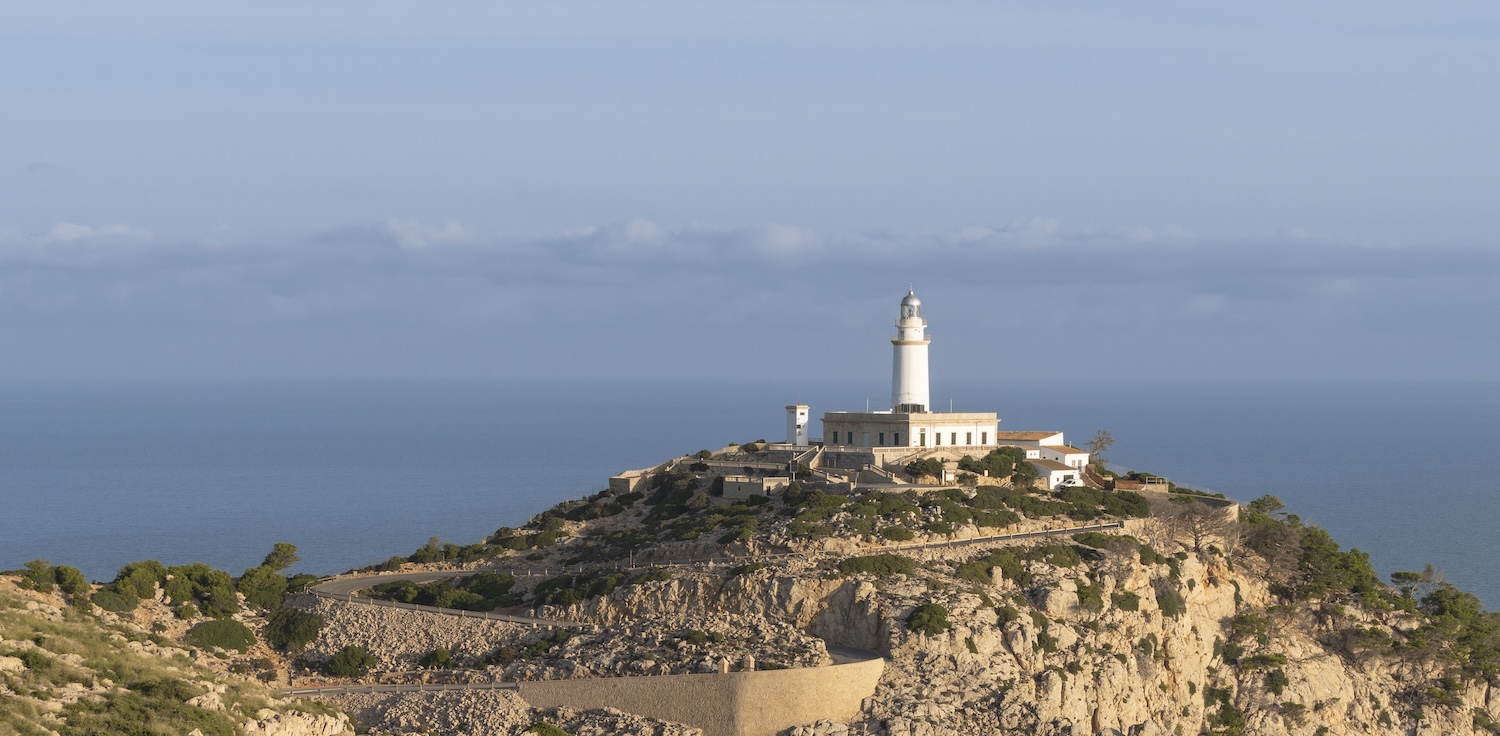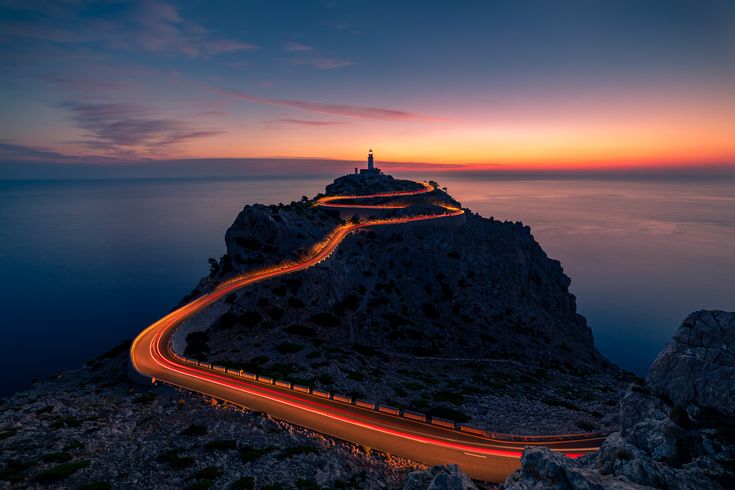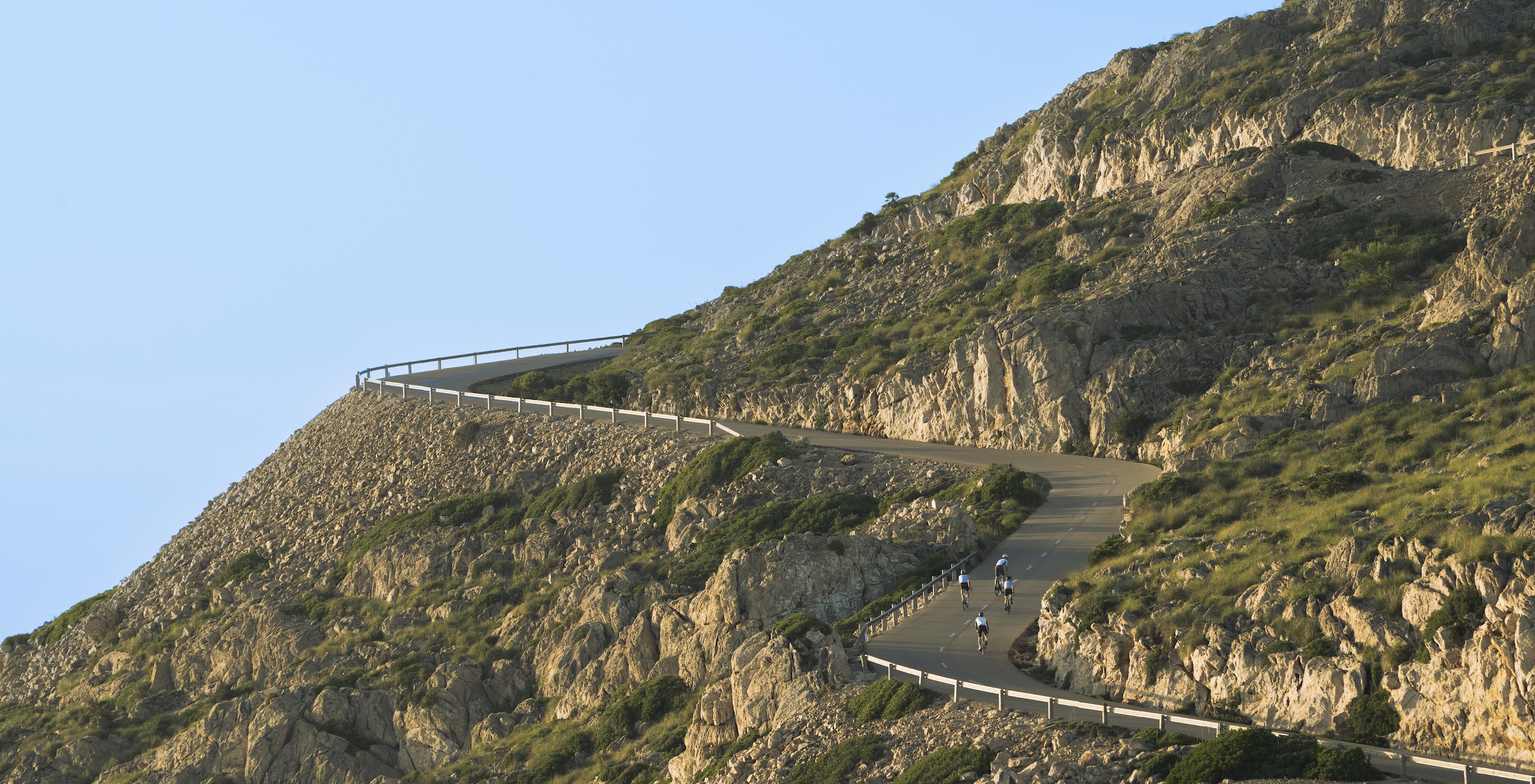
Same 4,670 m of climbing. One week covers 455 km of Mediterranean roads, the other 295 km of alpine passes.
Choose Mallorca if you want big mountain days you can scale up or down, from a Mediterranean base, for most of the year. Choose the Dolomites if you want a week built around high alpine passes and can travel between June and September.
The deciding number isn't distance. It's climbing per kilometre: our Dolomites week climbs about 15.8 m for every kilometre ridden, our Signature Mallorca week about 10.7 m. That's roughly 50% more.

Quick answer
- Same climbing, very different weeks: our Tramuntana Luxury Ride and our Veneto & Dolomites trip both total 4,670 m of climbing over 5 riding days — spread over 455 km in Mallorca and 295 km in the Dolomites.
- Season: Mallorca rides well from March to June and September to November; in the Dolomites the high passes are most reliable from June to September, and some can hold snow into late spring.
- Signature climbs: Sa Calobra is 9.5 km at 7.2% for 660 m; Passo Giau is 9.9 km at about 9.3%, topping out at 2,236 m.
- Level and price: our 7-day Signature Mallorca Bike Tour is rated Intermediate, from €2,320 per person; the 7-day Veneto & Dolomites Luxury Cycling Vacation is rated Experienced, from €3,950 per person.
- Our rule of thumb: mixed-ability group or riding outside summer → Mallorca. Strong group, summer dates, one shared alpine goal → the Dolomites.
We run founder-guided trips in both places, and we've already written a three-way comparison of Mallorca, Girona and the Dolomites. This piece goes deeper on the two-way decision we're asked about most: an island whose highest paved climb tops out below 900 m, or a range where the road summits sit above 2,000 m.
Mallorca vs the Dolomites at a glance
Mallorca is the more flexible destination: a longer riding season, shorter transfers between hotels, and routes that can be cut from 120 km to 50 km without leaving the coast. The Dolomites are the more concentrated one: fewer kilometres, steeper and higher climbs, and a narrower summer window. Both run on the same Trek fleet, with guided, self-guided or mixed options.
| Mallorca | Dolomites (Veneto & Dolomites) | |
|---|---|---|
| Best riding window | March–June, September–November | High passes: June–September (itinerary runs late April/May–early October) |
| Signature climb | Sa Calobra: 9.5 km, 660 m, 7.2% | Passo Giau: 9.9 km, ~9.3%, summit 2,236 m |
| Comparable 7-day Medfeel trip | Signature Mallorca Bike Tour: 430 km, 4,610 m | Veneto & Dolomites Luxury Cycling Vacation: 295 km, 4,670 m |
| Average per riding day | ~86 km, ~922 m | ~59 km, ~934 m |
| Climbing per km | ~10.7 m/km | ~15.8 m/km |
| Medfeel level | Intermediate (Easy to Experienced tours also available) | Experienced (e-bikes available) |
| From (per person) | €2,320 (Signature) · €950 for a 3-day weekend | €3,950 |
| Not for | Riders who want only high-altitude, alpine-scale climbs | Mixed-ability groups who need easy days, or anyone travelling November–April |
When can you ride each destination?
Mallorca is a three-season destination: spring (March–June) and autumn (September–November) are the best windows, and winter is mild enough for riding, as the pro teams show every year. The Dolomites are a summer destination: the high passes are most dependable from June to September, and the rest of the year depends on snow.
That single difference decides more trips than any climb. If your dates are fixed in March, April or late October, the comparison ends here — Mallorca. Our Veneto & Dolomites itinerary itself runs from late April or May to early October, because its first days are lowland riding through the Prosecco Hills, but we'd only promise the full high-mountain programme in the summer months. Even then, afternoon thunderstorms are common at altitude in high summer, so mountain days start early and we adjust the order of days to the forecast.
Mallorca has its own seasonal catches. Some mountain-village and rural hotels close in winter, July and August are hot on exposed climbs, and on dates when Formentor has traffic restrictions you need to check the current year's rules before planning that ride. For month-by-month detail, see our guide to the best time to cycle Mallorca.
Which is harder: climbing per kilometre
The Dolomites are harder, but not because the week is longer. Our Veneto & Dolomites trip covers 295 km and 4,670 m over 5 riding days, about 15.8 m of climbing per kilometre. Our Signature Mallorca Bike Tour covers 430 km and 4,610 m, about 10.7 m per kilometre. Same total effort, packed into far fewer, steeper kilometres.
The clearest comparison is our Mallorca's Tramuntana Luxury Ride. It climbs exactly the same 4,670 m as the Dolomites trip over 5 riding days — but spreads it over 455 km. In Mallorca, the climbing comes between long stretches of coast and valley road where you recover. In the Dolomites, the kilometres between climbs are short, so the legs never fully reset.
Two more things change the effort in the mountains. Altitude: Passo Giau tops out at 2,236 m, while Mallorca's highest paved climb, Puig Major from Sóller (14.4 km, 815 m, 5.7%), finishes below 900 m. Most riders feel the thinner air above 2,000 m as a slightly higher heart rate for the same pace. And descending: alpine descents are longer and colder, so a windproof layer is non-negotiable even in July.
The Signature Mallorca tour is rated Intermediate; the Dolomites trip is rated Experienced. Both can be shortened, and both run with Trek Domane+ and Charter+ e-bikes that take the sting out of the climbs.
What the signature climbs are actually like
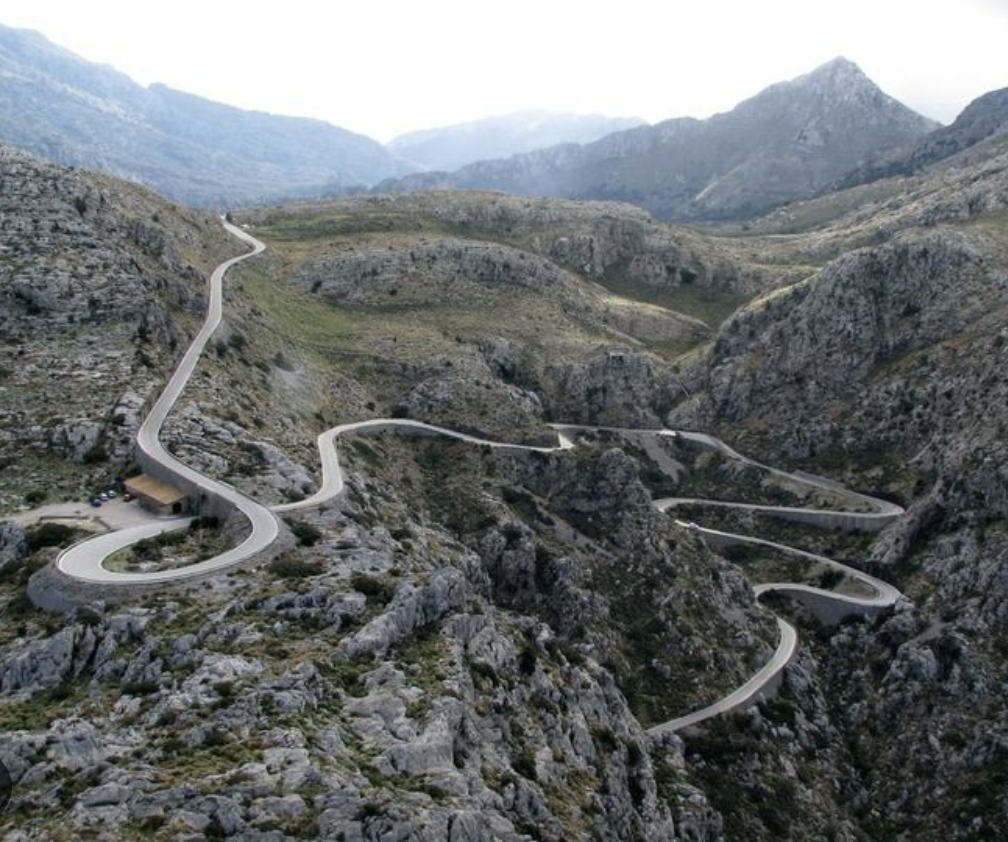
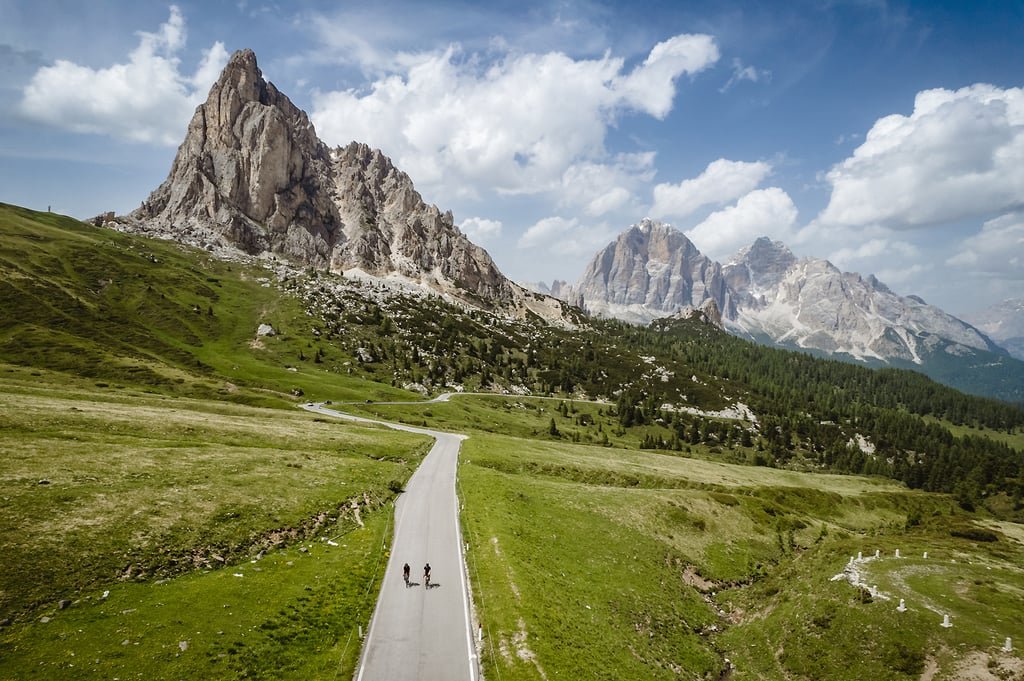
Sa Calobra and Passo Giau are similar in length but not in character. Sa Calobra (Coll des Reis) is 9.5 km at a steady 7.2% for 660 m, starting at sea level. Passo Giau is 9.9 km at around 9.3%, starting high in the mountains and finishing at 2,236 m — steeper, higher and more sustained.
Sa Calobra: a dead end you have to climb out of
The road to Sa Calobra ends at the sea. You descend first and climb back 9.5 km to get out — there is no other road, so either commit to the climb or arrange a pickup in advance. It sits inside a big day: on the Signature tour it's part of the North Tramuntana crossing, 95 km and 2,148 m from Pollença to Port de Sóller. If you go on to Puig Major, note that its summit is a military zone; the road passes through, but the top itself is off limits.
Passo Giau: the Dolomites' day of truth
On our itinerary, Passo Giau comes on day 5, after a transfer to Cortina d'Ampezzo: 45 km and 1,400 m of climbing, descending past Rifugio Fedare to close the loop. That is about 31 m of climbing per kilometre, against roughly 23 m per kilometre on our hardest Mallorca day. The day before, Passo San Boldo (53 km, 740 m) is the warm-up: a short climb known for its road tunnels cut into the rock and stacked hairpins.
What a week looks like on each
A Mallorca week alternates: a mountain day, a shorter coastal or valley day, a recovery ride. A Dolomites week builds: two lowland days in Veneto, a first mountain day, then the high passes. In Mallorca you can reshuffle almost any day; in the Dolomites the order matters because the hardest riding sits at the end.
| Day | Signature Mallorca Bike Tour | Veneto & Dolomites Luxury Cycling Vacation |
|---|---|---|
| 1 | Arrival, Can Aulí (Pollença) | Arrival and warm-up ride, Hotel Cipriani Asolo |
| 2 | Cap de Formentor — 49 km, 1,108 m | Palladian villas & the Piave river — 85 km, 900 m |
| 3 | North Tramuntana crossing — 95 km, 2,148 m | UNESCO Prosecco Hills to CastelBrando — 60 km, 650 m |
| 4 | Sóller valley recovery ride — 30 km, 320 m | Passo San Boldo — 53 km, 740 m |
| 5 | Deià & Valldemossa — 55 km, 1,188 m | Cortina d'Ampezzo and Passo Giau — 45 km, 1,400 m |
| 6 | Coastal challenge — 66 km, 1,341 m | Gravel to Lago di Landro — 52 km, 980 m |
| 7 | Departure from Palma | Departure from Cortina d'Ampezzo |
Two details matter here. Mallorca's day 4 is a deliberate recovery ride in the Sóller valley, right after the biggest day — the kind of reset the Dolomites itinerary doesn't have room for. And the Dolomites' day 6 is gravel: forest and meadow roads to Lago di Landro, so bring (or ask us about) a bike set up for it rather than assuming a pure road week. For the full day-by-day story, read our Veneto and Dolomites itinerary guide.
Hotels and the off-bike half of the trip
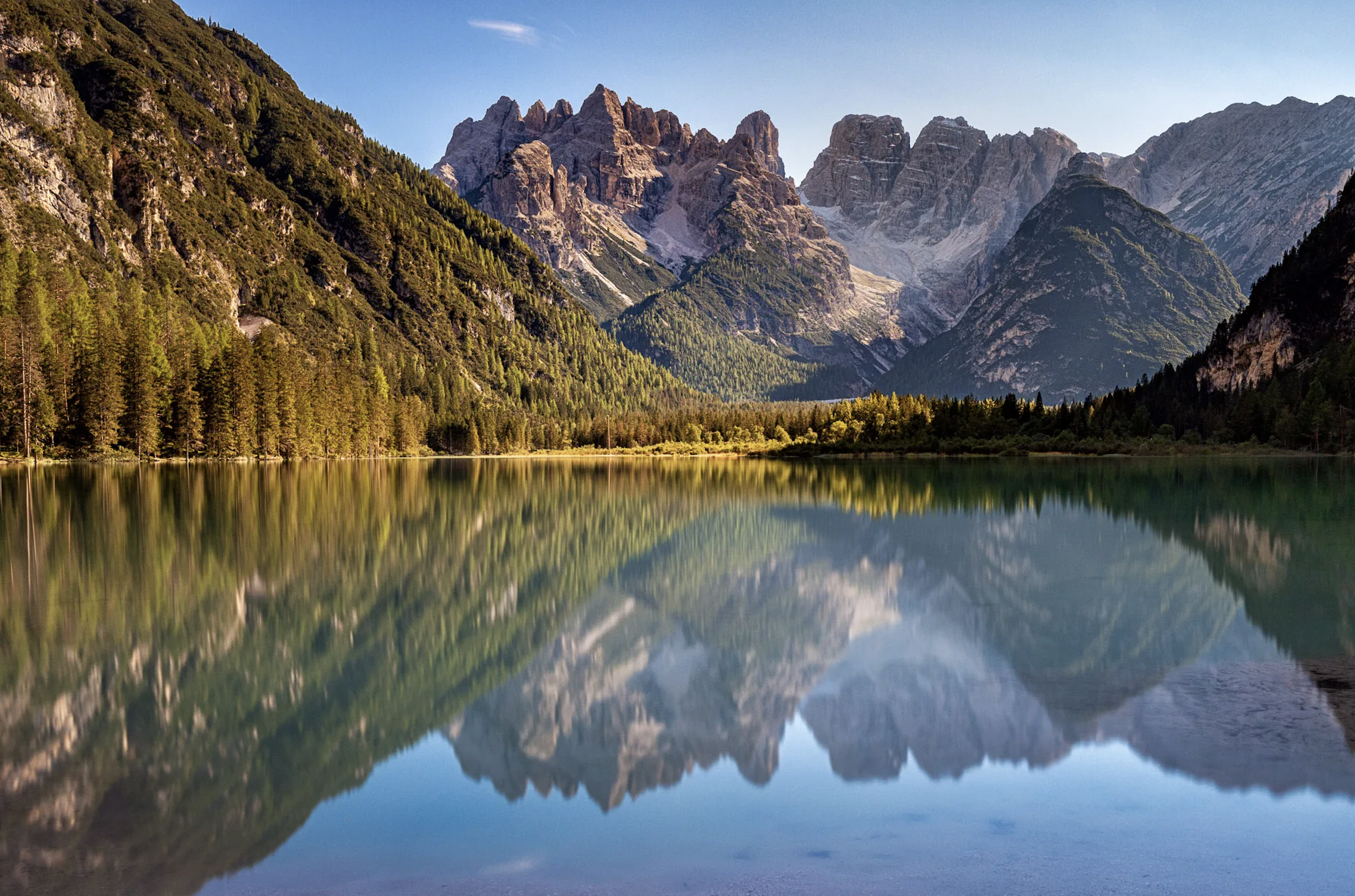
Both destinations move you between three hotels over seven days, with luggage transferred for you. Mallorca's hotels sit on the coast or close to it, so a non-riding afternoon means a swim or a harbour walk. The Dolomites trip moves from Venetian villa country to an alpine resort, so the off-bike week changes from Prosecco and piazzas to mountain air and spa.
On the Signature Mallorca tour you stay at Can Aulí in Pollença for Formentor and the north, Hotel Espléndido in Port de Sóller for the Tramuntana, and El Llorenç Parc de la Mar in Palma's old town for the last two nights. In Italy: Hotel Cipriani Asolo, Hotel CastelBrando above Cison di Valmarino, and Grand Hotel Savoia in Cortina d'Ampezzo.
The practical difference for couples and mixed groups: in Mallorca the non-riding partner has a full day of options from every hotel. In the Dolomites, the mountain days are the point of the trip, and a partner who doesn't ride will spend more of them waiting — unless they ride an e-bike.
Cost: what the price difference buys
Our 7-day Signature Mallorca Bike Tour starts from €2,320 per person; the 7-day Veneto & Dolomites Luxury Cycling Vacation starts from €3,950 per person. Both include the same things: hotels with breakfast, a Trek road bike or e-bike, daily bike insurance, GPX files, luggage and airport transfers, emergency assistance and a dedicated Medfeel Travel Agent.
The gap comes mostly from the hotels and the mountain season. Mallorca also gives you more price points: a 3-day Mallorca Weekend Cycling Escape from €950 per person, up to the 8-day Epic Island Cycling Loop from €5,850. In both destinations, flights, travel insurance and meals beyond breakfast are not included, and a private guide is optional. Cancel at least 35 days before departure for a full refund of the trip cost paid to Medfeel; we recommend travel insurance either way.
Getting there and riding: guided, self-guided or e-bike
Logistics are nearly identical. Both trips include airport transfers, bikes sized to you and delivered to the first hotel, and the choice of riding guided, self-guided with GPX files and support on call, or a mix. The difference is where a guide earns their fee: in the Dolomites, on long alpine descents and changing mountain weather.
In Mallorca, many guests ride self-guided on the coastal and valley days and take a guide for the Tramuntana crossing. In the Dolomites, we'd suggest the reverse logic: take a guide for the San Boldo, Giau and gravel days, where pacing, descending lines and weather calls matter most. If you want to see how the two formats compare in detail, read our guide to guided vs self-guided cycling in Mallorca.
Our take: which one to choose
For most first-time cycling holidays, mixed-ability groups and anyone travelling outside summer, we recommend Mallorca. For strong riders with summer dates who want one shared, high-mountain goal, we recommend the Dolomites. If you're still unsure, the season usually decides it before the climbs do.
- A couple where one partner rides much more than the other: Mallorca. Easier to split the day and meet for lunch.
- A strong club group, July or August: the Dolomites. This is what the itinerary is built for.
- Spring or late-autumn dates: Mallorca, without hesitation.
- Your first trip with a lot of climbing: Mallorca first; the Dolomites next year, with the fitness to enjoy them.
- Gravel curious: the Dolomites trip has a gravel day; Mallorca stays road-first.
- Not for the Dolomites: groups who need easy days in the middle of the week, or riders who dislike long, cold descents.
Weighing Mallorca against the Dolomites? Tell us your dates, your group's level and the one ride you most want to do — we'll tell you honestly which destination fits and build the week around it.
Plan your trip with Medfeel · or compare the Signature Mallorca Bike Tour (7 days, from €2,320 per person) with the Veneto & Dolomites Luxury Cycling Vacation (7 days, from €3,950 per person)
Frequently asked questions
Can I combine Mallorca and the Dolomites in one trip?
Yes, but it isn't a fixed Medfeel itinerary, so it's built as a bespoke trip with a flight between the two. It only makes sense in June or September, when Mallorca is still comfortable and the Dolomite passes are usually open. For most riders, one destination per trip gives a better week than two halves of each.
Is an e-bike a good idea in the Dolomites?
For a mixed-ability group, often yes. Our Trek Domane+ and Charter+ e-bikes let a less-trained rider climb Passo Giau with the group and keep the descent as the shared part of the day. They don't replace descending skills or warm layers, and battery use is higher on long alpine climbs, so we plan charging around the hotel stops.
Do I need to train differently for the Dolomites than for Mallorca?
Yes. For Mallorca, train for volume: several 80–100 km rides with 1,000 m or more of climbing. For the Dolomites, train for sustained effort: repeated 30–60 minute climbs at a steady pace, because the steepest sections arrive with little flat in between. In both cases, practise long descents before you travel.
Which is better for a first cycling holiday abroad?
Mallorca. The season is longer, the hotels are close together, every route can be shortened on the day, and Medfeel runs tours from Easy to Experienced there, including the Mallorca Easygoing E-Bike Tour. The Dolomites trip is rated Experienced and rewards riders who already know how they handle several mountain days in a row.
Can I ride the Dolomites trip self-guided?
Yes. Like all Medfeel tours, the Veneto & Dolomites Luxury Cycling Vacation runs guided, self-guided with GPX files and support on call, or a mix. Many guests ride the Prosecco Hills days on their own and take a guide for Passo San Boldo, Passo Giau and the gravel day to Lago di Landro.
Are flights included on either trip?
No. Flights, travel insurance and meals beyond breakfast are not included on either trip. Airport transfers are included, as are luggage transfers between hotels, so once you land the logistics are handled. Tell us your arrival airport and times and we'll plan the transfers around them.
Sources & methodology
- Tours, itineraries, prices, levels and inclusions: Medfeel's tour database (Signature Mallorca Bike Tour, Mallorca's Tramuntana Luxury Ride, Mallorca Weekend Cycling Escape, Veneto & Dolomites Luxury Cycling Vacation), checked October 2026. Climbing-per-kilometre figures are our own calculation from those totals.
- Mallorca climb data: Medfeel's climb database (length, elevation gain, average gradient). The "below 900 m" summit figure for Puig Major is derived from Sóller's near-sea-level start plus 815 m of gain.
- Passo Giau gradient and summit altitude: widely published climb profiles (from Selva di Cadore); figures vary slightly by source — verify against the official profile for your route.
- Seasons, pass conditions and riding advice: Medfeel's guiding experience in both regions. Pass openings, snow and Formentor traffic rules change every year — check them for your dates.